Core Fire Risks in Exchange Cabinets
An electricity exchange cabinet water fire-fighting system addresses the unique fire hazards associated with battery charging and swapping stations. These cabinets contain multiple lithium batteries undergoing continuous charging and discharging cycles, which can lead to thermal runaway conditions. Overcharging, internal cell failures, or external short circuits may trigger rapid temperature increases that ignite battery materials. The confined space within each cabinet compartment creates concentrated fire risks that demand specialized suppression solutions designed specifically for electrical environments.
Traditional Fire Suppression Limitations
Conventional sprinkler systems prove unsuitable for energized electrical equipment. Water conducts electricity, creating shock hazards for personnel and causing short circuits that worsen equipment damage. Standard sprinklers also discharge large water volumes that flood entire areas, destroying sensitive electronics throughout the facility. These limitations drove development of specialized electricity exchange cabinet water fire-fighting approaches using fine water mist technology that minimizes conductive risks while providing effective fire control.
High-Pressure Water Mist Technology
Modern systems employ high-pressure pumps forcing water through precision micro-nozzles at pressures exceeding sixty bar. This creates an ultrafine mist with droplet sizes measured in microns rather than millimeters. The mist behaves similarly to gas, penetrating confined spaces and reaching hidden fire sources within densely packed cabinet interiors. Cooling occurs through rapid heat absorption as droplets vaporize, while oxygen displacement smothers the flame front. Water consumption remains minimal compared to traditional systems, typically using liters rather than thousands of liters.
Detection and Activation Methods
Effective electricity exchange cabinet water fire-fighting systems incorporate multiple detection technologies for reliable operation. Heat-sensitive glass bulbs mounted at nozzle locations activate at specific temperature thresholds, typically fifty-seven to ninety-three degrees Celsius. Smoke detectors and gas sensors provide early warning before flames develop. Control units receive signals from these detectors and trigger solenoid valves, releasing water to affected zones. Some systems use temperature-sensitive cords routed throughout cabinets that burst when exposed to flames or excessive heat, providing mechanical activation independent of electronic controls.
Standalone System Configurations
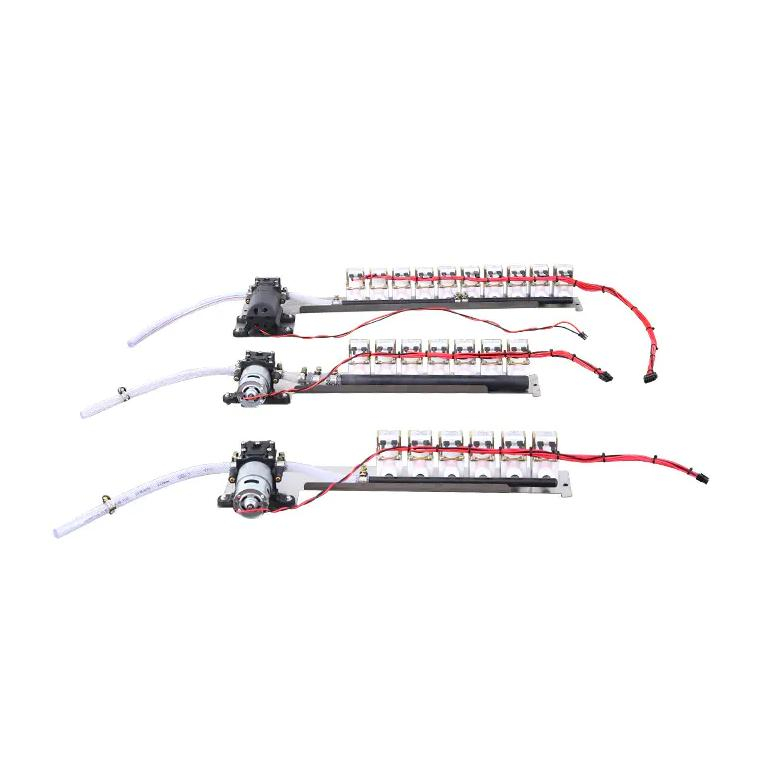
Compact cabinet environments demand self-contained solutions requiring no external power or water connections. Standalone electricity exchange cabinet water fire-fighting units include small water reservoirs, pressurization mechanisms, and control electronics within each cabinet or compartment. These units activate automatically upon detection, discharging integrated water supplies directly onto fire sources. Battery-powered operation ensures function even when main power fails during electrical fires. Modular designs allow individual compartment protection without affecting adjacent undamaged areas.
Non-Conductive Agent Alternatives
While water mist technology advances, some installations specify alternative agents for enhanced electrical safety. Aerosol-generating compounds release microscopic potassium-based particles that interrupt combustion chemistry without water's conductivity concerns. These systems occupy minimal space and activate thermally or electrically. Carbon dioxide systems provide total flooding for sealed compartments but require pressure vessels and pose asphyxiation risks during maintenance access. Clean agents like fluorinated ketones evaporate completely, leaving no residue but involve higher equipment costs.
Compartmentalized Protection Strategies
Modern electricity exchange cabinet water fire-fighting designs protect each battery compartment individually rather than flooding entire cabinets. Dedicated nozzles, detectors, and control circuits serve each cell, ensuring fires receive suppression at their source without affecting neighboring compartments. This approach preserves service continuity for undamaged batteries while containing incidents to smallest possible areas. Isolation valves prevent agent migration between compartments, maintaining concentration where needed most.