Core Business Definition
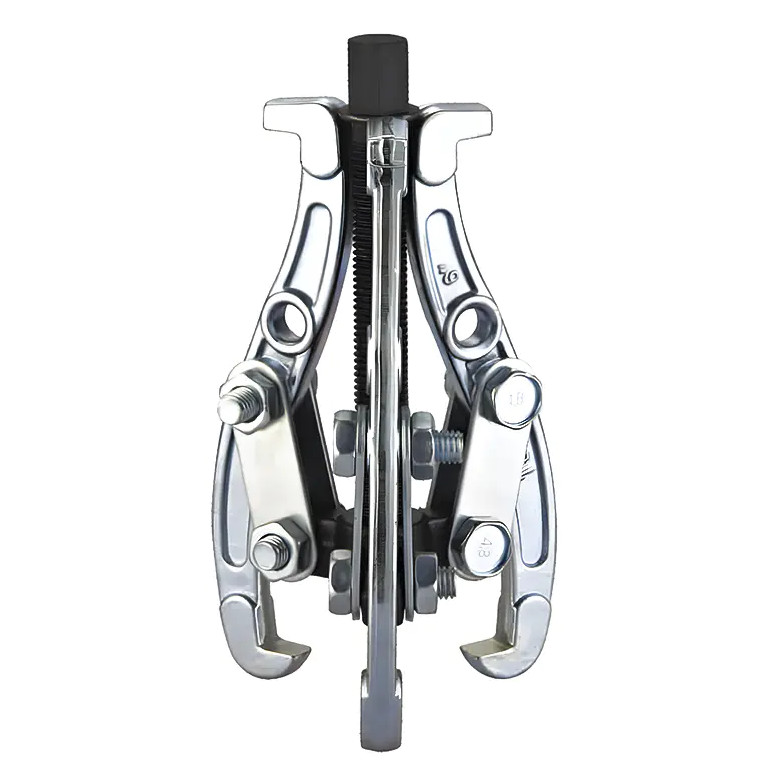
A gear puller factory is a specialized manufacturing facility that produces mechanical tools designed to remove gears, bearings, pulleys, and other press-fit components from shafts without causing damage. These factories engineer and manufacture pullers in various configurations including two-jaw, three-jaw, sliding, hydraulic, and bearing-specific designs. The manufacturing process combines forging, machining, heat treatment, and assembly operations to create tools that apply controlled pulling force for industrial maintenance, automotive repair, and mechanical equipment servicing. Factories range from large-scale producers with annual capacities exceeding one million units to specialized manufacturers focusing on heavy-duty hydraulic pullers for demanding applications.
Major Manufacturing Facilities
Several prominent gear puller factories operate globally with significant production capabilities. Tianda Tools, located in Zhangjiagang City, Jiangsu Province, China, manufactures gear pullers alongside pliers, wrenches, and other tools with annual production capacity reaching 1,000,000 pullers . More than sixty percent of their products are exported to Europe and the United States under the outside brand "REVO" and domestic brand "XINGONG" . Xuzhou Guangda Tools, established in 1955 in Jiangsu, produces gear pullers as part of a comprehensive hardware tool line, with exports reaching over forty countries and regions including North America, Europe, and Southeast Asia . Qingdao Wepro Tool Co., Ltd., located in Shandong, has manufactured precision instruments for over twenty years, exporting gear pullers to the United States, Germany, Italy, Canada, and India .
Product Types and Configurations
Gear puller factories produce various puller types each engineered for specific applications. Two-jaw pullers provide basic functionality for general gear and bearing removal, with heavy-duty sliding models available in sizes ranging from 80x100mm to 520x200mm . Three-jaw pullers offer more stable gripping for symmetrical components, with dual-action models distributing force evenly to prevent component damage . Hydraulic pullers incorporate hydraulic cylinders to generate high pulling forces, with capacities ranging from 5 tons to 200 tons for industrial applications requiring substantial force . Bearing puller sets combine multiple components including jaws, forcing screws, and adapters for comprehensive maintenance capabilities .
Manufacturing Processes and Materials
Production within a gear puller factory involves multiple precision operations. Forging forms basic jaw and body shapes from alloy steels, creating grain structures optimized for strength. CNC machining produces precise thread forms on forcing screws and accurate jaw geometries ensuring proper gripping. Heat treatment processes including quenching and tempering achieve optimal hardness balancing wear resistance with toughness to prevent brittle failure under load. Surface finishing through plating or coating provides corrosion resistance and professional appearance. Assembly operations integrate jaws, screws, and frames into complete tools ready for packaging.
Hydraulic Puller Technology
Advanced gear puller factories produce sophisticated hydraulic pullers for heavy industrial applications. Automatic motorized hydraulic gear pullers equipped with solenoid valves enable single-operator control of jaw positioning, cylinder lifting, and pulling force application . High-strength alloy steel jaws feature anti-skid designs preventing workpiece slippage during operation . Integrated wheel systems enable convenient movement around job sites while locking mechanisms ensure stability during use. Working pressures typically reach 70 megapascals, with capacities from 50 to 200 tons and strokes extending to 330 millimeters . These tools serve demanding applications in petrochemical plants, cement factories, shipbuilding, steel mills, and heavy construction.
Quality Control and Testing
Rigorous quality systems distinguish professional gear puller factories. Incoming material verification ensures steel alloys meet specifications for strength and durability. In-process inspections monitor forging quality, machining accuracy, and heat treatment results. Final testing may include proof loading to validate capacity ratings and functional verification of thread operation. Certifications, including ISO 9001 quality management, CE compliance for European markets, and GS safety authentication from German TUV demonstrate commitment to quality standards . Some manufacturers maintain in-house testing capabilities ensuring consistent product performance.