Core Business Definition
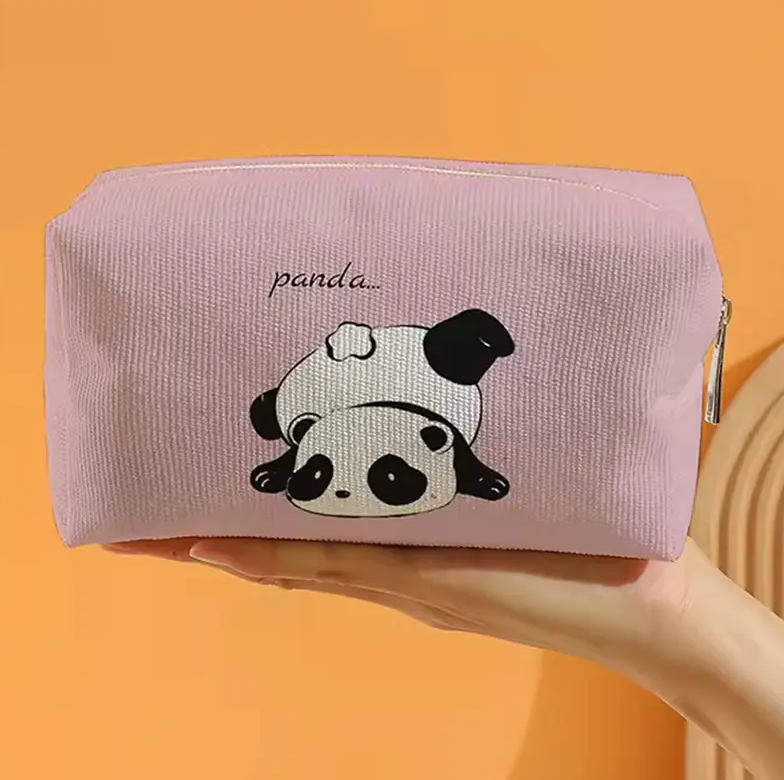
A toiletry bag factory is a specialized manufacturing facility that produces bags designed to organize and transport personal care items, cosmetics, and grooming accessories for travel and daily use. These factories manufacture diverse product ranges including cosmetic bags, wash bags, makeup pouches, travel organizers, and men's grooming kits in various materials such as polyester, nylon, PVC, PU leather, canvas, and eco-friendly recycled fabrics. Production facilities range from large-scale operations with annual capacities exceeding one million units to specialized manufacturers focusing on custom designs for brand clients worldwide.
Manufacturing Facilities and Scale
Toiletry bag factories operate across multiple manufacturing regions with varying production capabilities. Established facilities maintain production spaces ranging from 3,000 square meters to over 26,000 square meters, employing skilled workforces of 150 to 600 production staff equipped with advanced machinery including digital pattern-cutting equipment and automated sewing systems . Monthly production capacity can reach one million units, with approximately eighty percent of products exported to markets including Europe, the United States, Japan, and South Korea . Annual capacities exceed 1.5 million units for larger manufacturers, supported by multiple production bases ensuring stable supply and flexible order scaling from 500 to over 100,000 pieces .
Major Manufacturing Regions
Toiletry bag factories are concentrated in key industrial regions with established textile and bag manufacturing expertise. Guangdong Province hosts numerous manufacturers including facilities in Shenzhen, Huizhou, and Jiangmen, with some operations covering 26,000 square meters and employing over 600 production staff . Fujian Province, particularly Xiamen, Quanzhou, and Zhangzhou, serves as a major hub with manufacturers operating multiple facilities and maintaining annual capacities exceeding 1.5 million units . Zhejiang Province, including Yiwu and Ningbo, is home to factories producing leather and vegan leather toiletry bags with advanced manufacturing equipment . Anhui Province hosts manufacturers with 5,000 to 10,000 square meter facilities and 101 to 200 employees .
Material Types and Applications
Toiletry bag factories produce bags from diverse materials each offering distinct properties for different applications. Polyester and nylon provide durability, water resistance, and lightweight comfort for travel applications, available in various deniers including 600D for enhanced durability . PVC and TPU materials offer transparent options for easy content visibility and waterproof protection. PU leather and vegan leather provide premium appearance with ethical manufacturing considerations for sophisticated designs . Recycled polyester (rPET) manufactured from single-use bottles reduces carbon emissions by fifty-nine percent compared to virgin polyester while maintaining performance characteristics . Canvas and linen offer natural aesthetics for casual and sustainable product lines.
Manufacturing Processes and Equipment
Production within a toiletry bag factory involves multiple specialized operations using advanced equipment. Digital pattern-cutting systems ensure precise material utilization and consistent component dimensions across production runs . Automated sewing setups with skilled operators assemble bag bodies, install zippers, and attach handles with consistent stitch quality. Zipper installation requires precision alignment to ensure smooth operation throughout product life. Quality control stations at each production stage verify stitching integrity, zipper function, and dimensional accuracy. Some factories utilize robotic machines and advanced production equipment to ensure automated operation and line efficiency .
Quality Control and Certifications
Rigorous quality systems distinguish professional toiletry bag factories serving international markets. Comprehensive three-stage inspection protocols include raw material verification upon receipt, semi-finished product sampling during production to assess stitching and zipper durability, and final inspection verifying dimensions and customization accuracy before shipment . Certifications including ISO 9001 quality management, BSCI social compliance, FSC sustainable materials, ISO 14001 environmental management, and SA8000 social responsibility demonstrate commitment to international standards . Some factories maintain specific customer certifications for clients including Disney, Coca Cola, H&M, Nestle, Walmart, and other major brands .