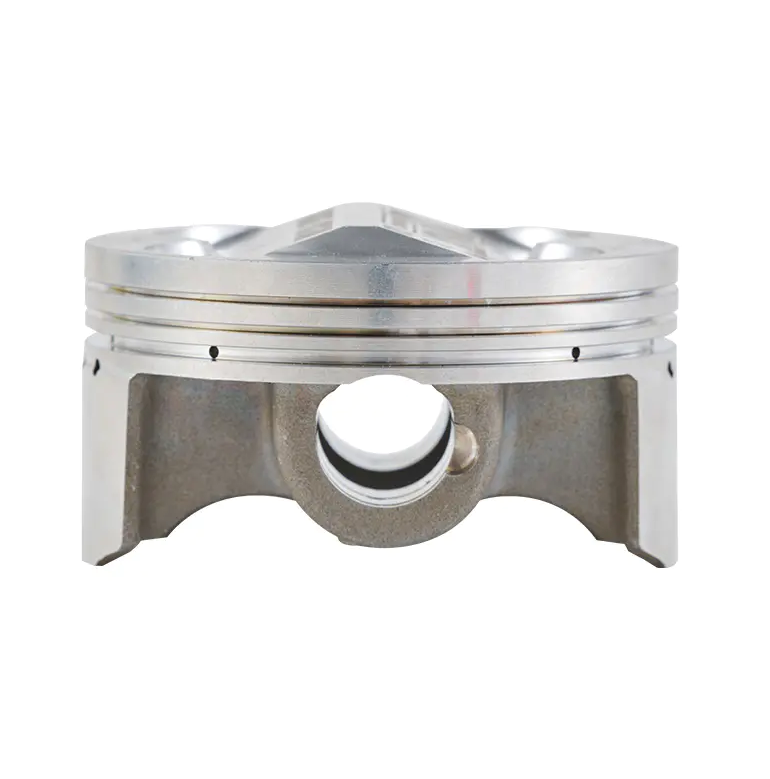
Understanding the Core Business Definition
An OEM piston manufacturer is a specialized industrial company that designs and produces pistons for installation in new engines by automotive, heavy equipment, and marine vehicle manufacturers. These manufacturers supply directly to engine builders who install the pistons as original components in vehicles ranging from passenger cars to massive marine diesel engines. Unlike aftermarket piston producers, OEM manufacturers work closely with engine designers during the development phase, creating pistons that precisely match the specifications, performance requirements, and durability targets of specific engine models. This close collaboration ensures that every new vehicle leaves the factory with pistons optimized for its particular application.
Engineering Collaboration with Engine Designers
The relationship between an OEM piston manufacturer and engine builders begins long before production starts. Piston engineers work alongside engine designers to develop pistons that complement combustion chamber geometry, valve placement, and fuel injection characteristics. Computer-aided design and finite element analysis optimize piston shape for strength while minimizing weight. Thermal analysis ensures the piston can withstand the extreme temperatures of combustion without distortion or failure. This collaborative engineering process results in pistons that are perfectly matched to the engine's operating characteristics, delivering optimal power, efficiency, and reliability.
How OEM Pistons Are Manufactured
Material Selection and Alloy Development
Manufacturing OEM pistons begins with specialized aluminum alloys developed specifically for high-temperature, high-stress engine applications. These alloys typically contain silicon, copper, nickel, and magnesium in carefully controlled proportions that optimize strength, wear resistance, and thermal expansion characteristics. The silicon content provides hardness and wear resistance at the piston skirt where contact with cylinder walls occurs. Copper and nickel enhance high-temperature strength, preventing piston deformation under combustion loads. Magnesium contributes to lightweight properties that reduce reciprocating mass. Alloy development represents years of metallurgical research, with each proprietary formulation offering specific advantages for different engine types.
Casting and Forging Processes
OEM piston manufacturers employ various forming processes based on engine requirements and production volumes. Gravity casting pours molten alloy into molds, suitable for moderate-performance applications where cost efficiency matters. Squeeze casting applies pressure during solidification, reducing porosity and improving mechanical properties for higher-performance engines. Forging, the most demanding process, shapes heated alloy billets under tremendous pressure, creating pistons with superior grain structure and strength for high-performance and heavy-duty diesel applications. Each process requires precise control of temperatures, pressures, and cooling rates to achieve the consistent quality OEM customers demand.
CNC Machining and Finishing
After forming, pistons undergo extensive machining operations that create the final precision geometry. CNC lathes turn the piston skirt to exact diameter specifications with tolerances measured in microns. Machining centers create wrist pin bores with precisely controlled location and surface finish. Ring groove cutting produces the exact width and depth required for compression and oil control rings. Valve relief pockets are machined to provide clearance for valves at top dead center. Each machining operation must maintain tight tolerances to ensure proper engine function and long service life. Surface finishing treatments may include skirt coatings that reduce friction and improve wear resistance.
Quality Control and Testing
Rigorous quality systems distinguish professional OEM piston manufacturers serving demanding engine builders. Dimensional inspection using coordinate measuring machines verifies that every critical feature meets specifications. Weight matching ensures that pistons within an engine set have identical mass, minimizing vibration. X-ray inspection detects internal porosity or inclusions that could lead to failure. Hardness testing confirms proper heat treatment results. Sample pistons from each production lot may undergo dyno testing to validate performance under actual operating conditions. These quality measures ensure that every piston meets the exacting standards required for OEM applications.