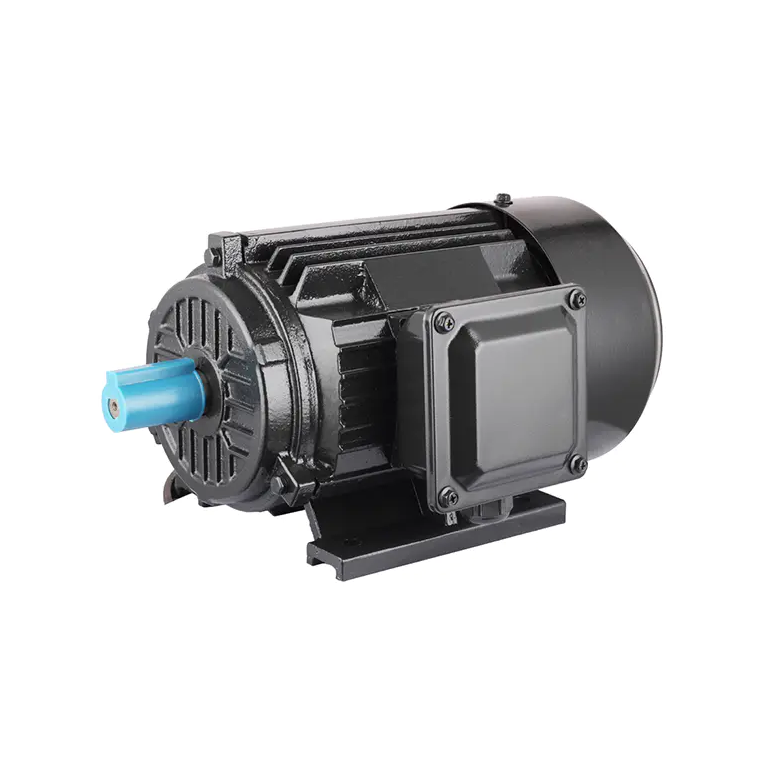
Understanding the Basic Motor Definition
An IE2 three-phase asynchronous electric motor is a high-efficiency industrial motor designed to convert electrical energy into mechanical power through electromagnetic induction. The term IE2 refers to the International Efficiency class 2, defined under the IEC 60034-30 standard as "High Efficiency" level . These motors operate on three-phase alternating current and feature a rugged, simple design with no brushes, commutators, or slip rings, making them reliable and low-maintenance for industrial applications . The asynchronous or induction principle means the rotor rotates at a speed slightly less than the rotating magnetic field created by the stator, with this speed difference essential for torque production .
Construction and Design Features
The physical construction of an IE2 three-phase asynchronous electric motor typically features either aluminum or cast iron housing depending on frame size and application requirements. Smaller frame sizes from 56 to 132 often use aluminum construction for lightweight applications, while larger sizes from 160 to 400 utilize robust cast iron for demanding industrial environments . These motors are typically Totally Enclosed Fan Cooled (TEFC) design, meaning an external fan mounted on the rotor shaft blows cooling air over the finned motor housing . Standard protection rating is IP55, offering complete protection against dust ingress and protection against water jets from any direction .
How Does the IE2 Efficiency Class Compare to IE1 and IE3
Efficiency Standards and Classification
The efficiency classification of an IE2 three-phase asynchronous electric motor follows international standards established by the International Electrotechnical Commission. IE2 represents "High Efficiency" motors, positioned above IE1 "Standard Efficiency" but below IE3 "Premium Efficiency" and IE4 "Super Premium Efficiency" classes . Compared to IE1 motors, IE2 units deliver approximately ten to fifteen percent lower energy losses, translating to significant electricity cost savings over years of continuous operation . The progression from IE1 to IE2 to IE3 represents incremental improvements in electromagnetic design, reduced electrical losses, optimized cooling, and better materials .
Application Considerations for Different Efficiency Classes
The choice between efficiency classes involves balancing initial investment against long-term operating costs. An IE2 three-phase asynchronous electric motor offers a cost-effective solution for applications where the highest efficiency levels of IE3 or IE4 motors are not necessary or economically justified . These motors are particularly suitable for applications with moderate duty cycles or where the motor size makes the premium for higher efficiency difficult to recoup through energy savings. Many industrial users select IE2 motors for general-purpose applications including pumps, fans, compressors, and conveyors where reliability and reasonable efficiency meet operational requirements .
What Are the Key Technical Specifications of IE2 Motors
Power Ratings and Speed Options
IE2 three-phase asynchronous electric motors are available in a comprehensive range of power outputs from fractional horsepower sizes under one kilowatt up to large industrial motors rated at 315 kilowatts or more . Standard synchronous speeds include 3000 RPM for two-pole motors, 1500 RPM for four-pole motors, and 1000 RPM for six-pole designs, with actual operating speeds slightly lower due to slip characteristics inherent in asynchronous design . Common voltage ratings include 380V, 400V, and 415V at 50Hz frequency, with options for 60Hz operation available from most manufacturers .
Mounting Configurations and Environmental Ratings
Manufacturers offer IE2 three-phase asynchronous electric motors in various mounting configurations to suit different installation requirements. Foot-mounted B3 designs provide stable base mounting for most industrial applications, while flange-mounted B5 and B35 versions allow direct attachment to driven equipment . Standard insulation class is F, with temperature rise typically limited to 80K to provide significant thermal margin and extend insulation life . Cooling method IC411 using external fan cooling ensures reliable operation in ambient temperatures ranging from minus fifteen to forty degrees Celsius at altitudes below one thousand meters .