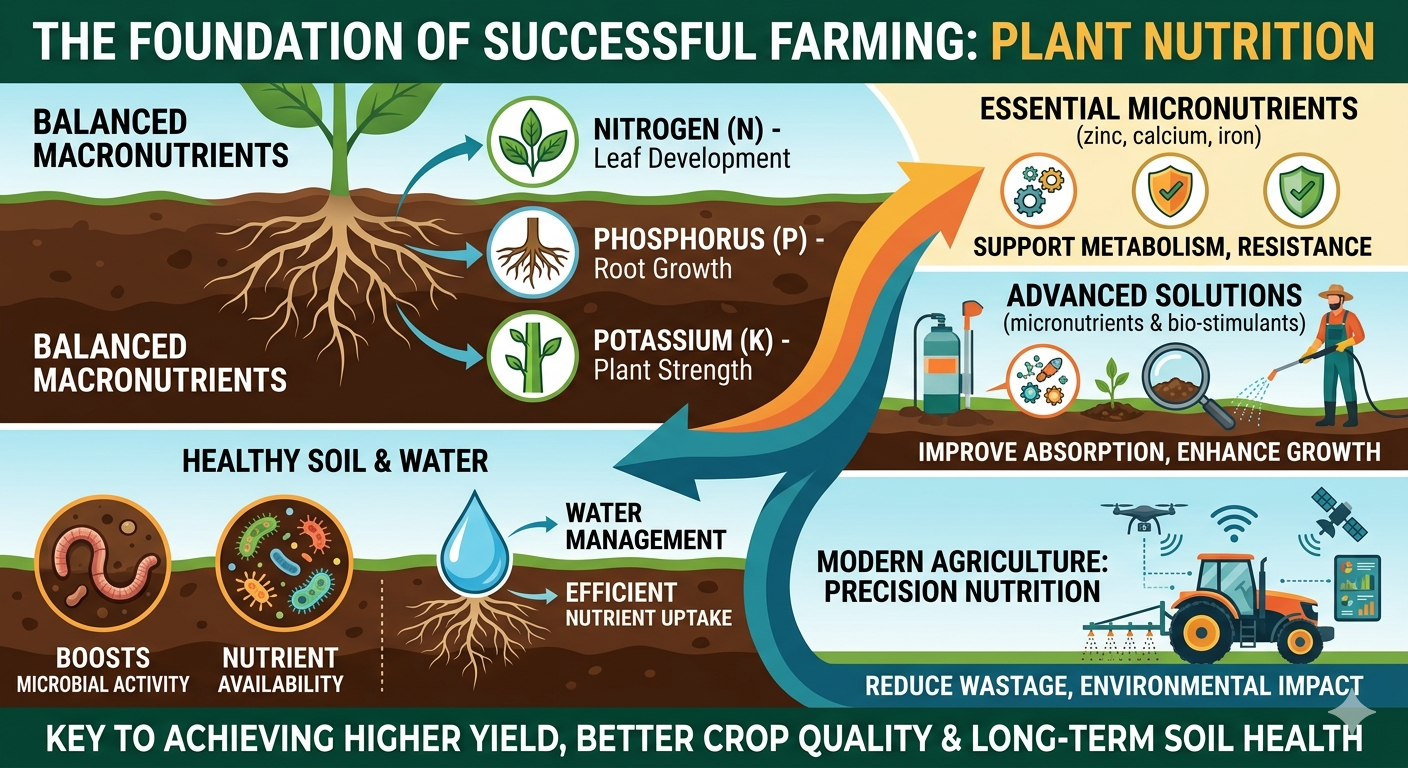
Plant nutrition plays a vital role in determining crop productivity and overall agricultural success. In modern farming, providing the right balance of nutrients is essential for achieving higher yield, better crop quality, and long-term soil health.
Plants require both macronutrients and micronutrients for proper growth. Macronutrients include nitrogen, phosphorus, and potassium, while micronutrients such as zinc, calcium, and iron are equally important in smaller quantities. A deficiency in any of these nutrients can lead to poor crop performance and reduced yield.
Balanced plant nutrition ensures that crops receive all essential elements required for their growth cycle. Nitrogen supports leaf development, phosphorus enhances root growth, and potassium improves overall plant strength and disease resistance.
Modern agricultural practices focus on precision nutrition, where fertilizers are applied based on crop requirements and soil conditions. This approach not only improves efficiency but also reduces wastage and environmental impact.
Incorporating advanced solutions like micronutrients and bio-stimulants helps in improving nutrient absorption and enhancing plant metabolism. These inputs play a key role in boosting crop productivity and ensuring uniform growth.
Soil health is another critical factor in plant nutrition. Healthy soil with good organic matter supports microbial activity, which helps in nutrient availability. Farmers are increasingly adopting practices that improve soil fertility, such as using organic inputs and soil conditioners.
Water management also influences nutrient uptake. Proper irrigation ensures that nutrients are effectively absorbed by plant roots, leading to better growth and development.
In conclusion, plant nutrition is the foundation of successful farming. By adopting balanced fertilization practices and using advanced agricultural inputs, farmers can significantly improve crop yield and ensure sustainable farming.