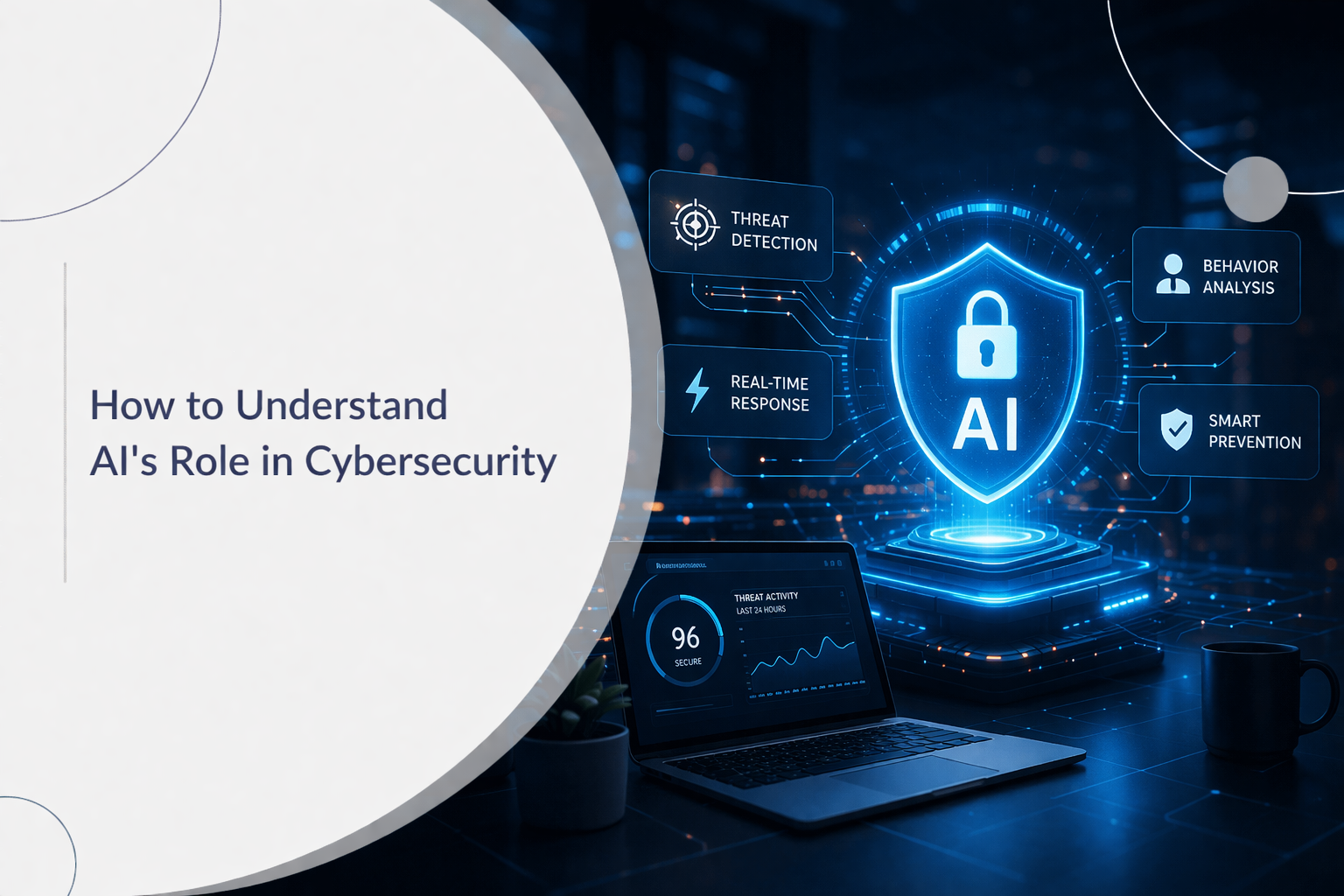
Artificial Intelligence (AI) is now central to cybersecurity - shaping both defense and attack. As threats grow more complex, AI is used not only to protect systems but also to drive increasingly advanced attacks. This dual-use reality defines the modern cyber battlefield.
Understanding AI’s role in cybersecurity is crucial for CISOs, security leaders, and B2B decision-makers seeking to develop resilient, future-ready security strategies.
The Evolution of AI in Cybersecurity
Traditionally, cybersecurity relied on rule-based systems and signature detection methods to identify threats. However, these approaches struggle to keep up with today’s dynamic attack landscape.
AI has transformed cybersecurity by introducing:
- Real-time threat detection through pattern recognition
- Behavioral analytics to identify anomalies
- Automated incident response
- Predictive risk assessment
These capabilities allow organizations to move from reactive defense to proactive threat intelligence.
AI as a Defensive Power in Cybersecurity
AI-powered security systems are now essential for identifying and mitigating threats at scale. Key applications include:
1. Threat Detection and Prevention
AI analyzes massive datasets to detect unusual behavior, malware signatures, and zero-day vulnerabilities that traditional systems often miss.
2. Security Automation
Automation reduces response times by instantly isolating threats, blocking malicious activity, and triggering remediation workflows.
3. Fraud Detection
Machine learning models identify suspicious financial transactions and prevent fraud in real time.
4. Vulnerability Management
AI scans systems continuously to detect weaknesses and prioritize risk mitigation strategies.
These capabilities significantly enhance an organization’s ability to defend against evolving cyber threats.
AI as an Offensive Weapon in Cyber Warfare
While AI strengthens cybersecurity defenses, it is also being weaponized by cybercriminals and nation-state actors.
1. AI-Driven Phishing Attacks
Attackers use AI to generate highly personalized phishing emails that are difficult to detect.
2. Automated Malware Development
AI enables the creation of adaptive malware that can evolve to bypass security defenses.
3. Deepfake and Social Engineering Attacks
AI-generated audio and video are used to impersonate executives, increasing the success rate of fraud and data breaches.
4. Intelligent Attack Automation
AI enables attackers to scan networks, identify vulnerabilities, and execute attacks more quickly than ever before.
AI’s dual role as defender and attacker marks a critical turning point: it is now a defining weapon in cyber warfare.
Key Challenges in AI-Driven Cybersecurity
Despite its advantages, AI introduces new challenges that organizations must address:
- Data privacy risks: AI systems require large datasets, raising compliance concerns
- Model bias and inaccuracies: Poorly trained models can lead to false positives or missed threats
- Adversarial AI attacks: Attackers can manipulate AI models to bypass detection
- Skill gaps: Organizations need expertise to deploy and manage AI-driven security systems
Addressing these challenges requires a balanced approach combining technology, governance, and human oversight.
Strategic Implications for Security Leaders
For CISOs and cybersecurity professionals, understanding AI’s dual role is critical for building resilient security frameworks.
Key strategies include:
- Integrating AI into Security Operations Centers (SOCs)
- Investing in threat intelligence platforms powered by machine learning
- Strengthening employee awareness against AI-driven phishing
- Implementing robust AI governance and compliance frameworks
Organizations that proactively adopt AI-driven security measures will be better equipped to handle emerging cyber threats.
The Future of AI in Cybersecurity
AI will continue to redefine cybersecurity in the coming years. As both defenders and attackers leverage advanced algorithms, the cybersecurity landscape will become more complex and competitive.
Future trends include:
- Autonomous security systems
- AI-driven zero trust architectures
- Advanced behavioral biometrics
- Real-time threat intelligence sharing
The organizations that succeed will be those that combine AI capabilities with human expertise and strategic foresight.
Final Thoughts
AI has fundamentally changed the cybersecurity landscape. It is both a powerful defense mechanism and a sophisticated weapon in cyber warfare. Understanding this dual role is essential for organizations seeking to protect their digital assets in an increasingly hostile environment.
By leveraging AI responsibly and strategically, businesses can stay ahead of threats, strengthen resilience, and build a proactive cybersecurity posture in the age of intelligent cyber warfare.