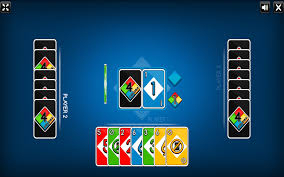
So, you're looking for a new game to sink your teeth into? Something that's deceptively simple but offers layers of strategic depth? Forget the endless scrolling through app stores, I've got a recommendation that might surprise you: Uno Online
Gameplay: Turning Uno Into an Economic Engine
The core idea is to treat each game of Uno Online as a single "day" in your virtual store. You'll need to define what the different aspects of the game represent within your store's economy. Here's a suggested framework:
- Starting Hand: Your initial capital. The number of cards in your starting hand represents the amount of resources (money, inventory, ingredients, depending on your imaginary store) you have available at the beginning of the day. More cards equal more starting capital. Let's say each card represents $10 of starting capital, making a standard 7-card hand worth $70.
- Other Players (Bots/Humans): Your customers. Each player represents a certain number of customers, or maybe a certain type of customer. For example, if there are four players, you might imagine that each player represents 25 customers coming to your store that day.
- Discard Pile: Sales made. Each card you successfully play onto the discard pile represents a sale you've made to a customer. The type of card can further refine this. Number cards could represent standard sales of regular items. Action cards could represent special promotions, sales of high-value items, or even discounts.
- Draw Pile: Overhead costs/Unexpected expenses. Each card you draw from the draw pile represents an unexpected expense that chips away at your starting capital. This could be anything from broken equipment to a supplier price increase to a sudden dip in customer traffic.
- Winning the Game (Going Uno/Out): Achieving your daily target. Winning the game means you've successfully managed your resources, satisfied your customers (the other players leaving the game), and met or exceeded your target sales for the day.
- Losing the Game: Bankruptcy/Not meeting your target. Losing the game (having too many cards in hand by the time others go out) means you haven't managed your resources effectively, customer satisfaction is low, and you failed to meet your target sales.
How to Play a "Store Management" Game of Uno Online:
- Set Your Target: Before each game, decide on your sales target for the day. Let's say you want to make $100 in sales, which translates to 10 cards played to the discard pile (since each card represents $10).
- Manage Your "Resources" (Hand): Strategically choose which cards to play based on their "value" (as defined above) and the potential cost of drawing more cards (overhead). Don't just blindly play cards!
- Assess "Customer" Behavior (Other Players): Pay attention to the other players' actions. Are they strategically blocking you? Are they drawing lots of cards? This could represent customer preferences changing or increased competition.
- Mitigate "Expenses" (Draw Pile): If you have to draw a card, treat it as an expense. Deduct the cost from your running total. This forces you to make careful decisions about when to play cards and when to hold back.
- Keep Score: Keep a running tally of your sales (cards played) and expenses (cards drawn). Compare this to your target at the end of each game to see how well you managed your store.
Tips for Optimizing Your Uno Online Store:
- Develop a Pricing Strategy: Decide on the "value" of different card types. Maybe a Skip card is worth $15 because it allows you to quickly move past a slow-moving customer. Maybe a Reverse card is worth -$5 because it represents a customer returning an item.
- Experiment with Marketing: Use Wild cards as advertising campaigns. If you play a Wild card, you might decide that it represents a targeted ad campaign that guarantees two more sales (you get to play two extra cards).
- Diversify Your "Inventory": Don't focus solely on one type of card. Having a variety of cards (products) allows you to adapt to changing customer demands (the other players' actions).
- Manage Your Cash Flow: Avoid drawing cards whenever possible. Focus on efficient sales (playing cards) to minimize your overhead costs.
- Embrace the Chaos: Sometimes, unexpected events (drawing penalty cards) will throw your plans off course. Learn to adapt and improvise, just like a real store owner.
- Track Your Progress: Keep a record of your daily "sales" and "expenses" over multiple games. This will allow you to identify trends and improve your store management skills.
- Increase Difficulty: Play against tougher opponents (humans or bots) or increase your sales target to challenge yourself further.
Conclusion: Uno Online - Your Pocket-Sized Business School
Okay, I know it sounds a bit silly, but trust me, this surprisingly engaging way to play Uno Online It forces you to think strategically, manage resources, and adapt to unexpected challenges, all while enjoying a classic card game.