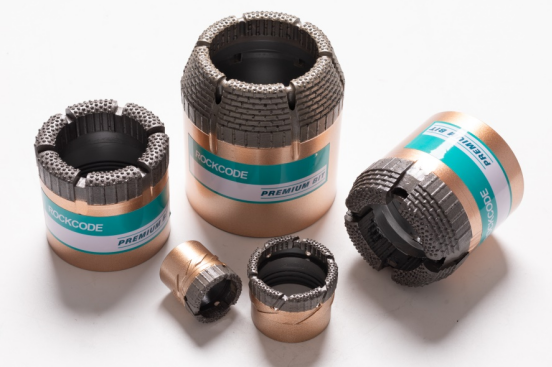
In the demanding field of geological exploration and geotechnical engineering, the efficiency of a drilling project is often determined by the interaction between the cutting media and the lithology. While diamond-based solutions are frequently prioritized for high-strength rock formations, the carbide core bit remains an indispensable component for drilling operations where economic efficiency and specific ground conditions intersect.
The Mechanical Principles of Tungsten Carbide in Coring
Carbide core bits—specifically those featuring tungsten carbide (TC) inserts—utilize sintered tungsten carbide segments as their primary cutting edges. These bits are strategically deployed in core drilling operations targeting specific lithologies; within such formations, their superior mechanical toughness offers a distinct advantage over more brittle materials, such as diamond.[1]
One of the primary drivers for selecting a carbide core bit is the significant reduction in operational overhead. For large-scale exploration programs, particularly in sedimentary basins or soil sampling projects, this price differential allows for a more extensive drilling budget without compromising the integrity of the core recovery.
Carbide vs. Diamond Core Bits
To optimize procurement and field performance, it is essential to understand the technical hierarchy of drilling bits. The choice is not merely a matter of price; it is governed by the physical hardness and abrasiveness of the rock.
1. Diamond Bits: The Hard Rock Specialists
Diamond bits are used almost exclusively for coring hard or dense lithologies. They are constructed by placing either natural or synthetic diamonds in a mold of a specific size and shape, which is then filled with a powdered metal (usually a tungsten alloy).
-
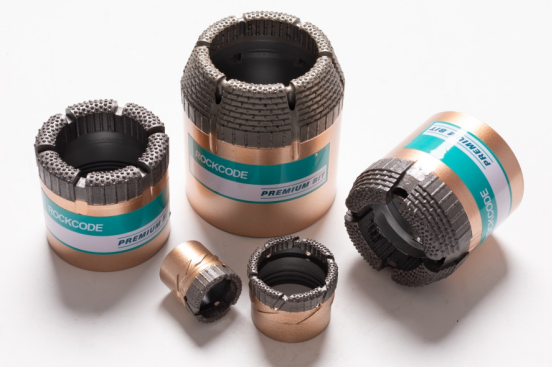
Surface Set Diamond Bits: These feature a single layer of diamonds exposed at the surface of the bit crown. They are highly efficient in consistent formations but are vulnerable to diamond fracturing if excessive down-pressure is applied.
-
Impregnated Diamond Bits: These have diamonds distributed uniformly throughout the crown material. As the crown wears away, new diamonds are exposed, producing a consistent cutting edge. As noted in technical documentation from Epiroc, an impregnated bit generally produces better results than a surface set bit when coring highly fractured or very hard lithologies like quartzite or silicified sandstones.
2. Carbide Core Bits: The Resilient Workhorse
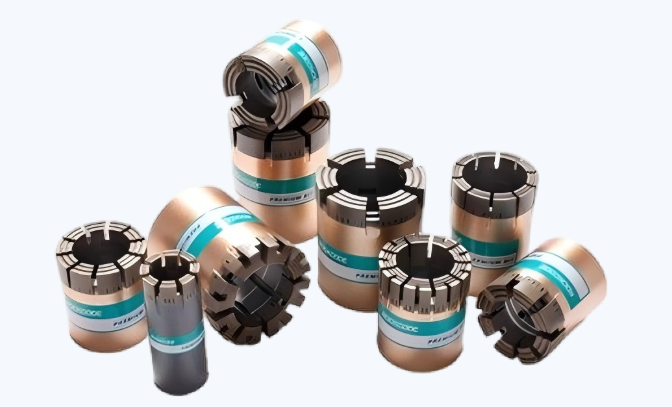
Carbide core bits operate based on a fundamentally different mechanical principle. Unlike the typical abrasive action of diamond bits, carbide inserts achieve cutting primarily through shearing or scraping actions. To attain optimal drilling rates, the key lies in precisely matching the arrangement of the carbide inserts—specifically their configuration and dimensions—to the lithology of the formation being drilled. For formations such as clay, shale, and soft limestone, the broad cutting faces of the carbide "teeth" deliver a higher Rate of Penetration (ROP) than the fine abrasive action characteristic of diamond bits.
Hybrid Technologies: The Role of PCD
A significant advancement in drilling technology is the development of the hybrid core bit. This design combines the cutting efficiency of a tungsten-carbide drag bit with the long life associated with diamonds.
This type of drill bit utilizes conventional furnace brazing techniques to affix disc-shaped polycrystalline diamond (PCD) cutting elements to the bit body, employing either steel or carbide materials as the substrate. Such bits are particularly well-suited for drilling through soft and/or cohesive formations, such as coal seams. When employing diamond bits for coring operations, it is typically necessary to apply relatively low weight on bit while maintaining moderate to high rotational speeds. Excessive weight on bit may result in the fracturing of the diamonds embedded in the bit face; furthermore, strict control over pump pressure and fluid flow rates is essential to prevent erosional damage to both the core sample and the bit's base metal.
Operational Parameters for Maximizing Bit Life
Even the highest quality carbide core bit can fail prematurely if field parameters are not strictly managed. To ensure maximum meterage, drillers should focus on three critical areas:
1. Rotation Speed (RPM) and Weight on Bit (WOB)
Coring techniques using diamond drill bits generally require less down-hole pressure and average-to-high rotating speeds. Conversely, a carbide core bit requires a more deliberate Weight on Bit (WOB) to allow the inserts to bite into the formation. However, excessive down-pressure can cause fracturing of the carbide, leading to catastrophic bit failure. A "low RPM, steady WOB" approach is generally recommended for TC bits in medium-hard ground.
2. Fluid Management and Erosion Control
Pump pressure and fluid velocity must be strictly controlled. This is essential to prevent the erosion of both the core sample and the bit-matrix metal. In soft or unconsolidated formations, if the fluid velocity is too high, it can wash away the core before it enters the inner tube. Furthermore, efficient fluid flow is necessary to clear cuttings and prevent "balling up," where clay adheres to the carbide teeth and stops the cutting action.
Carbide core bits are by no means mere tools; they represent a precision-engineered solution that, when applied correctly, offers a high return on investment. By understanding the nuances of insert configurations and adhering to rigorous operational practices, exploration teams can achieve high core recovery rates in medium-to-soft formations at a fraction of the cost associated with diamond drilling.
At ROCKCODE, we are dedicated to providing the global drilling community with professional-grade tools that exemplify the highest standards of Chinese manufacturing. We believe that by integrating modern metallurgical technologies, we are able to deliver drill bits capable of withstanding even the most demanding geological conditions.
→ For more information about ROCKCODE’s Products, please visit: https://www.rockcodebit.com/drill-bits-products
→ Email us at: info@rockcodebit.com
→ Information in this article is for general reference only. For specific drilling projects and drilling bits, please consult qualified professionals. Thank you.
Sources
[1] Manual on Drilling, Sampling, and Analysis of Coal
https://www.rockcodebit.com/technical-guide-to-carbide-core-bits.html