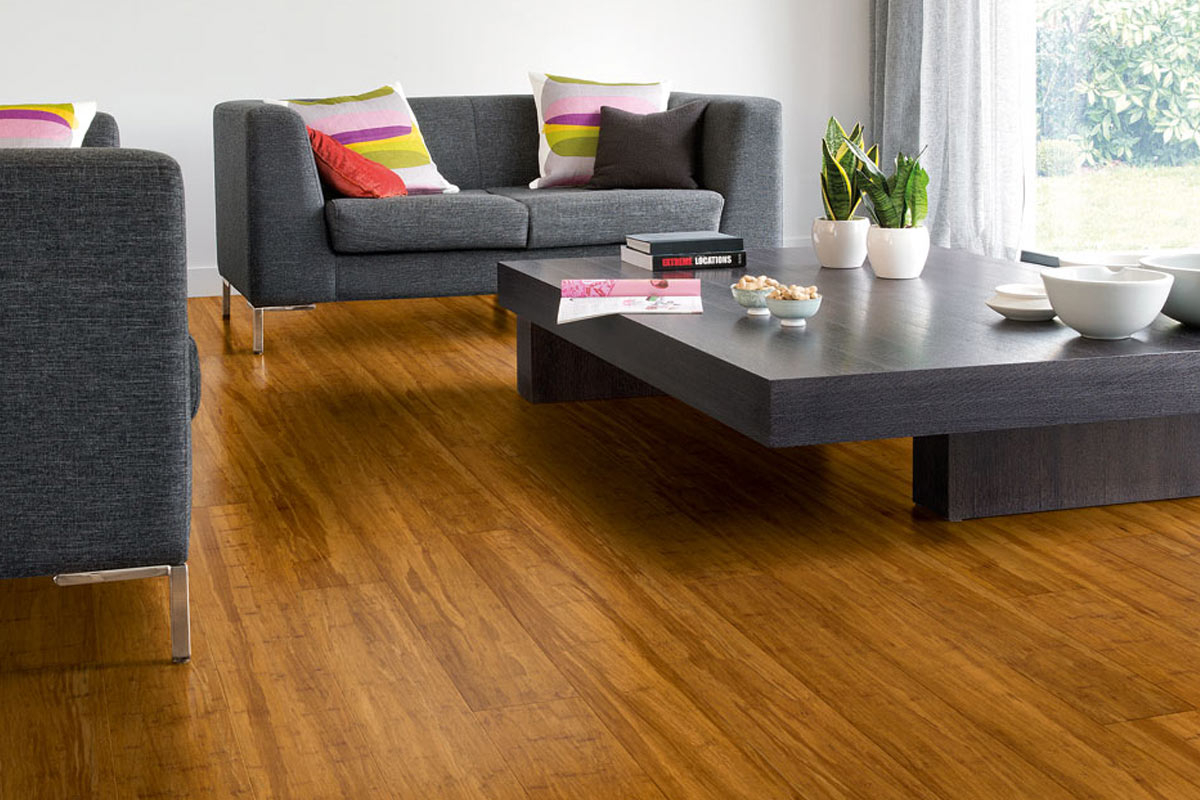
When you decide to transition your home to bamboo flooring, you are often motivated by the material’s reputation for sustainability and its impressive hardness. However, once you begin looking at samples, the choice quickly narrows down to two primary aesthetic and technical paths: Natural and Caramel. To the uninitiated, this might seem like a simple color preference—choosing between a light, sunny blonde and a rich, toasted brown.
In reality, the difference between Natural and Caramel bamboo goes deeper than the surface. The "Caramel" tone is the result of a specific manufacturing process that alters the internal structure of the bamboo fibers. This leads to subtle but important differences in hardness, stability, and how the floor ages over time. Determining which one is "better" depends entirely on your specific priorities regarding durability, design, and the level of foot traffic in your home.
The Biological Baseline: Natural Bamboo
To understand the comparison, we must first look at Natural bamboo. In its raw, harvested state, Moso bamboo—the species most commonly used for flooring—is a pale, creamy yellow. To turn this into flooring, the bamboo stalks are sliced into strips, boiled to remove starches and sugars, and then dried.
"Natural" bamboo flooring is exactly what it sounds like. The strips are left in their original blonde state. Because the material has undergone minimal processing beyond the standard drying and bonding, it retains the maximum natural strength of the bamboo plant.
From an aesthetic standpoint, Natural bamboo is prized for its ability to brighten up dark spaces. It reflects light efficiently and provides a clean, "Scandi-chic" or coastal look. If you have a room with limited natural light or a modern, minimalist design scheme, the Natural blonde tone is often the superior choice for creating an airy, open atmosphere.
The Science of Toasting: How Caramel is Made
Caramel bamboo flooring—sometimes referred to as "Carbonized" bamboo—achieves its darker hue through a process called carbonization. Unlike hardwood, which is often stained on the surface to achieve different colors, Caramel bamboo is changed from the inside out.
The raw bamboo strips are placed into a large pressure steamer and subjected to intense heat and steam. This process causes the natural sugars (fructose) within the bamboo fibers to caramelize. Much like browning sugar in a pan on your stove, the heat turns the fibers a deep, rich brown. Because this change happens at a molecular level throughout the entire strip, the color is consistent through the entire thickness of the plank.
This is a massive advantage for long-term wear. If you scratch a stained oak floor, you often see a bright white line where the raw wood is exposed. If you scratch a Caramel bamboo floor, the color underneath is the same as the color on top.
The Hardness Trade-Off
If there is a "downside" to the caramelization process, it is found in the material's hardness. The intense heat used to change the color of the bamboo also breaks down some of the structural fibers of the plant. As a result, carbonized or Caramel bamboo is technically softer than Natural bamboo.
On the Janka Hardness Scale—the industry standard for measuring a material's resistance to denting—Natural bamboo typically scores higher than its Caramel counterpart. In traditional horizontal or vertical constructions, Natural bamboo is roughly 15% to 30% harder than Caramel bamboo.
For a homeowner, this means that if you are choosing a traditional (non-strand-woven) bamboo floor, Natural is the "better" choice for high-traffic areas where heavy furniture or pets might cause indentations. However, if you move into the category of strand-woven bamboo, this hardness gap becomes almost irrelevant. Strand-woven technology compresses the fibers so densely that even the "softened" Caramel fibers become harder than almost any traditional hardwood on the market.
Aesthetic Versatility and Design Integration
Aesthetics are subjective, but the two styles serve very different design functions.
Natural Bamboo is the go-to for contemporary, bright, and high-energy spaces. It pairs beautifully with whites, light grays, and bold, "popping" colors. It hides dust and pet hair exceptionally well, making it a favorite for busy households with golden retrievers or light-colored cats. However, it can sometimes feel "cold" if the room lacks soft textures and warm lighting.
Caramel Bamboo offers a sense of traditional luxury. Its warm, honey-toned or coffee-colored hues mimic the look of expensive exotic hardwoods like Teak or Mahogany but at a fraction of the cost. It adds an immediate sense of "hygge" and coziness to a bedroom or library. While it shows dust and dark pet hair a bit more clearly than the Natural blonde, it provides a much more dramatic contrast against white skirting boards and light-colored walls.
Managing Sunlight and UV Exposure
One factor that many first-time buyers overlook is how the floor will react to the sun. All natural materials change color when exposed to UV rays, but they do so in different ways.
Natural bamboo tends to take on a more golden, amber hue as it ages and is exposed to sunlight. It "mellows" into a warmer blonde over the years. Caramel bamboo, on the other hand, can actually fade or "lighten" if it is subjected to intense, direct sunlight for many hours a day. This is because the caramelized sugars can break down under heavy UV load.
If you have a sunroom or a south-facing living room with massive floor-to-ceiling windows, Natural bamboo might be the "better" choice for color longevity. If you prefer Caramel in a sunny room, it is wise to invest in UV-filtering window films or to use area rugs and curtains to manage the exposure.
Stability and Moisture Resistance
In terms of stability—how much the floor expands or contracts with changes in humidity—both Natural and Caramel bamboo are excellent performers. Bamboo is naturally more stable than many North American hardwoods.
Some technical experts argue that the carbonization process used to create Caramel bamboo actually makes it slightly more moisture-resistant. The high-heat treatment "pre-shrinks" the fibers and removes more of the organic material that would otherwise absorb water. While neither floor is waterproof, Caramel bamboo may have a slight edge in environments with fluctuating humidity, such as kitchens or well-ventilated bathrooms.
Cost Considerations
Generally speaking, the price difference between Natural and Caramel bamboo is negligible. Because they are manufactured on the same lines using the same raw material, the only difference is the time spent in the carbonization steamer.
In most markets, you will find that the two colors are priced identically per square foot. This allows homeowners to make their decision based purely on performance needs and design preference rather than being forced into a choice by their budget.
Maintenance and Camouflage
When deciding which is better for your lifestyle, consider the "visibility of life."
-
Natural Bamboo is the king of camouflage. Because its color is similar to common household dust and many types of dirt, it looks cleaner for longer. If you have a busy lifestyle where you can’t sweep every single day, Natural is very forgiving.
-
Caramel Bamboo is more like a dark hardwood. It looks stunning when freshly cleaned, but it will show every bit of white lint, flour spills in the kitchen, or light-colored pet dander. If you choose Caramel, you should be prepared to be a bit more diligent with your microfiber mop.
Refinishing Potential
Since both Natural and Caramel bamboo are solid through the plank (if you choose the solid or strand-woven versions), they can both be sanded and refinished.
As mentioned earlier, Caramel has the advantage here because the color is consistent through the entire board. If you sand down a Caramel floor, you don't need to restain it; you just apply a fresh topcoat, and the toasted brown color is still there. With Natural bamboo, you are simply revealing more of the same blonde fiber. Both are easy to maintain in this regard compared to engineered woods with very thin veneers.
Environmental Impact
Both Natural and Caramel bamboo are among the most eco-friendly flooring options available. Bamboo reaches maturity in five to seven years and doesn't require replanting after harvest.
However, some very strict eco-purists prefer Natural bamboo because the manufacturing process uses slightly less energy. The carbonization process for Caramel requires significant steam and heat, which adds to the energy footprint of the final product. While both are significantly better for the planet than slow-growing hardwoods, Natural is the "greenest" of the two by a narrow margin.
The Verdict: Which is Better?
There is no objective "winner," but there is usually a clear winner for a specific home.
Choose Natural Bamboo if:
-
You want the hardest possible floor (especially in traditional constructions).
-
You want to brighten up a small or dark room.
-
You have a busy household and want a floor that hides dust and dander.
-
You are aiming for a modern, minimalist, or coastal aesthetic.
Choose Caramel Bamboo if:
-
You want the warm, luxurious look of exotic hardwood.
-
You are installing in a room where you want to create a cozy, intimate feel.
-
You are worried about scratches showing a different color underneath (since the color is through-and-through).
-
You prefer a linear, sophisticated grain that feels more traditional.
Ultimately, the rise of strand-woven technology has made the hardness gap between these two options almost a moot point. If you choose a high-quality strand-woven product, you can simply pick the color that makes you happy. Whether you prefer the sunny, raw energy of Natural blonde or the sophisticated, toasted warmth of Caramel, you are investing in a material that is durable, sustainable, and capable of transforming the character of your home for decades to come. Success lies in understanding these subtle technical differences so that your expectations match the long-term reality of your floor.