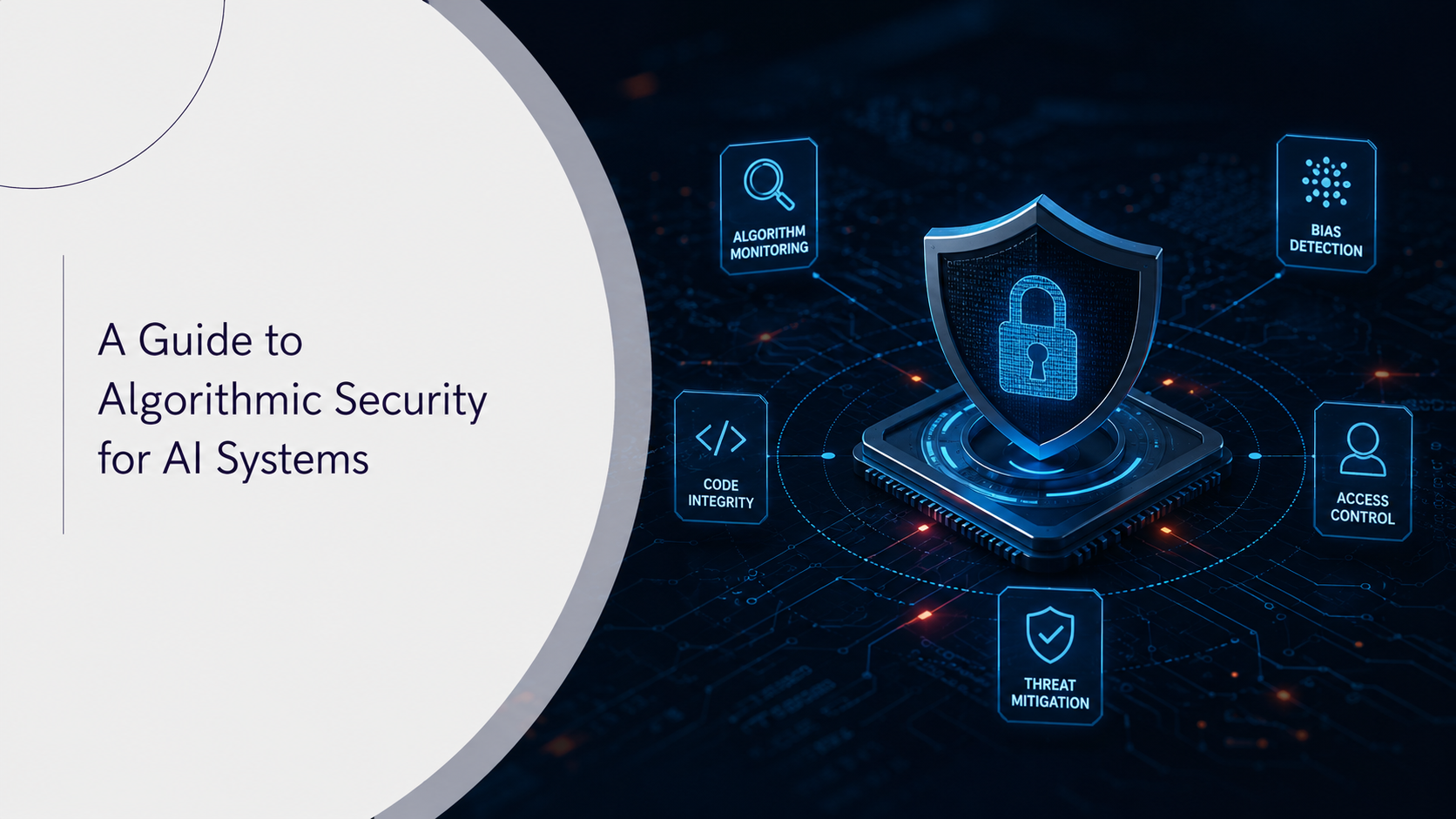
Artificial intelligence is quickly becoming the foundation of modern businesses. AI technologies are now thoroughly embedded into company workflows, spanning predictive analytics and automated decision-making to cybersecurity operations and consumer intelligence. However, as enterprises speed up their AI use, algorithmic security has emerged as one of the most pressing challenges for 2026 and beyond.
Algorithmic security refers to the protection, governance, and monitoring of AI models and algorithms against risks such as bias, manipulation, adversarial attacks, data poisoning, and unauthorized access. As AI systems gain influence over business-critical decisions, organizations must ensure these technologies remain secure, transparent, and trustworthy.
For enterprises operating in cybersecurity, finance, healthcare, and cloud environments, algorithmic security is no longer optional - it is foundational to digital resilience.
Why Algorithmic Security Matters in 2026
AI systems process massive volumes of sensitive business and customer data. Without proper safeguards, these systems can become vulnerable to exploitation or produce biased outcomes that negatively impact operations, compliance, and customer trust.
Key concerns surrounding AI risk management include:
- Algorithmic bias and discrimination
- Adversarial AI attacks
- Data manipulation and poisoning
- Lack of explainability in AI decisions
- Model theft and unauthorized access
- Regulatory and compliance risks
As governments and regulatory bodies introduce stricter AI governance frameworks, enterprises must adopt proactive security strategies to ensure ethical and secure AI deployment.
Understanding the Core Risks in AI Systems
AI algorithms are only as secure as the data and infrastructure supporting them. Organizations deploying machine learning models must understand where vulnerabilities can emerge.
1. Algorithmic Bias
Bias occurs when AI systems produce unfair or inaccurate outcomes due to imbalanced training datasets or flawed model assumptions. In sectors like hiring, finance, and healthcare, biased AI decisions can create serious ethical and legal consequences.
Organizations must continuously audit datasets and model outputs to identify and mitigate unintended bias.
2. Adversarial Attacks
Cybercriminals increasingly target AI systems through adversarial attacks, where malicious inputs are designed to manipulate model predictions. These attacks can disrupt fraud detection systems, autonomous technologies, and cybersecurity operations.
Robust testing and adversarial defense frameworks are essential to strengthen AI resilience.
3. Data Poisoning
Data poisoning occurs when attackers intentionally inject corrupted or manipulated data into AI training datasets. This can compromise model accuracy and influence future decisions.
Implementing secure data pipelines and continuous monitoring reduces exposure to these threats.
4. Lack of Explainability
Many advanced AI systems function as “black boxes,” making it difficult to understand how decisions are generated. This lack of transparency creates compliance challenges and reduces stakeholder trust.
Explainable AI (XAI) frameworks are becoming increasingly important for enterprise governance strategies.
Best Practices for Strengthening Algorithmic Security
To secure AI ecosystems effectively, organizations should adopt a multi-layered governance approach.
Implement AI Governance Policies
Clear governance frameworks help organizations define accountability, ethical standards, and compliance requirements for AI deployment.
Conduct Continuous Model Auditing
Regular testing ensures AI models remain accurate, unbiased, and resistant to manipulation.
Secure Training Data Pipelines
Encrypting datasets and validating data integrity minimizes the risk of poisoning attacks.
Integrate Explainable AI Models
Transparent AI systems improve regulatory compliance and build trust among users and stakeholders.
Align Cybersecurity and AI Teams
Collaboration between cybersecurity professionals and AI developers strengthens overall risk management strategies.
The Business Impact of Algorithmic Security
For enterprises adopting AI-driven operations, algorithmic security directly impacts:
- Brand reputation and customer trust
- Regulatory compliance readiness
- Operational resilience
- Data privacy and governance
- Long-term AI scalability
Organizations that fail to secure AI systems may face reputational damage, legal exposure, and increased cybersecurity risks.
Conversely, companies that prioritize responsible AI governance position themselves as trusted digital leaders in increasingly competitive markets.
The Future of Secure AI Systems
As AI technologies evolve, algorithmic security will become a central pillar of enterprise cybersecurity strategy. Businesses will increasingly invest in AI governance platforms, automated threat detection, model validation tools, and ethical AI frameworks to manage emerging risks.
The future of AI innovation depends not only on model performance but also on transparency, accountability, and resilience against evolving cyber threats.
Final Thoughts
Algorithmic security is rapidly becoming one of the defining challenges of the AI era. As enterprises integrate AI into mission-critical operations, managing bias, securing datasets, defending against adversarial attacks, and ensuring explainability will be essential for sustainable innovation.
Organizations that proactively strengthen AI governance today will be better prepared to build trustworthy, compliant, and resilient AI ecosystems tomorrow.