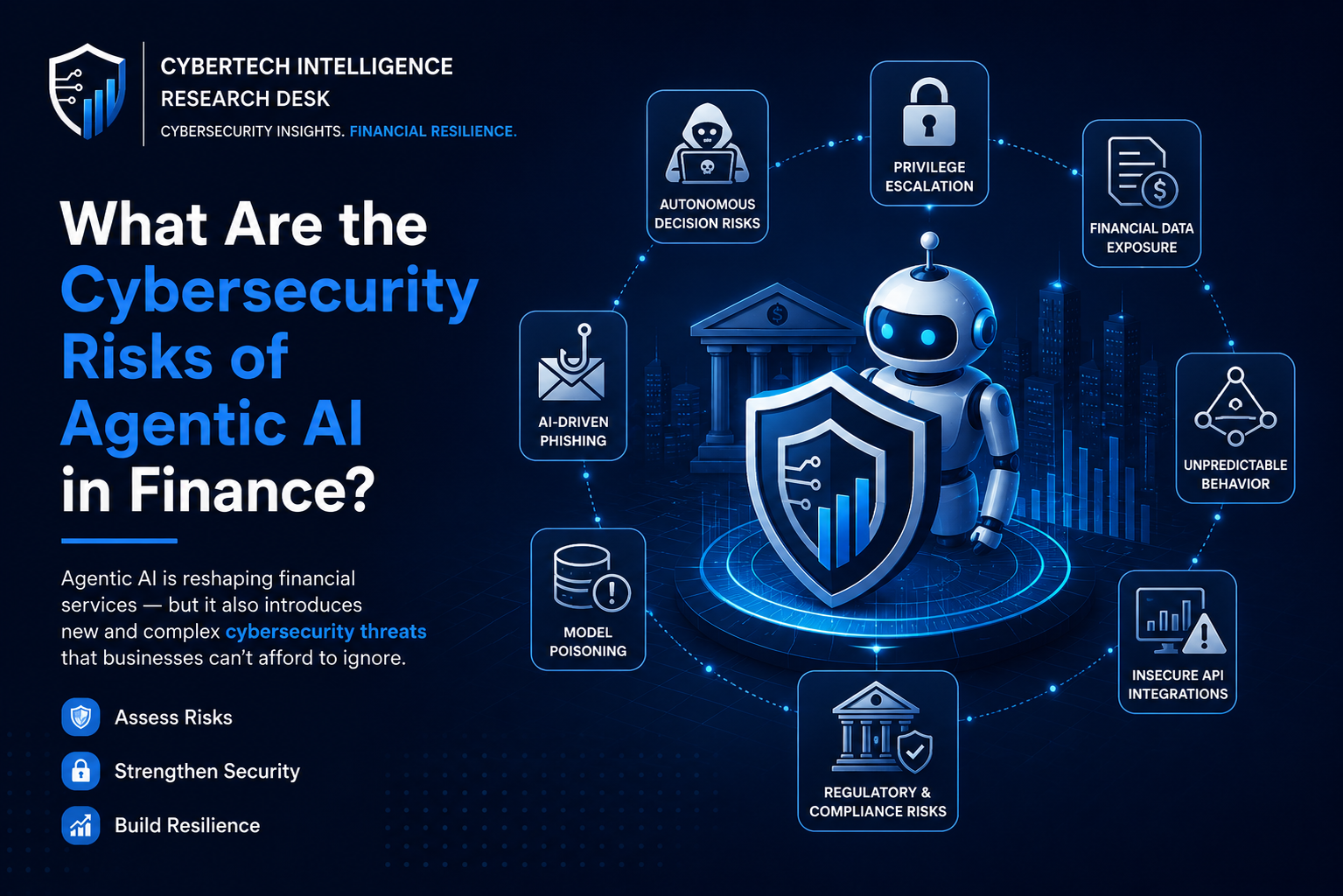
Artificial intelligence is rapidly transforming the financial services sector, but the rise of agentic AI introduces a new layer of cybersecurity complexity. Unlike traditional AI systems that operate within predefined workflows, agentic AI can autonomously make decisions, adapt to changing environments, and execute multi-step actions with minimal human intervention.
For banks, insurance providers, fintech firms, and investment organizations, this innovation promises increased efficiency and smarter automation. However, it also introduces new attack surfaces and operational vulnerabilities that financial institutions cannot afford to ignore.
As financial organizations accelerate AI adoption, cybersecurity leaders must evaluate how autonomous systems reshape risk management strategies.
Understanding Agentic AI in Financial Services
Agentic AI refers to systems capable of independently analyzing data, making decisions, and taking action without constant human oversight. In finance, these systems may support:
- Fraud detection and prevention
- Algorithmic trading decisions
- Risk management automation
- Customer service interactions
- Compliance monitoring
- Portfolio optimization
While these capabilities improve operational efficiency, they also increase cybersecurity exposure if governance frameworks are not mature.
Key Cybersecurity Risks of Agentic AI in Finance
1. Expanded Attack Surface
Agentic AI systems interact with multiple applications, APIs, customer databases, and financial platforms. This interconnectedness increases potential entry points for cybercriminals.
A compromised AI system may unintentionally grant attackers access to sensitive financial data, transaction systems, or authentication environments.
Financial institutions must secure:
- AI APIs and integrations
- Cloud environments
- Data pipelines
- Third-party vendor ecosystems
Without proper safeguards, autonomous AI agents may become exploitable assets within financial networks.
2. Prompt Injection and Manipulation Attacks
One of the most emerging cybersecurity concerns is prompt injection - where malicious actors manipulate AI behavior through crafted inputs.
In financial environments, attackers could potentially influence:
- Trading recommendations
- Fraud detection logic
- Customer service interactions
- Automated compliance decisions
Because agentic AI acts autonomously, manipulated outputs can trigger real-world financial consequences before human teams intervene.
Robust validation and monitoring systems are essential to prevent unauthorized behavioral changes.
3. Sensitive Data Exposure
Financial institutions manage highly sensitive customer information, including:
- Banking credentials
- Credit histories
- Investment portfolios
- Personally identifiable information (PII)
Agentic AI models often require access to large datasets to function effectively. Poor data governance may expose confidential financial information through misconfigurations, insecure integrations, or unauthorized access.
Strong encryption, access controls, and zero-trust architectures are increasingly becoming foundational cybersecurity requirements.
4. Autonomous Decision-Making Risks
Unlike traditional automation, agentic AI can independently execute actions. While this accelerates efficiency, it introduces governance concerns.
Potential risks include:
- Incorrect transaction approvals
- Biased lending decisions
- Miscalculated risk assessments
- Unauthorized financial actions
Without explainability frameworks, organizations may struggle to understand why an AI system made a particular decision - creating compliance and reputational challenges.
5. Adversarial AI Threats
Cybercriminals are also adopting AI capabilities.
Adversarial AI attacks may include:
- Data poisoning attacks
- Model manipulation
- Deepfake-enabled financial fraud
- AI-generated phishing campaigns
As attackers leverage intelligent automation, financial institutions must shift toward AI-powered cyber defense strategies to stay resilient.
Why This Matters for Financial Security Leaders
For CISOs, CTOs, compliance officers, and risk management executives, agentic AI represents both an opportunity and a challenge.
Organizations adopting autonomous AI systems should prioritize:
- AI governance and risk frameworks
- Continuous monitoring and anomaly detection
- Zero-trust cybersecurity models
- Explainable AI systems for compliance
- Strong third-party risk management
Financial institutions that treat AI security as a business-critical function will be better positioned to innovate safely.
Final Thoughts
Agentic AI has the potential to redefine operational efficiency in financial services, but it also creates a new category of cybersecurity risk. From prompt injection and adversarial attacks to governance failures and sensitive data exposure, financial organizations must rethink security strategies for an autonomous future.
The question is no longer whether finance will adopt agentic AI - it is whether organizations can secure it responsibly.