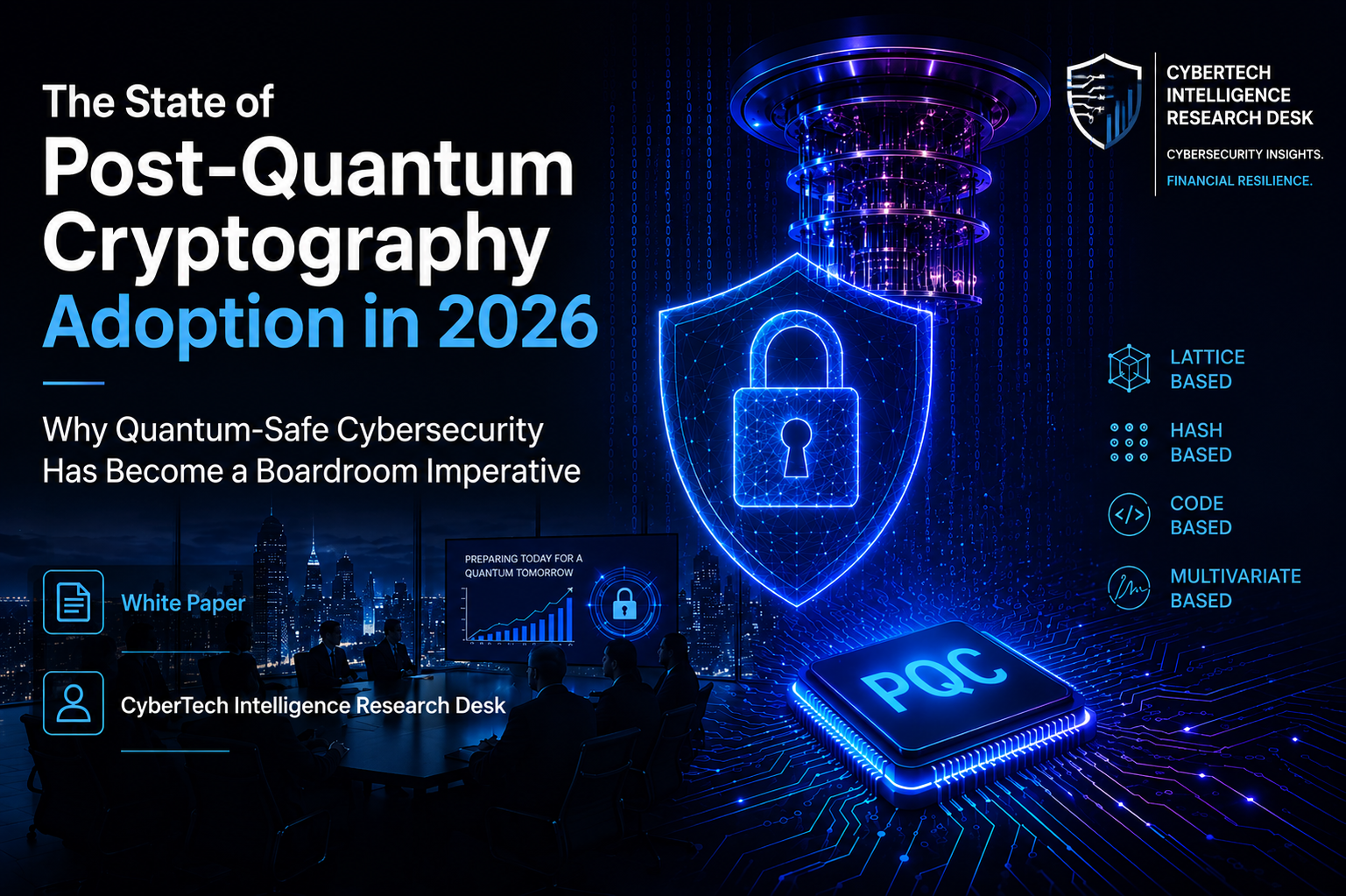
As quantum computing capabilities continue to advance, organizations worldwide are facing an urgent cybersecurity challenge: preparing for a post-quantum future. Traditional encryption methods that have protected sensitive communications for decades may soon become vulnerable to quantum-powered attacks. In response, enterprises, governments, and cybersecurity leaders are accelerating the adoption of Post-Quantum Cryptography (PQC) to future-proof digital security infrastructures.
In 2026, post-quantum cryptography is no longer a theoretical discussion - it is a strategic cybersecurity priority. For CISOs, IT decision-makers, and enterprise security teams, understanding the current state of PQC adoption is critical to ensuring long-term resilience against evolving threats.
What Is Post-Quantum Cryptography?
Post-Quantum Cryptography refers to cryptographic algorithms specifically designed to withstand attacks from both classical and quantum computers. Unlike traditional encryption methods such as RSA and ECC (Elliptic Curve Cryptography), PQC algorithms are built to resist the computational power expected from future quantum systems.
The urgency around PQC stems from the concept of “harvest now, decrypt later” attacks. Cybercriminals and nation-state actors may already be collecting encrypted sensitive data today with the intention of decrypting it once quantum technology matures.
This growing risk has pushed enterprises to reevaluate long-term cryptographic strategies.
Why Post-Quantum Cryptography Adoption Is Accelerating in 2026
Several factors are driving increased PQC adoption across industries.
1. Regulatory and Government Pressure
Governments and cybersecurity agencies are actively encouraging organizations to transition toward quantum-resistant encryption frameworks. National security concerns and critical infrastructure protection have placed PQC migration high on enterprise risk agendas.
Industries such as:
- Financial services
- Healthcare
- Defense and aerospace
- Telecommunications
- Cloud and SaaS providers
They are among the earliest adopters due to the sensitive nature of their data environments.
2. Rising Enterprise Awareness of Quantum Risk
Many organizations have shifted from asking “if” quantum disruption will happen to “when.” Security leaders increasingly recognize that cryptographic migration requires years of planning, testing, and deployment.
Large enterprises are conducting:
- Cryptographic asset discovery
- Encryption inventory assessments
- Quantum risk evaluations
- Hybrid cryptographic testing environments
These steps help identify vulnerabilities before large-scale implementation.
3. Hybrid Security Models Are Emerging
Rather than replacing traditional encryption overnight, many organizations are adopting hybrid cryptographic frameworks that combine conventional encryption with quantum-resistant algorithms.
This phased approach allows organizations to:
- Maintain interoperability with legacy systems.
- Reduce operational disruption
- Test algorithm performance in real environments
- Strengthen long-term cyber resilience.
Hybrid deployments are becoming a practical bridge between current cybersecurity infrastructure and quantum-ready systems.
Industries Leading Post-Quantum Readiness
Financial Services
Banks and financial institutions are prioritizing quantum-safe encryption to secure high-value transactions and protect long-term financial data.
Healthcare and Life Sciences
Healthcare organizations face heightened pressure to protect patient records, research data, and connected medical ecosystems from future decryption risks.
Cloud and Enterprise Technology
Cloud providers and enterprise software vendors are integrating PQC readiness into zero-trust frameworks, identity management, and secure communications.
Government and Critical Infrastructure
Public-sector agencies continue to lead migration efforts due to national security implications and the need to safeguard classified information.
Challenges Slowing PQC Adoption
Despite growing momentum, organizations still face significant barriers:
- Limited internal expertise on quantum-safe cryptography
- Compatibility concerns with legacy infrastructure
- Performance trade-offs in certain algorithms
- Complex migration planning requirements
- Uncertainty around long-term standardization
For many enterprises, the challenge is balancing immediate cybersecurity priorities with long-term quantum preparedness.
What CISOs and Security Leaders Should Prioritize in 2026
Organizations preparing for quantum resilience should focus on:
- Conducting a cryptographic inventory assessment
- Identifying systems vulnerable to quantum attacks
- Building crypto-agility into security architecture
- Testing hybrid PQC implementation models
- Aligning with emerging cybersecurity standards
Taking proactive steps today reduces future operational disruption and security exposure.
Final Thoughts
The state of post-quantum cryptography adoption in 2026 reflects a cybersecurity industry moving from awareness to action. While widespread migration is still underway, organizations across regulated sectors are beginning to integrate quantum-safe strategies into long-term security planning.
The shift toward PQC is not simply a technical upgrade - it represents a foundational transformation in enterprise cybersecurity. Businesses that invest early in crypto-agility, risk assessment, and quantum readiness will be better positioned to secure sensitive data in the next era of digital threats.
As quantum innovation accelerates, one reality becomes increasingly clear: preparing for post-quantum security today is essential for protecting tomorrow’s digital ecosystem.