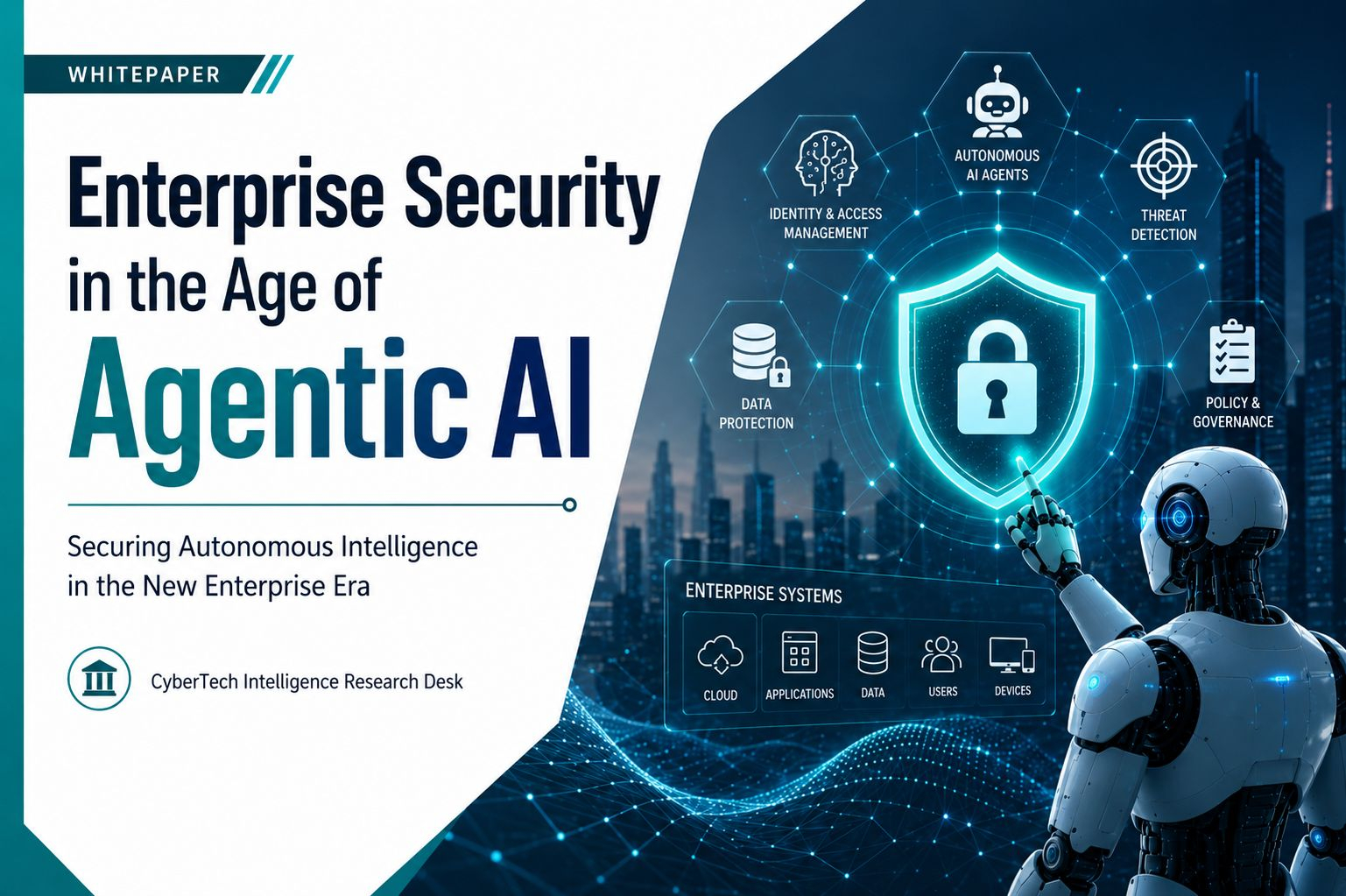
Artificial intelligence is evolving rapidly, and enterprises are entering a new era defined by Agentic AI - systems capable of autonomous decision-making, task execution, and adaptive reasoning with minimal human intervention. While these advancements promise operational efficiency, productivity gains, and intelligent automation, they also introduce a new category of cybersecurity risks.
As organizations increasingly integrate autonomous AI agents into workflows, enterprise security strategies must evolve just as quickly. Traditional cybersecurity frameworks built for static systems are no longer enough to defend against dynamic, self-learning, and highly adaptive AI-driven environments.
For CISOs, CIOs, security architects, and enterprise technology leaders, understanding how to secure Agentic AI systems has become a strategic priority rather than a future concern.
What Is Agentic AI and Why Does It Matter?
Agentic AI refers to intelligent systems capable of independently planning, reasoning, and executing tasks based on contextual objectives. Unlike traditional automation, which follows predefined instructions, agentic systems can:
- Make autonomous decisions
- Learn from evolving environments.
- Coordinate across systems and tools.
- Adapt actions based on outcomes.
- Operate with limited human oversight.
In enterprise settings, these capabilities are transforming areas such as:
- Threat detection and response
- IT workflow automation
- Customer service operations
- Data analytics and intelligence gathering
- Software development and DevSecOps
However, the more autonomy AI gains, the greater the security implications become.
Why Enterprise Security Must Evolve for Agentic AI
Legacy security models assume predictable user behavior and controlled workflows. Agentic AI disrupts this assumption by introducing systems capable of independent action.
Organizations now face emerging risks such as:
1. Autonomous Decision Risks
AI agents making unsupervised decisions could accidentally expose sensitive data, misconfigure systems, or trigger unintended operational outcomes.
Without governance frameworks, organizations risk creating “black box” decision environments where accountability becomes difficult.
2. Expanded Attack Surfaces
Every AI model, API connection, plugin, or integrated system creates additional entry points for attackers.
Cybercriminals are increasingly targeting:
- AI training datasets
- Model vulnerabilities
- API manipulation
- Prompt injection attacks
- Identity privilege escalation
As AI ecosystems grow, securing interconnected systems becomes exponentially more complex.
3. Data Privacy and Compliance Challenges
Agentic AI systems often process massive volumes of enterprise data, including confidential business intelligence, customer information, and regulated records.
Security leaders must ensure compliance with:
- GDPR requirements
- HIPAA standards
- Industry-specific cybersecurity frameworks
- Enterprise governance policies
Data visibility and access control become even more critical when autonomous agents operate at scale.
Core Security Strategies for the Age of Agentic AI
To build resilient enterprise environments, organizations should adopt security-first AI and governance models.
Implement Zero Trust Architecture
Zero Trust principles ensure that no user, device, or AI agent receives automatic trust.
Key practices include:
- Continuous identity verification
- Least-privilege access control
- Micro-segmentation of systems
- Real-time monitoring and validation
This reduces lateral movement risks if AI systems are compromised.
Strengthen AI Governance Frameworks
Enterprises must define:
- Clear AI accountability policies
- Human oversight protocols
- Explainability requirements
- Risk escalation processes
Security teams should establish governance boards to oversee AI deployment and operational safety.
Secure AI Models and Infrastructure
Protecting AI requires securing the entire lifecycle:
- Model training environments
- Data pipelines
- APIs and integrations
- Runtime monitoring systems
Continuous testing for vulnerabilities and adversarial attacks is essential.
Prioritize Security Automation
Ironically, AI itself is becoming a powerful cybersecurity ally. Security teams are increasingly leveraging AI-driven systems for:
- Threat detection
- Behavioral anomaly identification
- Incident response automation
- Risk prioritization
This creates a more adaptive and resilient defense posture.
Why This Matters for Enterprise Leaders
Agentic AI represents both opportunity and risk. Organizations that deploy autonomous intelligence without strong governance frameworks may expose themselves to operational disruption, compliance failures, and sophisticated cyber threats.
For enterprise leaders, the goal is not to slow innovation - it is to secure innovation.
Businesses that align cybersecurity, governance, and AI strategy will gain competitive advantages through safer automation, stronger trust, and long-term operational resilience.
Final Thoughts
Enterprise security in the age of Agentic AI demands a mindset shift. Traditional perimeter defenses alone cannot protect autonomous systems capable of independent reasoning and execution.
As organizations adopt increasingly intelligent technologies, cybersecurity strategies must become equally adaptive, proactive, and AI-aware.
The future of enterprise security will not simply depend on defending systems - it will depend on securing intelligent decision-making itself.