You want your baby to sleep safe and well each night. Many parents worry about their baby getting too hot or having loose blankets. But you can feel better. Studies show that using a baby sleep bag instead of blankets helps lower the risk of Sudden Infant Death Syndrome. Here is what researchers found:
-
Most families followed safe baby sleep tips. They shared a room and used a baby sleeping bag.
-
Overheating happens less when you choose the right sleep sack.
-
Babies sleep better when there are no loose blankets.
Key Takeaways
-
Pick a baby sleep bag instead of blankets. This helps lower the chance of SIDS. It also keeps your baby safe. - Get a sleep sack that fits your baby well. It should be snug around the shoulders and chest. This stops your baby from getting too hot. It also makes sure your baby is comfy. - Choose sleep sacks made from fabrics that let air through. Organic cotton or bamboo are good choices. These keep your baby cool and dry all night. - Look at the TOG rating on the sleep sack. Match it to your room’s temperature. This stops your baby from getting too hot or cold. - Always use safe sleep rules. Do not use loose fabrics. Make sure the sleep sack closes tightly.
Why Use a Baby Sleep Bag
Safety Benefits Over Blankets
You want your baby to be safe every night. Many parents worry about loose blankets in the crib. This is a real concern. The American Academy of Pediatrics (AAP) says babies under 12 months should use a sleep sack. Blankets can cover your baby's face. This can make SIDS or suffocation more likely. A baby sleep bag stays in place. You do not have to worry about your baby getting tangled or rolling over.
Here’s a quick look at how a traditional blanket compares to a baby sleeping sack:
| Criteria | Traditional Blanket | Sleep Sack (Wearable Blanket) |
|---|---|---|
| Suffocation Risk | High | None |
| Strangulation Risk | High | None |
| Temperature Control | Poor; overheating is likely | Precise with TOG |
| Stability During Sleep | Often kicked off | Always stays secure |
| Recommended by AAP | Not recommended | Strongly recommended |
| Ease of Use | Complex to tuck | Simple to wear, zip fasteners |
A sleep sack keeps your baby safe all night. It does not move around or bunch up. Nothing will cover your baby's face. You also avoid strangulation and entanglement risks. Picking a sleep sack helps protect your baby from SIDS. You can feel calm and worry less.
How Sleep Bags Improve Sleep
A baby sleep sack does more than keep your baby safe. It also helps your baby sleep better. The right sleeping bag keeps your baby at a steady temperature. This means your baby will not get too hot or too cold. Breathable fabrics and the TOG rating help you pick the right one for your room.
When you use a baby sleep sack, your baby can sleep longer. Your baby wakes up less during the night. The snug fit helps stop the startle reflex. Your baby feels safe, almost like being in the womb. This comfort helps your baby sleep better. You also get more rest. If you want to help your baby sleep, pick a sleep sack that fits well and matches the season. You will see your baby happier and more energetic during the day.
How to Choose the Right Size and Fit
Choosing the right size for your baby sleep bag is one of the most important steps for safe and cozy nights. You want your baby to feel snug but not restricted. Let’s break down how to measure, what to look for, and why the right fit matters.
Measuring for the Perfect Fit
You might wonder how to pick the right baby sleeping sack for your little one. The answer starts with knowing your baby’s age, weight, and height. Most brands offer a size chart to help you choose the right size. Here’s a quick sleep bag size guide you can use:
| Size | Bag | Bag Length |
|---|---|---|
| NB-3M | swaddle | 26" |
| 3-9M | sleep bag | 29" |
| 9-18M | sleep bag | 32" |
| 18-24M | sleep bag | 35" |
| 24-36M | sleep bag | 38" |
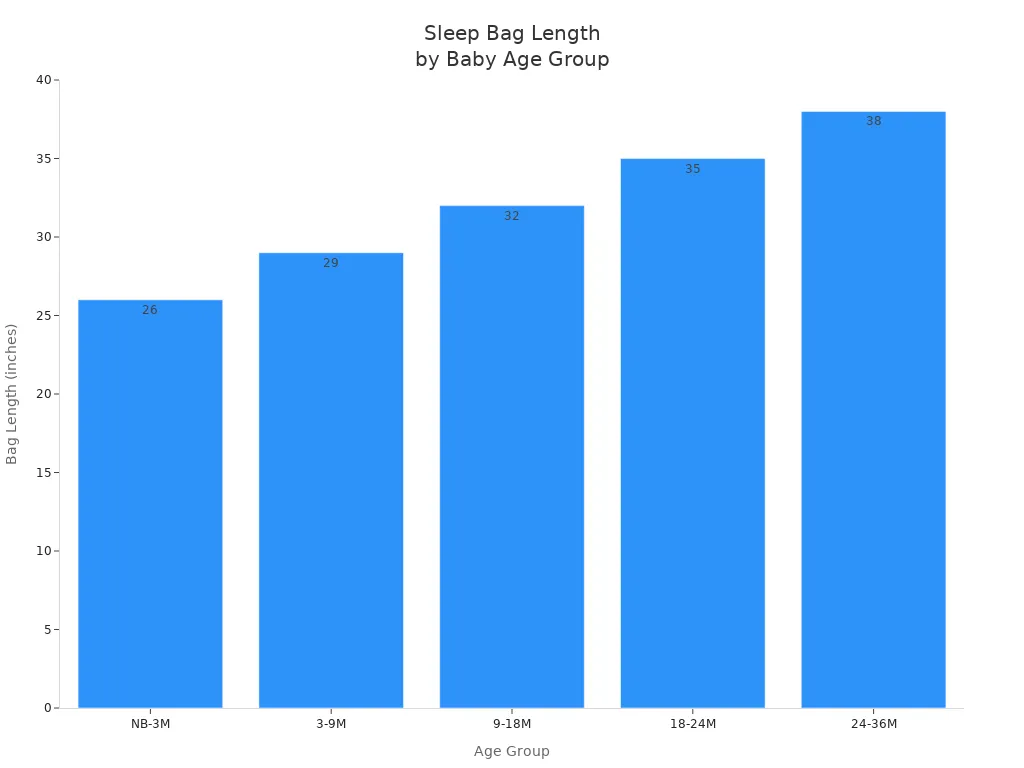
Always check the size chart before you buy. Measure your baby from shoulder to toe and compare it to the bag length. If your baby is between sizes, go with the smaller one for a safer fit. The right sizing keeps your baby comfortable and helps prevent overheating.
A proper fit means the sleep sack fits snugly around the shoulders and torso but leaves room for your baby’s hips and legs to move. This balance is key for healthy hip development and safe sleep.
Tip: Look for a sleep sack with adjustable features like stretchable armholes or snap crotches. These make diaper changes easier and help the sleep sack fit as your baby grows.
Avoiding Oversized Sleep Sacks
It might seem smart to buy a bigger baby sleeping bag so your baby can grow into it. But oversized sleep sacks can be risky. Here’s why you want to avoid them:
-
A loose sleep sack can slip over your baby’s face, which is unsafe.
-
Extra fabric can bunch up and make it hard for your baby to move or roll over.
-
Babies can trip if they try to stand or walk in a bag that’s too long.
A snug sleep sack fit around the torso and shoulders keeps your baby secure. Here’s what you get with the ideal sleep sack:
-
The sleep sack stays in place and won’t slip off.
-
Your baby can move their legs and hips freely.
-
There’s no extra fabric to cause trouble during baby sleep.
When you choose the right size, you help your baby sleep safely and soundly. The right sizing also helps prevent overheating, which is a top concern for parents.
Here are some adjustable features to look for in a baby sleep bag:
| Feature | Benefit |
|---|---|
| Zippered closures | Make nighttime diaper changes quick and easy. |
| Reverse zipper | Lets you access diapers without taking off the bag. |
| Adjustable fits | Grow with your baby for longer use. |
| Breathable materials | Help keep your baby cool and prevent overheating. |
Note: Always use the size chart and check for adjustable features. These small details make a big difference in comfort and safety.
If you follow the sleep bag size guide and focus on proper fit, you’ll feel confident every night. Your baby will stay safe, cozy, and happy in their sleep sack.
Materials and TOG Ratings for Baby Sleeping Bags
Choosing Breathable Fabrics
Picking the right fabric for a baby sleep bag is important. You want your baby to feel cozy and not get too hot. Choose breathable materials that help keep your baby’s temperature steady. Natural fabrics like organic cotton and bamboo are great choices. They are soft, let air move, and soak up moisture. This keeps your baby dry all night. Wool is also a good option for cold months. It keeps your baby warm and pulls moisture away, so your baby does not get sweaty.
Here’s a simple look at popular fabrics for sleep sacks:
| Fabric Type | Best For | Key Benefits | Care Instructions |
|---|---|---|---|
| Organic Cotton | Everyday, all seasons | Breathable, durable, soft, hypoallergenic | Machine wash warm, tumble dry low |
| Organic Bamboo | Sensitive skin, sleepwear | Silky-smooth, thermoregulating, moisture-wicking | Wash cold, gentle cycle, line dry |
| Organic Wool | Cold weather | Insulating, breathable, moisture-absorbent, odor-resistant | Hand wash or wool cycle, air dry |
| Polyester | Easy care, durability | Quick-drying, lightweight, less expensive | Machine wash, tumble dry |
Tip: Always check the care label before you wash your baby sleep bag. Wool needs special care, but it fights germs and does not need washing often.
Safety Tips for Sleep Sacks
When you pick a baby sleep bag, you want to make sure your little one stays safe and comfortable all night. Following safe sleep guidelines helps lower the risk of accidents and keeps your baby cozy in the crib. Here’s what you should look for and what you should avoid.
Safe Features to Look For
You want a sleep sack that puts safety first. The best baby sleeping bag designs include smart features that protect your baby and make your life easier:
-
Two-way zippers let you change diapers without taking off the whole sleep sack. Your baby stays warm and less likely to wake up.
-
Zipper covers, sometimes called zipper garages, keep the zipper pull from scratching your baby’s chin or neck.
-
Reinforced seams around the neck, armholes, and sides add strength. This means the sleep sack holds up to lots of movement and washing.
-
Secure fastenings, like snap crotches, help the sleep sack stay in place and make diaper changes simple.
Tip: Always check for product certifications like GOTS or CPSC. These show the sleep sack meets strict safety standards.
What to Avoid for Safe Sleep
Not every sleep sack is safe. Some features can put your baby at risk. Here’s what you should skip:
-
Loose threads or unfinished seams can wrap around tiny fingers or toes.
-
Oversized sleep sacks or loose fabric can slip over your baby’s face. This raises the risk of suffocation and overheating.
-
Unsafe fastenings, like weak snaps or zippers, can break and become a choking hazard.
-
Never add extra blankets, pillows, or stuffed toys to the crib. These items go against safe sleep guidelines and can cause overheating or block your baby’s breathing.
You should check for product recalls and safety alerts often, especially if you use a second-hand sleep sack. Wash your sleep sack with a gentle detergent for sensitive skin. Use a mesh laundry bag for delicate fabrics and air dry when you can. This keeps the sleep sack soft and safe for your baby sleep routine.
By following these tips, you help your baby sleep safely and lower the risk of overheating. You can rest easy knowing you’re following safe sleep guidelines every night.
What to Wear Under a Baby Sleep Bag
Layering for Comfort and Safety
You might wonder what your baby should wear under a sleep sack. The answer depends on the room temperature and the TOG rating of your baby sleep bag. The TOG rating tells you how warm the sleep sack will keep your baby. Always match the TOG to the temperature in your nursery, not outside. For most homes, the ideal room temperature for baby sleep is between 68 and 72 degrees Fahrenheit.
Here’s a simple guide to help you choose the right layers:
| Room Temperature (°C / °F) | Recommended TOG Rating | Suggested Clothing |
|---|---|---|
| Over 26°C (78°F) | No sleep sack | Just a diaper |
| 24-25°C (75-77°F) | 0.5 TOG | Short-sleeved bodysuit |
| 21-23°C (70-74°F) | 1.0 TOG | Short-sleeved bodysuit |
| 18-20°C (64-69°F) | 1.0 TOG | Long-sleeved bodysuit |
| 16-17°C (61-63°F) | 2.5 TOG | Long-sleeved bodysuit + sleepsuit (no-feet PJs) |
| Under 16°C (61°F) | 2.5 TOG | Long-sleeved bodysuit + sleepsuit + socks |
Choose natural fabrics like cotton or linen for your baby’s layers. These materials help prevent overheating and keep your baby comfortable. Skip hats during sleep, as they can cause overheating and are not safe.
Adjusting for Room Temperature
You should always check your baby for signs of overheating or chills. Feel the back of your baby’s neck or tummy. If it feels sweaty or clammy, your baby is too warm. If it feels cool, add a light layer. Watch for signs like flushed cheeks, damp hair, or restlessness. These can mean your baby is overheating. If your baby seems fussy or their chest feels cold, they might need another layer.
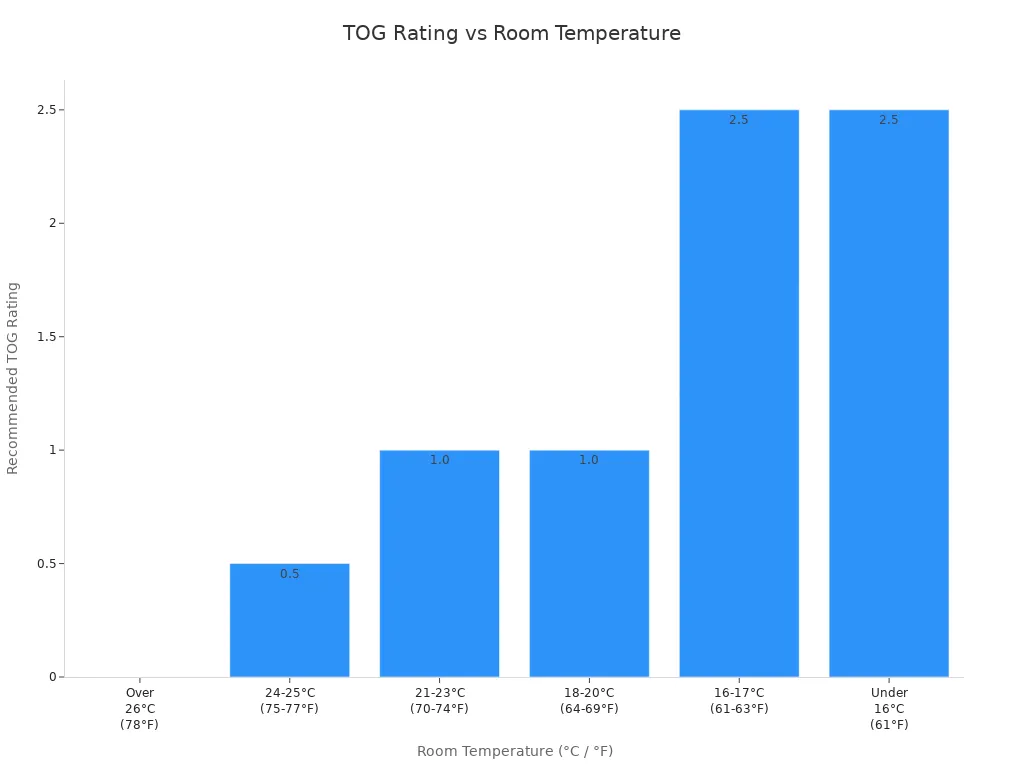
In hot weather, you may only need a diaper or a light onesie under the sleep sack. In colder rooms, add a long-sleeved bodysuit or a sleepsuit. The baby sleeping bag should fit well and help prevent overheating. Adjust layers as the seasons change to keep your baby safe and cozy. Remember, the ideal room temperature and the right layers will help your baby sleep soundly every night.
Choosing the right sleep sack for your baby can feel simple when you know what to look for. Here are the key steps:
-
Pick a sleep sack that fits snugly around the neck and arms.
-
Use a firm, flat sleep surface and keep the crib clear.
-
Select the right TOG rating to prevent overheating or chills.
-
Choose natural fabrics for comfort and skin health.
You can help your baby sleep safely and soundly every night. Always check the product details and think about your baby’s needs. If you have questions about your baby sleeping bag or baby sleep, check the FAQ for quick answers.
FAQ
How do I know if my baby is too hot or too cold in a sleep bag?
Feel your baby’s neck or back. If it feels sweaty, your baby is too warm. If it feels cool, add a light layer. Watch for flushed cheeks or shivering.
Can I use a sleep bag for naps during the day?
Yes! You can use a sleep bag for naps and nighttime sleep. It helps your baby feel safe and keeps their sleep routine consistent.
How often should I wash my baby’s sleep bag?
Wash the sleep bag every few days or if it gets dirty. Use a gentle detergent. Check the care label for special instructions.
What size sleep bag should I choose if my baby is between sizes?
Go with the smaller size for a snug fit. A sleep bag that is too big can be unsafe. Always check the brand’s size chart.
Can my baby wear socks inside a sleep bag?
Yes, you can use socks if the room is cool. Make sure your baby does not overheat. Check their feet to see if they feel warm and comfortable.
https://www.liangliangbaby.com/how-to-choose-the-right-baby-sleep-bag-for-your-child.html