
With the expansion of market demand and the development of machine vision technology , shortwave infrared industrial cameras are increasingly being used in various fields, including industry, healthcare, and food. Semiconductor inspection and food inspection are two major application markets, each holding a significant market share. Today, we will take a look at shortwave infrared cameras.
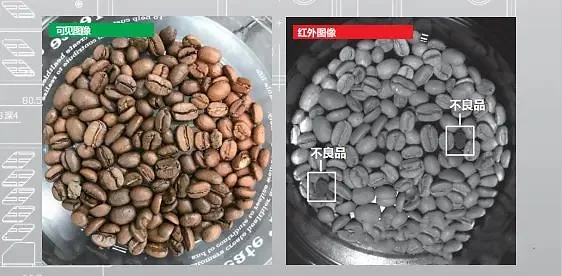
Short-wave infrared (SWIR), typically referring to light with a wavelength of 0.9 to 1.7 μm, is a type of light with a longer wavelength than visible light. This light cannot be seen with the naked eye or detected by a standard camera. However, due to the material properties of the object being inspected, some features that are invisible under visible light can be revealed under near-infrared light. Therefore, short-wave infrared cameras can be used to detect object features .
It typically uses InGaAs sensors to sense light in this band and is the most commonly used technology in machine vision applications including inspection, classification, and quality control.
SWIR imaging can image through glass, making them useful in a wide variety of applications and industries. This capability also allows SWIR cameras to be mounted within a protective window, which provides great flexibility when mounting the camera system on a potential platform.
Characteristics of shortwave infrared imaging
-
Higher recognition
Short-wave infrared imaging is mainly based on the principle of imaging by target reflected light. Its imaging features are similar to those of visible light grayscale images, with high imaging contrast and clear target details. In terms of target recognition, short-wave infrared imaging is a supplement to thermal imaging technology.
-
All-weather adaptability
Short-wave infrared imaging is less affected by atmospheric scattering, has a strong ability to penetrate fog and smoke, has a long effective detection distance, and is more adaptable to climatic conditions and battlefield environments than visible light imaging.
-
Low-light-level night vision
Under night vision conditions, photon irradiance is mainly distributed in the short-wave infrared band of 1.0 to 1.8 μm, which makes short-wave infrared night vision imaging have advantages over visible light night vision imaging.
-
Simple optical configuration
Optically, glass windows have high transmittance in the short-wave infrared band, which gives short-wave infrared imaging an important technical advantage. This allows short-wave infrared cameras to be assembled within a protective window to achieve highly sensitive imaging, which provides great flexibility when applied to a specific platform or occasion.
Main Applications
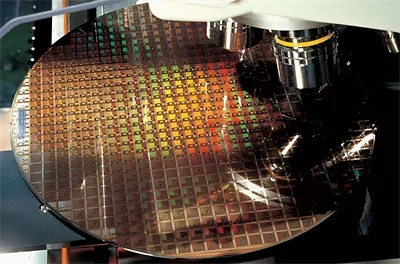
Semiconductor wafer inspection: Various defects can occur during the wafer production process. For example, residual stress accumulated during various steps can cause cracks within the wafer. Failure to detect these defects before subsequent IC manufacturing stages can affect the yield of the final IC chip, driving up manufacturing costs. By leveraging the ability of shortwave infrared light to penetrate silicon wafers, shortwave infrared cameras can detect defects within the wafer, preventing defective wafers from entering subsequent stages and significantly reducing manufacturing costs.
Object sorting: Shortwave infrared (SWIR) waves correspond to the sum and harmonic frequencies of molecular bond vibrations. By measuring an object's absorption of different wavelengths of SWIR light, information such as its type and defects can be analyzed. Therefore, SWIR cameras are also widely used for sorting grain, tea, plastics, and other products.
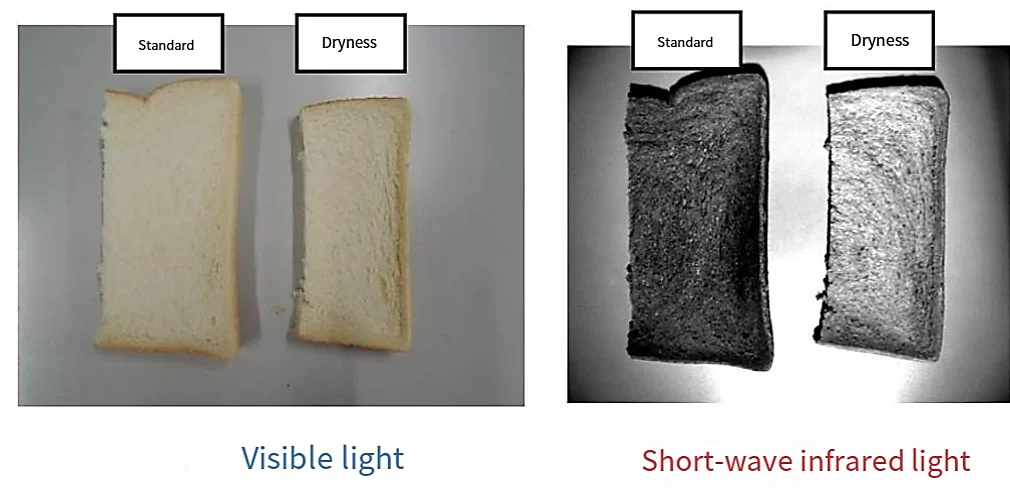
Detecting food defects: Using SWIR cameras to measure moisture content in food can help detect food defects. As shown in the image below, using 1450nm imaging, moist bread appears darker, while dry bread appears lighter. This method can predict the moisture content of certain foods and determine whether they are defective products.
https://www.y-crystaled.net/short-wave-infrared-cameras-assist-industrial-inspection.html