In today’s industrial imaging landscape, camera performance is no longer judged by resolution alone. Modern applications such as machine vision, robotics, AI systems, and intelligent surveillance demand a combination of high-speed processing, imaging precision, low distortion optics, and real-time responsiveness.
This is where the 12MP USB 3.0 camera module stands out as a next-generation imaging solution.
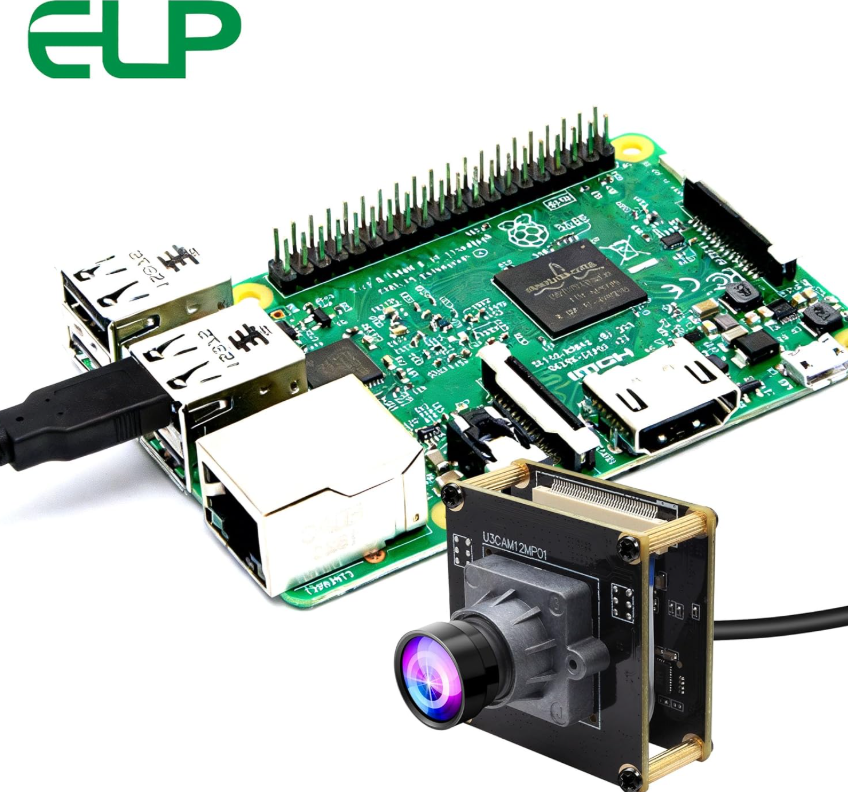
Designed for industrial and advanced technical environments, the ELP 12MP Ultra HD USB 3.0 camera module combines ultra-high-definition imaging, fast frame rate capability, and plug-and-play integration into a compact platform suitable for a wide range of professional applications.
What Is a 12MP USB 3.0 Camera Module?
A 12MP USB 3.0 camera module is a high-performance imaging device designed to capture ultra-HD images and video through a high-speed USB interface.
These camera modules are widely used in:
- Machine vision systems
- Industrial automation
- Robotics and AI development
- Smart surveillance
- Scientific imaging
- Embedded vision platforms
Compared with traditional imaging devices, USB 3.0 camera modules offer significantly faster data transmission, making them ideal for real-time image processing applications.
IMX577 CMOS Sensor: The Core Imaging Technology
At the center of the ELP 12MP USB camera module is the well-known 1/2.3” Sony IMX577 CMOS sensor.
This sensor is recognized for delivering:
- 12MP ultra-high resolution (4000 × 3000)
- High dynamic range performance
- Excellent low-light sensitivity
- Accurate color reproduction
- Sharp image detail capture
These features allow the camera to provide stable and precise image quality suitable for industrial-grade analysis and monitoring systems.
For applications requiring visual accuracy, sensor performance is critical, and the IMX577 offers a strong balance between clarity, sensitivity, and operational stability.
High-Speed Imaging Performance
One of the major strengths of the 12MP USB 3.0 camera module is its flexible frame-rate capability.
The camera supports:
- 4K video output at 60fps
- 1080P high-speed capture up to 230fps
This combination makes the module suitable for both:
- Real-time monitoring applications
- High-speed motion analysis
In industrial automation, for example, high-frame-rate imaging is extremely useful for:
- Mechanical motion analysis
- Defect inspection
- Production line optimization
- Precision movement tracking
The ability to switch between ultra-HD imaging and ultra-fast capture adds significant versatility.
Low Distortion Lens Design for Precision Applications
The ELP camera module is equipped with an 88-degree low distortion lens, designed to maintain image accuracy across the frame.
Key benefits include:
- Reduced edge distortion
- More accurate spatial measurement
- Improved image consistency
- Better calibration performance in machine vision systems
In robotics, metrology, and industrial inspection, even small optical distortions can affect positioning accuracy and measurement reliability.
A low-distortion optical system helps ensure dependable imaging results in precision applications.
Plug-and-Play UVC Compatibility
One of the biggest advantages of this USB camera module is its native UVC (USB Video Class) compatibility.
This enables true plug-and-play operation without requiring complicated driver installation.
The module supports multiple platforms including:
- Windows
- Linux
- macOS
- Android
- Raspberry Pi
- NVIDIA Jetson Nano
This wide compatibility makes the camera especially attractive for developers working on:
- Embedded AI systems
- IoT vision projects
- Robotics platforms
- Edge computing applications
The simplified integration process reduces development time and improves deployment flexibility.
Industrial and Technical Applications
The versatility of the ELP 12MP USB 3.0 camera module allows it to perform effectively across many industries.
1. Machine Vision and Industrial Automation
Common applications include:
- Defect detection systems
- Assembly line inspection
- Precision positioning and alignment
- Automated quality control
High resolution combined with fast frame rates improves production accuracy and inspection efficiency.
2. Robotics and Artificial Intelligence
In robotics and AI systems, the camera supports:
- Real-time object recognition
- Navigation and obstacle detection
- Visual feedback processing
- Autonomous system development
Low latency and stable image transmission are particularly important for these applications.
3. Traffic Monitoring and Surveillance
The module can also be integrated into:
- License plate recognition systems
- Intelligent traffic monitoring
- Smart security platforms
- Urban surveillance networks
The high image clarity helps improve recognition accuracy in complex environments.
4. Medical and Scientific Imaging
Scientific and laboratory applications benefit from:
- High-detail observation
- Experimental recording
- Microscopy support imaging
- Research documentation systems
The sensor’s image quality and color stability are particularly useful in technical analysis environments.
5. Sports and Motion Analysis
With frame rates reaching 230fps, the camera is highly suitable for:
- Biomechanical analysis
- Motion tracking
- Sports training systems
- High-speed action recording
This allows researchers and trainers to analyze movement in fine detail.
USB 3.0 Interface Advantage
Compared with older USB 2.0 imaging systems, USB 3.0 provides major performance improvements.
Advantages include:
- Higher data transmission bandwidth
- Lower image latency
- Stable ultra-HD video streaming
- Reduced frame loss during operation
This is especially important when transmitting 12MP image data in real time.
At the same time, backward compatibility with USB 2.0 increases integration flexibility across existing systems.
Why the ELP 12MP USB 3.0 Camera Module Stands Out
The ELP camera module is not simply a sensor board—it is a complete industrial imaging solution optimized for real-world applications.
Its key strengths include:
- High-resolution image quality
- Stable long-term operation
- Flexible hardware and software integration
- Balance between speed, clarity, and compatibility
- Reliable performance in demanding environments
ELP focuses not only on specifications, but also on practical deployment and long-term usability across industrial and research applications.
Conclusion
The 12MP USB 3.0 camera module represents a powerful combination of ultra-HD imaging, high-speed performance, low-distortion optics, and broad system compatibility.
Powered by the Sony IMX577 sensor and capable of up to 230fps high-speed capture, the ELP camera module provides a reliable and flexible imaging solution for modern industries including machine vision, robotics, AI development, surveillance, and scientific research.
As industrial imaging systems continue to evolve toward smarter and faster processing, high-performance USB 3.0 camera modules will remain an essential technology platform for future innovation.