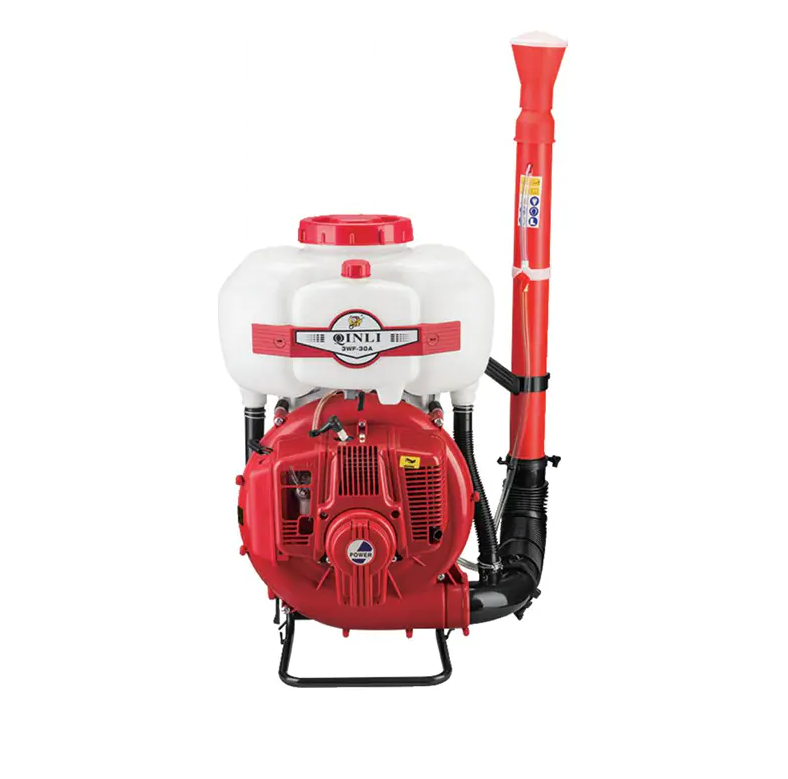
There's a reason the knapsack mist duster has remained a fixture in agricultural and horticultural work for decades. It solves a genuinely tricky problem — how do you get pesticide, fungicide, or fertilizer evenly across large areas of plant material without wasting material, exhausting the operator, or spending hours on the task? The mist duster approach handles all three concerns reasonably well, which is not something every piece of farm equipment can claim.
The misting function is what distinguishes this type of applicator from a conventional knapsack sprayer. Rather than relying purely on liquid pressure to push droplets toward the target, a knapsack mist duster uses a high-velocity airstream to carry fine particles or atomized liquid. That airstream can penetrate dense foliage, reach the undersides of leaves, and cover a wider swath with each pass. For crops with thick canopies — fruit trees, tall vegetable plants, dense shrubs — that penetrating capability makes a visible difference in how evenly the treatment lands.
Dust application adds another dimension. Some knapsack mist dusters handle both liquid mist and dry dust formulations, which broadens the range of products you can apply with a single piece of equipment. Dusting is particularly useful for certain fungal treatments and some insecticide formulations that are more stable or effective in powder form. Being able to switch between mist and dust modes without buying separate equipment is a practical advantage for operations that deal with varied pest and disease pressures throughout the growing season.
Operator comfort has improved considerably in newer knapsack mist duster designs. Padded shoulder straps, adjustable harness systems, and ergonomically positioned controls reduce the physical strain of carrying and operating the unit over extended periods. The vibration levels from motorized units have also been addressed in many current designs, with anti-vibration mounting reducing the amount of engine movement transmitted to the operator's body.
Safety during operation deserves attention. The fine particles produced by a knapsack mist duster can drift in wind, so checking conditions before spraying helps avoid unintended exposure to nearby people, animals, or non-target plants. Wearing appropriate protective equipment — gloves, eye protection, a mask — is straightforward common sense when working with chemical treatments of any kind.