When a pump system underperforms, the first assumption is often that the pump is aging or undersized. Replacement is considered, adjustments are made, and pressure settings are checked repeatedly. Yet in many cases, the real issue is upstream—inside the flow path that feeds the system.
In industrial and residential water applications, contaminants rarely arrive in large, visible amounts. Instead, they appear gradually: fine sand, rust particles, or leftover debris from installation work. These materials don’t stop the system immediately—they slowly reduce efficiency over time.
A standard Check Valve already plays an important role in preventing reverse flow, but it does not always address the issue of incoming debris. That gap is where many systems begin to experience long-term wear and instability.
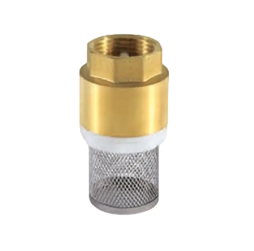
This is why more engineers and procurement teams are turning to the Check Valve with Screen. It combines flow direction control with a built-in barrier that filters out unwanted particles before they enter the main system. Instead of reacting to contamination, the system actively blocks it at the earliest stage.
In practical use, this means fewer clogged pipes, fewer pump overload events, and fewer unexpected maintenance calls. For operators managing irrigation systems, HVAC loops, or small industrial installations, this reduction in daily interruptions has a noticeable impact on workflow stability.
One of the most overlooked advantages is consistency. Systems without proper screening often behave unpredictably—working fine one day and showing reduced flow the next. These fluctuations are usually caused by small accumulations that gradually restrict movement inside the pipeline.
A screened check valve helps smooth out these variations by maintaining cleaner internal conditions. The result is more stable performance over time, even in environments where water quality is inconsistent or difficult to control.
It also helps in unexpected scenarios, such as construction residue entering pipelines after installation or seasonal sediment changes in water sources. Instead of reaching pumps or sensitive equipment, particles are stopped early, reducing the risk of sudden breakdowns.
From a usability perspective, nothing about the daily operation needs to change. The system still functions the same way for the user. The difference is in what the user does not see—fewer failures, fewer interruptions, and fewer emergency repairs.
That invisible reliability is exactly what modern industrial buyers are prioritizing: systems that quietly protect themselves without constant attention.