Behind every clean weld bead and every structurally sound metal joint, there's a piece of equipment that made it possible — and behind that equipment, a welding torch manufacturer who made decisions about materials, engineering tolerances, and heat management that the end user may never think about directly. That invisibility is, in a way, the mark of a job well done. When a torch performs reliably shift after shift, nobody stops to question why. It's only when something goes wrong that the quality of the manufacturer's work becomes suddenly very apparent.
A welding torch manufacturer operates at the intersection of metallurgy, fluid dynamics, and ergonomic design. The torch body must channel fuel gas and oxygen — or shielding gas in MIG and TIG applications — at precise flow rates while withstanding the thermal stress of being operated close to temperatures that would damage lesser materials. Copper alloys are widely used for torch head and tip components because of their thermal conductivity, which helps dissipate heat away from critical areas. The mixing chamber geometry determines how cleanly gases combine before combustion, which directly affects flame stability and temperature consistency.
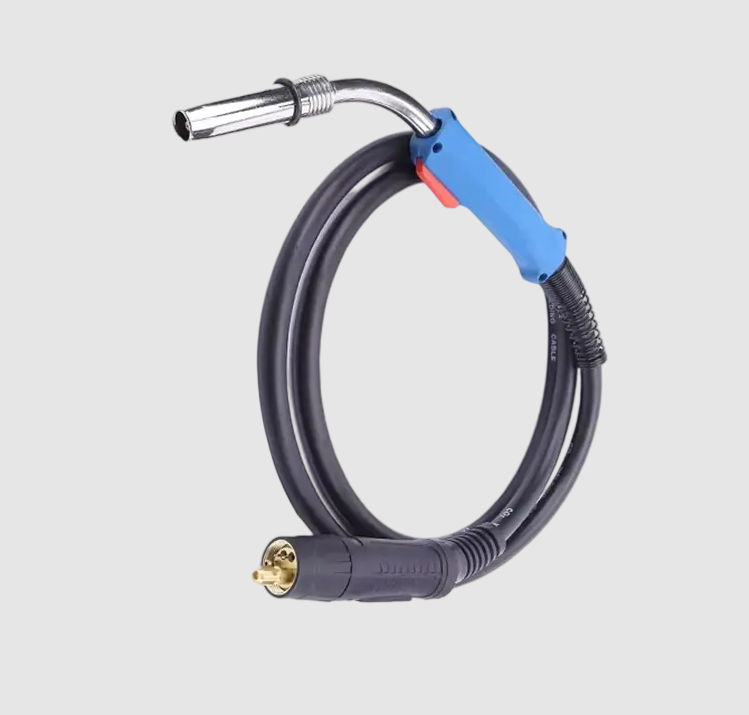
The range of torches a manufacturer produces typically spans several welding and cutting processes. Oxy-fuel torches handle cutting, brazing, and gas welding across a broad range of metal thicknesses. MIG torch assemblies manage wire feed and shielding gas delivery simultaneously, requiring robust liner and contact tip designs that maintain consistent electrical contact as the wire travels through. TIG torches prioritize precise arc control and clean shielding gas coverage, with collet bodies and ceramic or glass nozzles that must be dimensionally accurate to protect the tungsten electrode and the weld pool effectively.
Consumable components — tips, nozzles, liners, collets, and diffusers — represent a significant part of a welding torch manufacturer's product portfolio. These parts wear through normal use and require regular replacement to maintain torch performance. A manufacturer whose consumables are consistently dimensioned and made from appropriate materials gives welders confidence that replacing a worn tip will restore performance rather than introduce new variables. Inconsistent consumable quality is a source of frustration that experienced welders recognize quickly and remember for a long time.