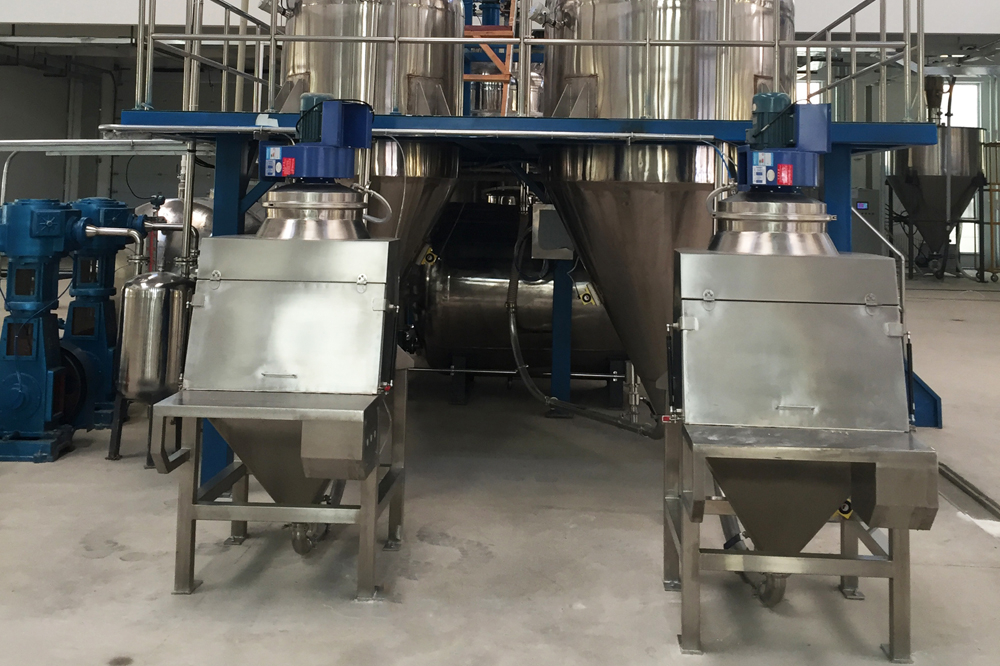
In modern industrial manufacturing, powder handling is no longer a simple material transfer process. Industries such as lithium battery production, food processing, pharmaceuticals, coatings, plastics, chemicals, and magnetic materials now demand higher standards for cleanliness, environmental protection, production safety, and material utilization efficiency.
As industrial automation and environmental regulations continue evolving, traditional open feeding methods are increasingly unable to meet modern production requirements. Dust leakage, material loss, operator exposure, and contamination risks not only affect production efficiency but also create safety and compliance challenges.
The Growing Importance of Dust-Free Powder Handling
Powder materials are widely used across industrial production lines, but they also present unique handling challenges.
During manual feeding and unloading operations, traditional systems frequently cause:
-
Dust dispersion into the working environment
-
Material waste during transfer
-
Cross-contamination risks
-
Increased cleaning requirements
-
Operator exposure to hazardous particles
In industries such as pharmaceuticals, food processing, and lithium battery manufacturing, even small amounts of airborne powder contamination can negatively affect product quality and workplace safety.
The demand for cleaner production systems has therefore accelerated the adoption of enclosed and negative-pressure powder unloading technologies.
What Is a Small Bag Dust-Free Powder Discharging Station?
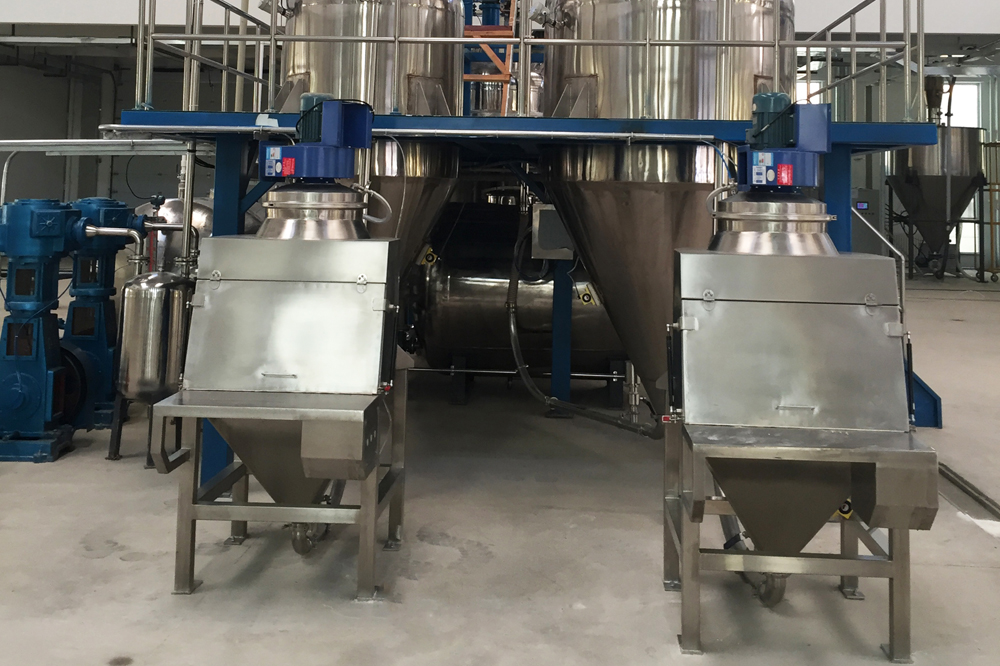
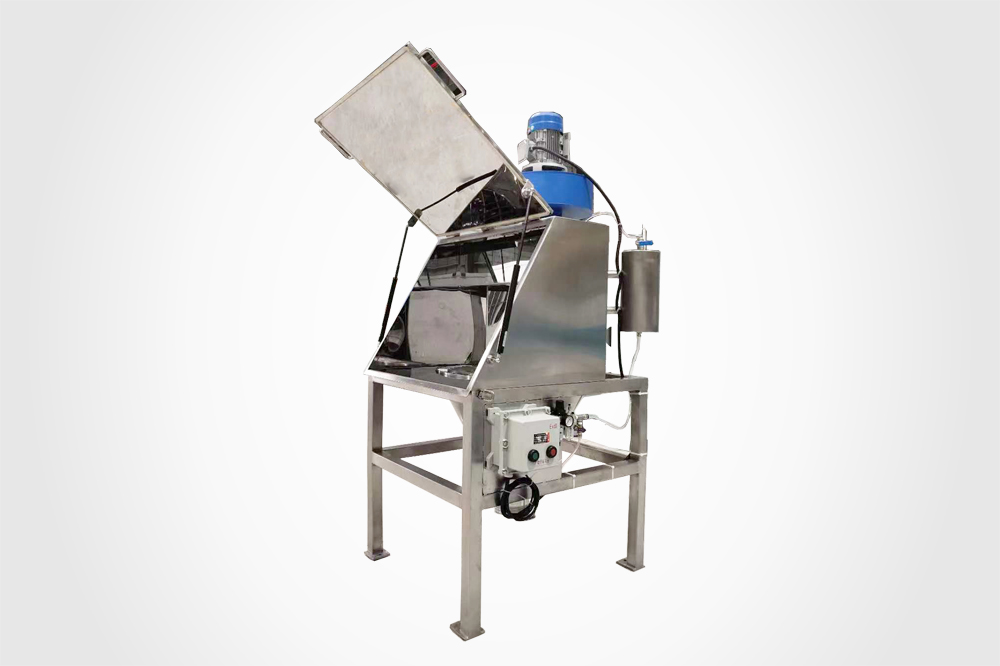
A Small bag dust-free powder discharging station is an enclosed unloading and feeding system specifically designed for small bag powder materials.
The equipment allows operators to safely unload powder materials while maintaining a controlled negative-pressure environment that prevents dust leakage into the surrounding workspace.
Compared with traditional open feeding platforms, the system significantly improves:
-
Environmental cleanliness
-
Material transfer efficiency
-
Worker safety
-
Production stability
The system can also integrate with:
-
Positive pressure conveying systems
-
Negative pressure pneumatic conveying systems
-
Automated feeding production lines
This integration capability makes the equipment highly adaptable for modern intelligent manufacturing environments.
Negative Pressure Design: The Core Technology Behind Dust-Free Operation
One of the most important engineering features of the system is its negative pressure feeding platform design.
During operation, the feeding area remains under controlled negative pressure conditions. This creates continuous inward airflow that prevents powder particles from escaping into the external environment.
This design delivers several important advantages:
No Dust Leakage
Dust generated during bag opening and powder unloading is captured within the system rather than released into the production area.
Improved Environmental Protection
Reducing airborne dust helps facilities comply with increasingly strict environmental and workplace safety regulations.
No Material Loss During Feeding
Traditional feeding methods often result in material loss due to dust escape. The enclosed negative-pressure system minimizes waste and improves raw material utilization efficiency.
Cleaner Production Environment
A cleaner workshop directly improves:
-
Product quality consistency
-
Equipment cleanliness
-
Operational visibility
-
Maintenance efficiency
For industries with high sanitary requirements, dust-free operation is no longer optional—it is a production necessity.
Sanitary Design and Easy Cleaning Structure
Modern industrial processing equipment must support both operational efficiency and hygiene compliance.
The Small bag dust-free powder discharging station developed by Rucca incorporates:
-
Easy-to-clean internal structures
-
Sanitary-grade design standards
-
Smooth surface treatment
-
Reduced dead-corner accumulation areas
These features are particularly important for:
-
Food processing plants
-
Pharmaceutical manufacturing facilities
-
Fine chemical production lines
Efficient cleaning capability reduces downtime between production batches while lowering contamination risks.
Safer Material Handling and Reduced Labor Intensity
Traditional manual powder unloading processes expose operators to physical strain and airborne particle risks.
The dust-free unloading station improves workplace safety by:
-
Reducing direct powder exposure
-
Lowering airborne particle inhalation risks
-
Improving ergonomic feeding operations
-
Reducing manual cleaning requirements
This contributes to:
-
Safer production environments
-
Reduced labor intensity
-
Improved operator comfort
-
Better long-term occupational health conditions
As industrial safety standards continue increasing globally, intelligent powder handling systems are becoming essential investments for manufacturers.
Flexible Integration with Automated Production Lines
Modern manufacturing facilities increasingly rely on automated material transfer systems.
The Small bag dust-free powder discharging station can connect with:
-
Vacuum conveying systems
-
Pneumatic transfer pipelines
-
Centralized feeding systems
-
Intelligent batching systems
This flexibility supports automated continuous production while improving overall process consistency.
For high-volume industrial operations, integrated feeding systems significantly reduce manual intervention and improve production efficiency.
Wide Industrial Application Range
The versatility of dust-free powder discharging systems makes them suitable across multiple industries.
Magnetic Materials Industry
Fine powder handling requires contamination-free transfer conditions to maintain material purity and magnetic performance stability.
Food Processing Industry
Dust-free sanitary feeding systems help meet hygiene standards while protecting ingredient quality.
Plastic Processing Industry
Powder additives and resin materials require controlled feeding environments to reduce material waste and maintain production consistency.
Lithium Battery Industry
Battery material processing requires extremely clean environments due to the sensitivity of lithium powder materials.
Coatings and Chemical Industry
Chemical powders often generate hazardous airborne particles, making enclosed unloading systems critical for workplace safety.
Pharmaceutical Industry
Pharmaceutical production environments require strict contamination control and sanitary material handling standards.
Rucca’s Focus on Industrial Powder Processing Solutions
As powder processing technologies become increasingly advanced, manufacturers require equipment suppliers capable of delivering both engineering reliability and process optimization.
Rucca emphasizes:
-
Dust-free feeding efficiency
-
Hygienic structural design
-
Stable negative-pressure control systems
-
Intelligent conveying integration
-
Industrial-grade operational durability
By combining sanitary engineering principles with modern automation technology, Rucca provides powder unloading systems designed for demanding industrial production environments.
Conclusion
The Small bag dust-free powder discharging station is no longer simply a feeding device—it has become an essential component of modern clean manufacturing systems.
Through negative-pressure dust control, sanitary design, safer operation, and automated production integration, these systems significantly improve workplace cleanliness, production safety, and material utilization efficiency.
With strong engineering capability and extensive industrial application experience, Rucca continues providing advanced dust-free powder handling solutions for industries requiring cleaner, safer, and more efficient production environments.
https://www.ruccagroup.net/the-advantages-of-small-bag-dust-free-powder-discharging-stations.html