
In Blow-Fill-Seal (BFS) pharmaceutical manufacturing, much of the attention is often placed on forming, filling, sealing, and inspection. However, many production managers discover that the real efficiency bottleneck appears after these core processes—during collection, alignment, and frame feeding of BFS strip containers.
As production speeds increase and compliance requirements tighten, manual or semi-automatic handling of BFS strips becomes increasingly difficult to manage. Inconsistent collection, misaligned strips, and labour-intensive frame loading can quietly limit overall line performance.
This is where automated downstream handling systems begin to play a critical role.
Why BFS Collection and Frame Feeding Matter More Than You Think
BFS strip ampoules are lightweight, flexible, and produced at high speed. These characteristics make them efficient to manufacture—but challenging to handle downstream.
Common issues enterprises face include:
-
Irregular stacking or misalignment of BFS strips
-
Inconsistent frame feeding affecting inspection or packaging accuracy
-
High labour dependency with unstable output
-
Increased risk of secondary contamination due to manual handling
While upstream equipment may run smoothly, downstream inefficiencies can lead to line stoppages, rework, or hidden productivity losses.
The Role of Automated Collecting and Frame Feeding
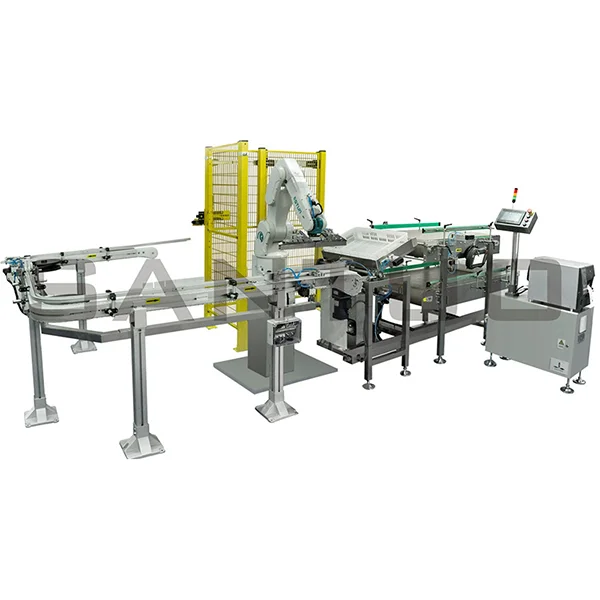
A BFS Auto Collecting and Frame-feeding Machine is designed specifically to stabilise this often-overlooked stage of production.
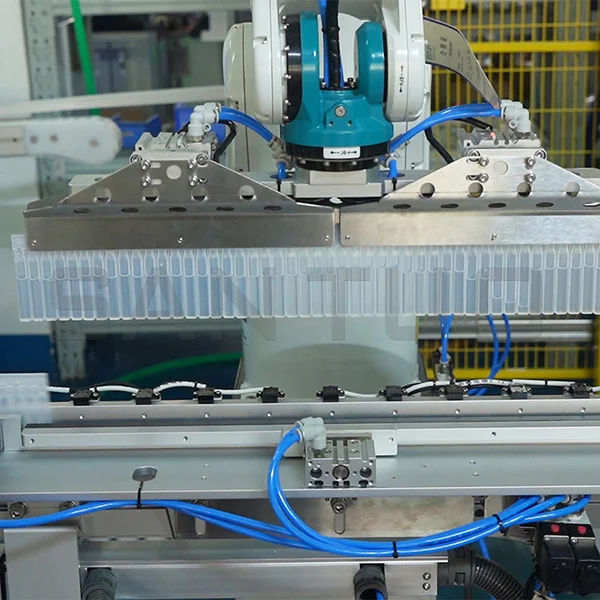
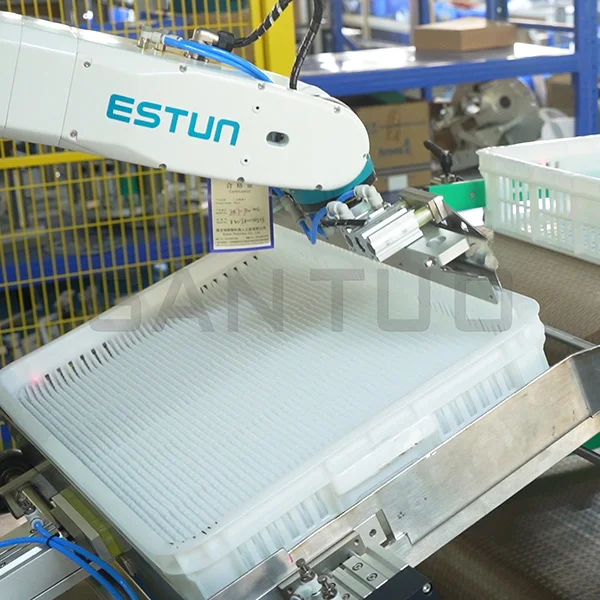
Instead of relying on manual sorting or basic conveyors, the system automatically collects BFS strip containers, aligns them accurately, and feeds them into frames in a controlled and repeatable manner. This creates a consistent interface between BFS forming lines and downstream inspection, leak testing, or cartoning processes.
Key Advantages from a Production Management Perspective
1. Improved Line Stability
Automated collecting eliminates randomness in strip positioning, ensuring uniform feeding into frames and downstream equipment.
2. Reduced Labour Dependency
By replacing manual collection and alignment, enterprises reduce reliance on skilled operators for repetitive tasks, improving workforce efficiency.
3. Lower Contamination Risk
Minimal human contact helps maintain hygienic conditions, particularly important for ophthalmic solutions, inhalation products, and single-use pharmaceuticals.
4. Better Compatibility with High-Speed Lines
Automated systems are designed to match the output rhythm of modern BFS machines, preventing accumulation or bottlenecks.
Integration into Existing BFS Lines
One of the key considerations for business owners is whether downstream automation can be integrated without disrupting current operations.
Modern BFS collecting and frame-feeding systems are typically designed with:
-
Compact footprints suitable for limited floor space
-
Modular structures for flexible line layout
-
Synchronised control logic to interface with upstream BFS machines
This allows enterprises to upgrade downstream handling without replacing core BFS equipment.
When Does Automation Become Necessary?
Automated collection and frame feeding is particularly valuable when:
-
BFS output exceeds what manual handling can reliably manage
-
Product quality audits highlight handling-related risks
-
Labour availability or cost becomes a limiting factor
-
Production is scaled for export markets with stricter compliance expectations
At this stage, downstream automation shifts from a “nice-to-have” to a strategic requirement.
Conclusion
In BFS pharmaceutical manufacturing, efficiency is not defined solely by forming and filling speed. The ability to collect, align, and feed products consistently plays a decisive role in overall line performance.
By introducing a BFS Auto Collecting and Frame-feeding Machine, enterprises can stabilise downstream operations, reduce labour risks, and support long-term scalable production. For business owners focused on sustainable efficiency and compliance, addressing this hidden bottleneck is a practical and forward-looking decision.
https://www.santuomachine.com/eliminating-downstream-bottlenecks-in-bfs-production-lines.html