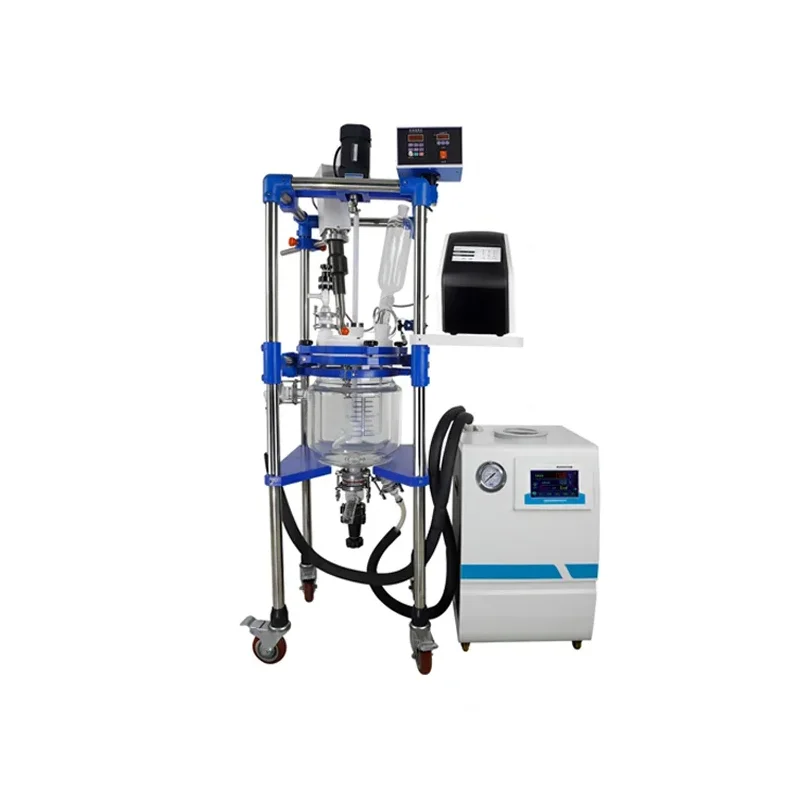
In research laboratories, pharmaceutical manufacturing, food processing, and biotechnology industries, extraction technology continues to evolve toward greater efficiency, precision, and reproducibility. Today, extraction performance is no longer evaluated solely by the quantity of material recovered. Researchers and manufacturers increasingly focus on extraction speed, preservation of active compounds, solvent consumption, and process consistency.
Against this backdrop, the ultrasonic extractor has become an important tool for modern extraction applications. By utilizing high-frequency ultrasonic energy, these systems offer a more efficient alternative to traditional extraction methods that rely heavily on prolonged heating, mechanical stirring, or extensive processing times.
As industries seek faster and more reliable extraction solutions, ultrasonic extraction technology is gaining attention across a growing range of scientific and industrial fields.
How Ultrasonic Extraction Works
The effectiveness of an ultrasonic extractor is based on a phenomenon known as acoustic cavitation.
When ultrasonic waves travel through a liquid medium, they create alternating cycles of compression and expansion. During these cycles, microscopic bubbles form and collapse rapidly within the liquid.
Although these bubbles are extremely small, their collapse generates significant localized energy, including:
- High localized temperatures and pressures
- Strong micro-scale turbulence
- Intense shear forces
- Enhanced mass transfer between solid and liquid phases
These effects help break down cellular structures, improve solvent penetration, and accelerate the release of target compounds into the extraction medium.
As a result, substances that might require hours of conventional extraction can often be recovered much more efficiently using ultrasonic technology.
More Than Extraction: A Multi-Functional Processing Tool
One of the major advantages of modern ultrasonic extraction systems is their ability to perform multiple process functions within a single platform.
By combining ultrasonic energy with precise temperature regulation and controlled stirring, operators can optimize extraction conditions according to specific materials and objectives.
Beyond extraction, ultrasonic systems are frequently used for:
Cell Disruption
Ultrasonic cavitation can rupture cell walls and membranes, making it highly effective for releasing intracellular compounds.
Emulsification
The intense mixing action generated by ultrasonic waves helps create stable emulsions in pharmaceutical, cosmetic, and food applications.
Dispersion
Ultrasonic energy promotes the uniform distribution of particles, improving product consistency and material performance.
Reaction Enhancement
In certain applications, ultrasonic treatment can improve reaction kinetics and facilitate more efficient chemical processing.
This multifunctionality makes ultrasonic extraction equipment valuable in both laboratory research and industrial manufacturing environments.
Applications Across Diverse Industries
The flexibility of ultrasonic extraction technology allows it to support a wide range of scientific disciplines and production sectors.
Pharmaceutical and Medical Research
Researchers use ultrasonic extraction to isolate active ingredients from natural products and medicinal materials while preserving sensitive bioactive compounds.
Biotechnology and Microbiology
Ultrasonic systems facilitate cell lysis, protein extraction, and intracellular component recovery.
Food and Agricultural Industries
Natural extracts, antioxidants, pigments, flavors, and plant-based bioactive compounds can be obtained more efficiently using ultrasonic-assisted extraction methods.
Materials Science and Nanotechnology
Ultrasonic processing is widely used for nanoparticle dispersion, material synthesis, and suspension stabilization.
Environmental and Analytical Laboratories
The technology is also employed in sample preparation and analytical workflows where accuracy and repeatability are critical.
Because of its adaptability, ultrasonic extraction has become a standard technique in many research and industrial facilities worldwide.
Advantages Compared with Traditional Extraction Methods
Compared with conventional extraction technologies, ultrasonic extractors offer several practical benefits.
Faster Processing
Ultrasonic energy significantly accelerates mass transfer, reducing extraction times from hours to minutes in some applications.
Improved Extraction Efficiency
Enhanced solvent penetration and cell disruption often result in higher yields of target compounds.
Lower Solvent Consumption
More efficient extraction can reduce the amount of solvent required, lowering operational costs and environmental impact.
Better Preservation of Active Ingredients
Because ultrasonic extraction often operates at lower temperatures than traditional methods, heat-sensitive compounds are less likely to degrade.
Greater Process Consistency
Controlled operating parameters help ensure reproducible results across multiple batches.
These advantages are particularly important for industries where product quality, regulatory compliance, and production efficiency are key priorities.
What to Consider When Selecting an Ultrasonic Extractor
Not all ultrasonic extraction systems provide the same level of performance.
When evaluating equipment, users should consider several important factors:
- Ultrasonic power stability
- Frequency control accuracy
- Reactor design and energy distribution
- Temperature regulation capability
- Stirring and mixing efficiency
- Material compatibility
- Long-term operational reliability
A well-designed system should distribute ultrasonic energy evenly throughout the processing vessel, minimizing dead zones and maximizing extraction effectiveness.
For industrial users, system durability and ease of maintenance are equally important considerations.
How Shanghai Zhenxin Technology Co., Ltd. Supports Advanced Extraction Applications
As a manufacturer specializing in laboratory and industrial processing equipment, Shanghai Zhenxin Technology Co., Ltd. focuses on developing ultrasonic extraction solutions that combine practical usability with precise process control.
Its ultrasonic extraction systems are designed to provide:
- Stable ultrasonic output
- Accurate temperature control
- Integrated stirring functionality
- Reliable cavitation performance
- Robust construction for continuous operation
By integrating multiple process functions into a single platform, the company helps laboratories and manufacturers improve extraction efficiency while maintaining consistent product quality.
Whether supporting research-scale experiments or larger production applications, the objective remains the same: delivering reliable and repeatable extraction performance under real-world operating conditions.
From Laboratory Development to Industrial Production
One of the most attractive aspects of ultrasonic extraction technology is its scalability.
Processes developed in laboratory environments can often be transferred to pilot-scale and industrial-scale production with relatively few adjustments.
This offers several advantages:
- Faster product development cycles
- Improved consistency between research and manufacturing
- Reduced scale-up risks
- Greater production efficiency
For industries such as pharmaceuticals, nutraceuticals, biotechnology, and natural product processing, this scalability can significantly shorten the path from innovation to commercialization.
Conclusion
Ultrasonic extraction technology has become an important advancement in modern processing science. Through cavitation-driven energy transfer, ultrasonic extractors offer faster extraction, improved yields, lower solvent consumption, and enhanced preservation of sensitive compounds.
Their ability to combine extraction, emulsification, dispersion, and cell disruption within a single system makes them valuable tools across numerous scientific and industrial applications.
As research and manufacturing sectors continue to pursue greater efficiency and process control, ultrasonic extractors are expected to play an increasingly important role in the future of extraction technology.
https://www.zinscien.com/precision-extraction-redefined-inside-the-ultrasonic-extractor.html