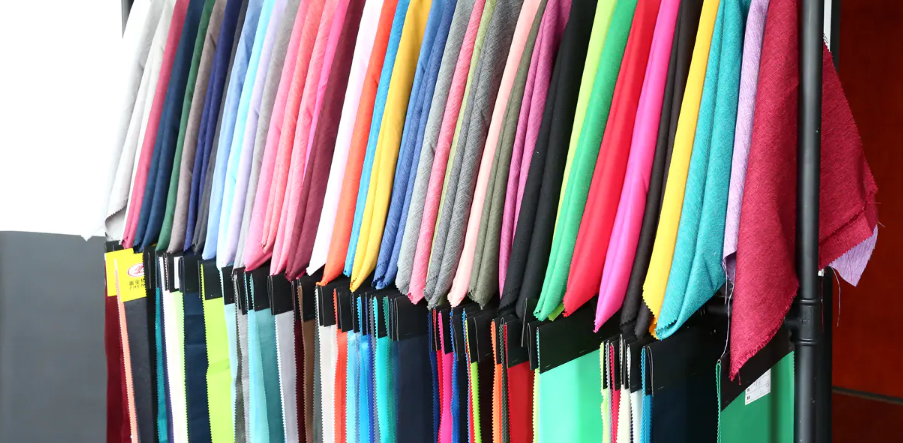
Backpack manufacturing has gradually shifted toward engineered textile systems that combine strength, weight control, and coating stability. Among commonly used materials, 300D Oxford Fabric PU is widely applied in everyday bags, travel packs, and utility storage products because it offers a balanced structure suitable for mass production and functional design.
Yarn construction and weave behavior
The base of this fabric is 300 denier polyester filament yarn. This medium-thickness yarn allows designers to maintain structural stability without adding unnecessary weight.
Key structural characteristics include:
Yarn specification: 300D polyester filament
Weave type: Oxford basket weave (2×1 or 2×2 variation)
Fabric density: typically 60T–86T depending on design
Weight range: 135–210 gsm
Tensile strength: moderate to high depending on coating layer
The Oxford weave distributes tension across multiple interlaced points, reducing localized stress during heavy load carrying.
PU coating contribution in backpack applications
The polyurethane coating layer plays a critical role in transforming base fabric into a functional backpack shell.
Technical coating parameters:
Coating thickness: 0.1–0.25 mm standard range
Hydrostatic resistance: 800–1500 mmH₂O typical performance
Surface sealing: reduces water penetration at stitch zones
Flex endurance: supports repeated folding and compression cycles
This coating ensures that light rain exposure does not immediately affect internal contents of the bag.
Structural performance under load conditions
Backpacks experience dynamic stress during use, including shoulder pulling, internal compression, and repetitive folding. 300D Oxford Fabric PU reacts in a controlled deformation pattern.
Mechanical behavior:
Load dispersion across weave grid
Reduced seam stress concentration
Stable elongation under moderate tension
Recovery after repeated packing cycles
These behaviors allow the fabric to maintain shape consistency even after extended use.
Functional design integration
Manufacturers often combine this fabric with other materials to improve overall system performance:
EVA foam panels for structure reinforcement
Polyester lining fabrics for internal separation
Mesh ventilation zones for airflow sections
Reinforced stitching tape at load points
The fabric acts as the main structural shell in these systems.
Application range in bag production
Typical uses include:
School backpacks
Urban commuter bags
Lightweight hiking packs
Laptop storage bags
Foldable travel backpacks
Each application benefits from the material’s balance of flexibility and abrasion resistance.
Manufacturing process compatibility
This fabric integrates well into automated production systems:
CNC cutting systems for pattern accuracy
Heat pressing for logo applications
Ultrasonic welding in sealed compartments
Multi-layer lamination for reinforced panels
Production scalability is one reason it remains widely used in bag industries.