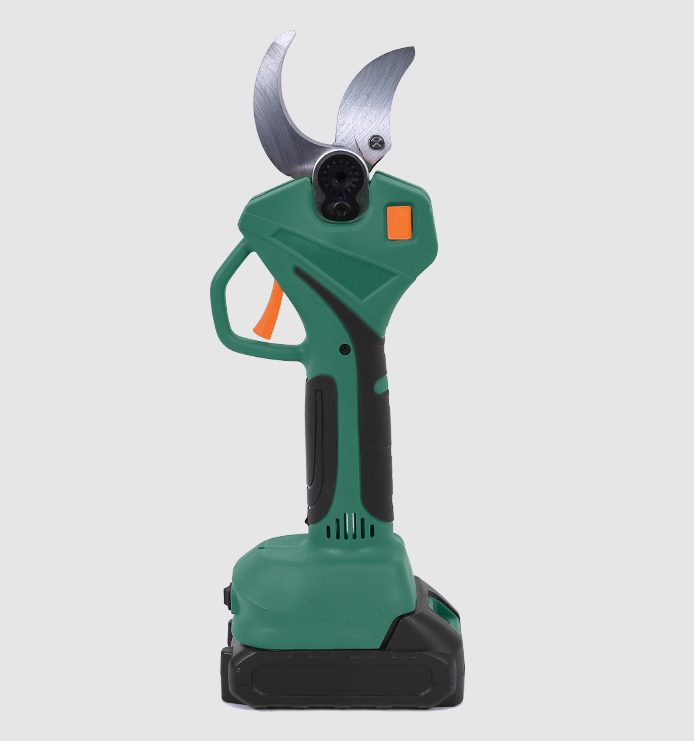
Modern fastening and drilling tasks require not only raw power but also controlled torque delivery and stable rotational behavior. The Lithium Battery Brushless Cordless Drill integrates electronic control systems and advanced motor architecture to achieve consistent performance across different material densities.
At the center of this system is the brushless motor, which eliminates mechanical brushes and replaces them with electronic commutation. This allows the motor controller to regulate current flow with high precision. The result is reduced energy loss and improved torque stability during operation.
Typical torque output in this category ranges between 60 Nm and 120 Nm depending on gear configuration and motor winding density. The torque control ring usually provides 15 to 25 adjustable settings, allowing the user to match output force to specific fastening requirements. Lower settings are designed for delicate materials such as softwood or thin sheet metal, while higher settings support structural fastening applications.
A dual-speed gearbox is standard. Low gear typically operates between 0–450 RPM, delivering high torque for screw driving and heavy load drilling. High gear ranges from 0–1800 RPM or higher, optimized for fast drilling in wood, plastic, and non-hardened metals. This separation of speed and torque zones helps maintain control under varying load conditions.
Lithium-ion battery systems used in this drill type are generally rated at 18V or 21V nominal voltage. Battery packs consist of multiple 18650 or 21700 cells connected in series and parallel. A typical 5.0Ah pack can deliver sustained discharge currents between 20A and 40A depending on cell quality and internal resistance.
Electronic protection circuits manage thermal conditions, overcurrent events, and voltage drops. This ensures stable output even during continuous drilling tasks. When load increases suddenly, the battery management system allows short bursts of higher current to maintain motor speed without stalling.
Another important feature is electronic brake control. Once the trigger is released, the motor stops rotation quickly, reducing overshoot and improving precision during repeated fastening cycles. This is particularly useful in assembly environments where consistent screw depth is required.
Chuck systems are typically 13mm keyless designs. The internal gripping mechanism uses hardened steel jaws that maintain bit stability under high torque conditions. Some systems include automatic spindle lock functions that simplify bit changes without additional tools.
Heat management is another key engineering aspect. Brushless motors generate less frictional heat, but under continuous load, internal airflow channels and aluminum heat sinks help dissipate thermal energy. This maintains performance stability during extended use.
The Lithium Battery Brushless Cordless Drill is widely used in mechanical assembly, electrical installation, furniture manufacturing, and maintenance engineering. Its combination of torque adjustability and electronic control makes it suitable for both precision and heavy-duty applications.
With continued improvements in battery cell density and motor control algorithms, future versions are expected to deliver even smoother torque transitions and improved energy efficiency across varying load conditions.