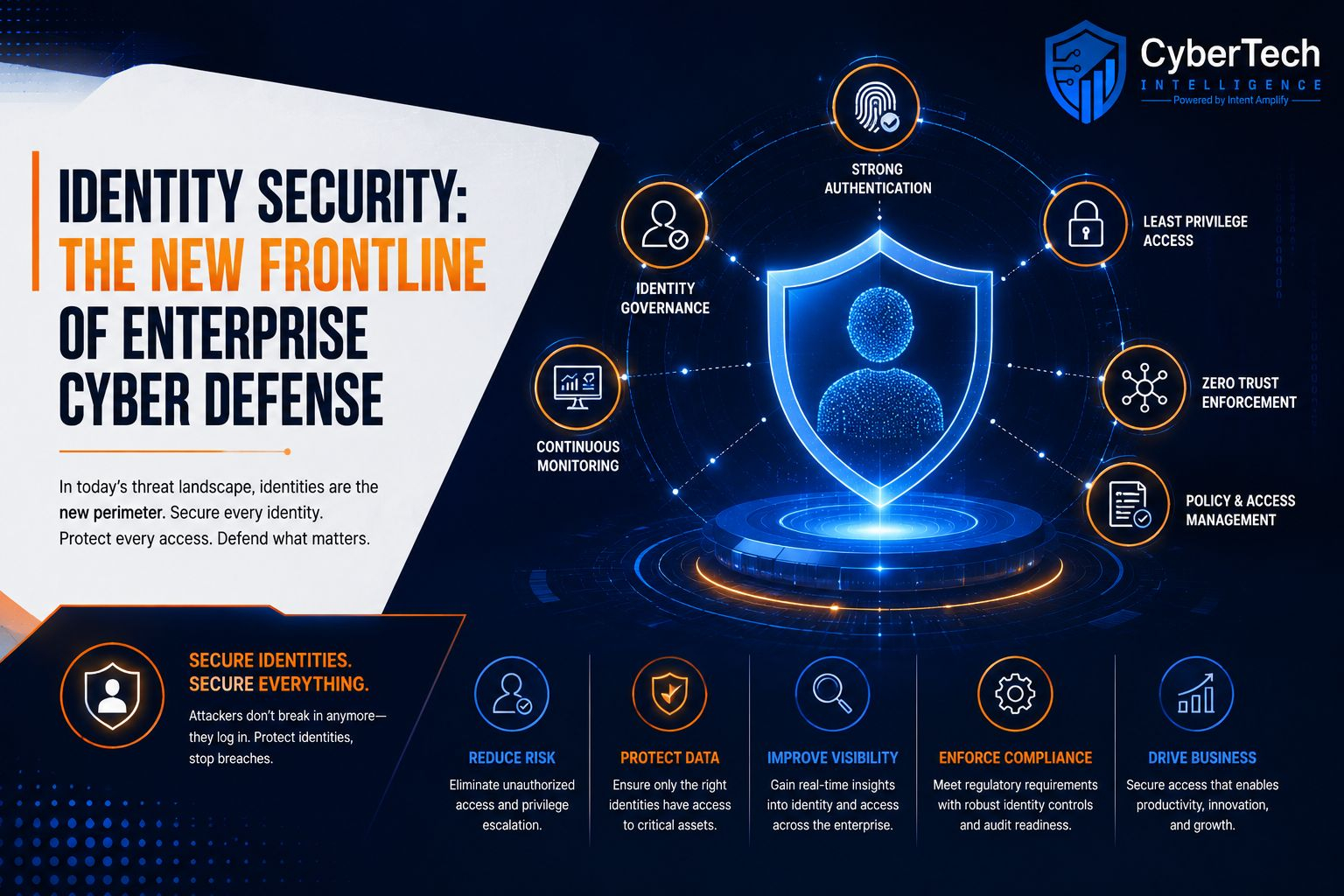
In today's digital-first business environment, identity has become the most targeted attack surface in cybersecurity. As organizations accelerate cloud adoption, embrace remote work, and deploy increasingly connected technologies, traditional network perimeters continue to dissolve. Cybercriminals are no longer focused solely on breaching infrastructure - they are targeting identities.
User credentials, privileged accounts, service accounts, and machine identities have become prime targets because they provide direct access to critical business systems and sensitive data. As a result, Identity Security has emerged as one of the most important pillars of modern cybersecurity strategy.
Organizations that fail to secure identities effectively risk data breaches, ransomware incidents, regulatory penalties, and reputational damage.
Why Identity Has Become the Primary Attack Vector
Modern enterprises operate across complex ecosystems consisting of cloud applications, SaaS platforms, remote endpoints, third-party integrations, and hybrid environments.
This growing complexity creates challenges such as:
- Excessive user permissions
- Weak authentication controls
- Credential reuse
- Privileged account abuse
- Insider threats
- Identity sprawl
Cybercriminals understand that compromising an identity often provides easier access than attempting to penetrate hardened infrastructure.
This shift has fundamentally changed how security leaders approach cyber defense.
Understanding Modern Identity Security
Identity security focuses on protecting and managing digital identities throughout their lifecycle.
These identities include:
- Employees
- Contractors
- Partners
- Customers
- Applications
- Devices
- Machine identities
Effective identity security ensures that the right users have the right access to the right resources at the right time.
More importantly, it continuously validates trust rather than assuming it.
Core Components of a Strong Identity Security Program
Multi-Factor Authentication (MFA)
Passwords alone are no longer sufficient.
Modern organizations should implement:
- Biometric authentication
- Hardware security keys
- Mobile authentication applications
- Adaptive authentication policies
MFA significantly reduces the likelihood of unauthorized access even when credentials are compromised.
Privileged Access Management (PAM)
Privileged accounts are among the highest-value targets for attackers.
Organizations should:
- Limit administrative privileges
- Enforce just-in-time access
- Monitor privileged sessions
- Rotate credentials regularly
Controlling privileged access reduces the potential impact of compromised accounts.
Identity Governance and Administration (IGA)
Identity governance provides visibility into who has access to what resources.
Strong governance includes:
- Role-based access controls
- Access certification reviews
- Automated provisioning
- Automated deprovisioning
These controls help eliminate unnecessary permissions and reduce insider risk.
The Role of Zero Trust in Identity Security
The Zero Trust security model has become a foundational framework for identity protection.
Rather than automatically trusting users within a network, Zero Trust continuously verifies:
- User identity
- Device health
- Location context
- Behavioral patterns
- Risk signals
Every access request is evaluated before permission is granted.
This approach dramatically improves resilience against modern cyber threats.
Common Identity Security Challenges
Many organizations struggle with:
- Orphaned accounts
- Shadow IT applications
- Identity lifecycle management
- Cloud identity visibility
- Excessive permissions
As businesses adopt more digital services, identity complexity grows exponentially.
Without centralized management, security teams often lose visibility into who has access to critical resources.
Organizations seeking to strengthen their overall Identity Security posture should prioritize visibility, governance, and continuous authentication to reduce identity-based threats and improve cyber resilience.
Emerging Trends Shaping Identity Security
Several innovations are shaping the future of identity protection:
- Passwordless authentication
- AI-driven identity analytics
- Behavioral biometrics
- Decentralized identities
- Continuous adaptive trust
These technologies aim to improve both security and user experience while reducing reliance on traditional credentials.
Final Thoughts
Identity has become the new security perimeter. As organizations continue expanding their digital ecosystems, identity-based attacks will remain one of the most significant cybersecurity challenges.
By implementing strong authentication controls, privileged access management, governance frameworks, and Zero Trust principles, organizations can better protect users, systems, and critical business assets.
A mature identity security strategy is no longer simply a security initiative - it is a business imperative for protecting the modern enterprise.
Know More