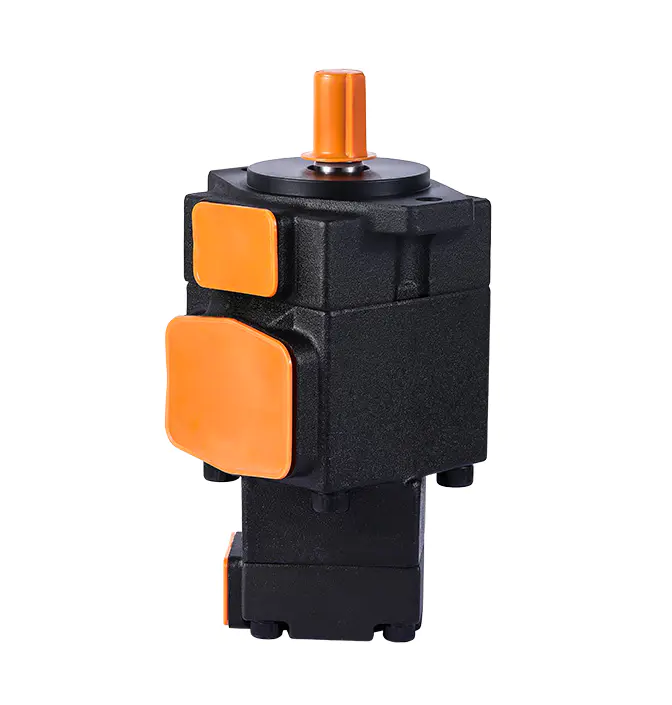
Hydraulic power units are found in factories, workshops, and automated production lines around the world. Their function is straightforward: convert mechanical energy into hydraulic energy and distribute pressurized oil to actuators, cylinders, and motors. The hydraulic pump sits at the center of this process, making pump selection an important engineering decision.
A PV2R Series Vane Pump is widely applied in hydraulic power units because it combines balanced internal forces with relatively smooth oil delivery. Its operating principle helps reduce pressure fluctuations while supporting continuous industrial duty.
Hydraulic Power Unit Requirements
A hydraulic power unit must provide:
Stable pressure
Consistent flow
Low vibration
Controlled operating temperature
Easy maintenance
Sudden pressure changes can affect cylinder movement and machine accuracy. Stable flow characteristics help hydraulic systems maintain predictable performance.
Balanced vane pump technology is designed to reduce radial shaft loading while maintaining smooth oil circulation. Typical PV2R Series pumps are available with operating pressures up to 21 MPa and speeds ranging from 600 to 1800 rpm.
Flow and Displacement Selection
Different machines require different hydraulic capacities.
Large hydraulic stations may require higher flow output, while compact machinery benefits from smaller displacement models.
Choosing an appropriate displacement can help reduce unnecessary energy consumption while maintaining production requirements.
Pressure Stability
Hydraulic cylinders depend on steady oil pressure.
Applications benefiting from stable pressure include:
Press machines
Injection molding
Metal forming
Automatic clamping
Hydraulic lifting platforms
The balanced rotor structure helps distribute hydraulic loads evenly, reducing internal stress on bearings and shafts.
Cartridge Structure
Maintenance is an important cost factor for industrial equipment.
Many PV2R Series designs use a cartridge-style internal assembly.
Advantages include:
Faster servicing
Simplified component replacement
Reduced downtime
Easier inspection
Instead of replacing an entire pump housing, maintenance personnel may focus on wear components inside the cartridge assembly.
Oil Temperature Management
Heat generation is unavoidable in hydraulic systems.
Temperature control depends on:
Oil reservoir capacity
Cooling devices
Pump efficiency
System pressure
Oil viscosity
Hydraulic oil that becomes too hot may lose lubricating properties.
Regular monitoring of oil temperature helps protect vanes, bearings, and shaft seals.
Common Industrial Applications
A PV2R Series Vane Pump is commonly used in:
CNC machine tools
Plastic machinery
Rubber equipment
Leather processing machinery
Forging presses
Hydraulic stations
Construction equipment
Continuous production environments benefit from stable oil supply and relatively smooth hydraulic operation.
Installation Considerations
Reliable operation depends on proper installation.
Recommended practices include:
Flexible shaft couplings
Correct pump rotation
Clean hydraulic oil
Proper suction pipe sizing
Accurate alignment
Installation guidance indicates that excessive shaft misalignment can shorten bearing life and increase vibration.
Maintenance Planning
Routine inspections should include:
Oil level
Filter condition
Seal leakage
Pressure stability
Operating temperature
Noise level
Preventive maintenance often costs less than emergency repairs and helps avoid unexpected shutdowns.
Supporting Modern Manufacturing
Manufacturing equipment increasingly demands stable hydraulic performance across long operating cycles. A PV2R Series Vane Pump offers multiple displacement options, balanced hydraulic loading, cartridge-style maintenance, and operating pressures suitable for many industrial systems. Combined with proper installation and regular servicing, it can support hydraulic power units used across a wide variety of production environments.