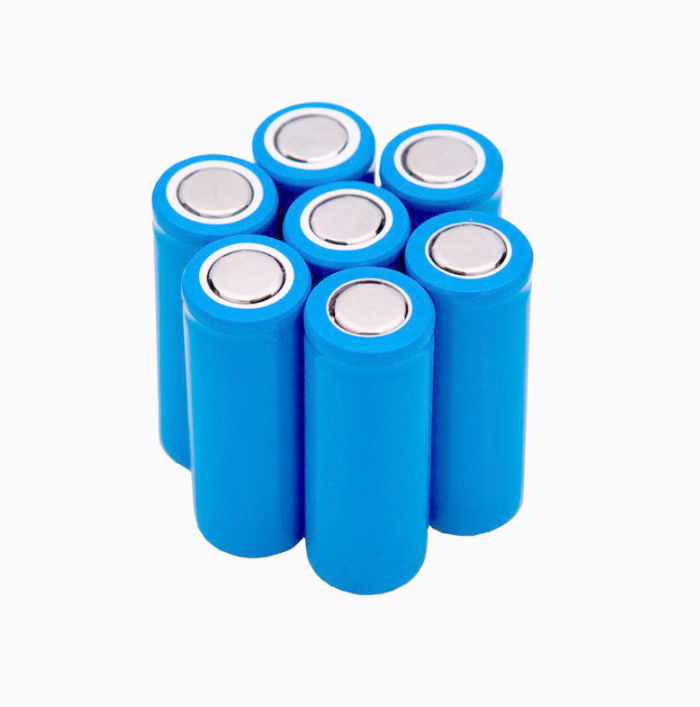
Electric vehicle battery systems require a balance between power output, safety stability, and thermal control. Within this environment, Cylindrical Cells Supply continues to play a significant role, especially in platforms designed for high discharge performance and modular battery pack structures.
Common EV cylindrical formats include 18650 and 21700 cells, with newer high-capacity variants pushing energy density beyond 260 Wh/kg in advanced NMC chemistries. Each cell operates at a nominal voltage of 3.6V–3.7V, and EV battery packs combine hundreds or thousands of cells in series-parallel structures such as 96S74P or similar architectures, depending on range requirements.
Thermal Behavior in EV Operation
Cylindrical cells provide radial heat dissipation due to their geometry. This helps maintain internal temperature balance during acceleration cycles where discharge rates may reach 2C–5C bursts.
Typical EV thermal management thresholds:
Operating range: -20°C to 55°C
Maximum safe cell temperature: ~60°C
Thermal runaway initiation risk zone: above 130°C internal core temperature
Cooling strategies often include liquid channels between cylindrical rows, improving heat exchange efficiency compared to tightly stacked flat cells.
Mechanical Stability in Vehicle Environments
EVs operate under vibration, road impact, and mechanical stress conditions. Cylindrical steel casing offers structural resilience with compression resistance exceeding 1000 psi, reducing deformation risk during pack operation.
This makes Cylindrical Cells Supply particularly suitable for vehicles requiring:
High durability over long service cycles
Stable mechanical integrity in crash scenarios
Predictable degradation behavior
EV Pack Design Efficiency
Cylindrical cells require more interconnections than prismatic designs, but automation reduces assembly complexity. Welding and busbar systems are optimized for high-volume production lines.
Energy density at pack level typically ranges:
Cylindrical packs: 140–200 Wh/kg
EV system variation depends on cooling and spacing design
Conclusion
Electric mobility continues to depend on cylindrical architecture due to its balance between manufacturability, durability, and thermal stability. A stable Cylindrical Cells Supply ensures consistent EV production scaling and predictable performance in long-range driving systems.