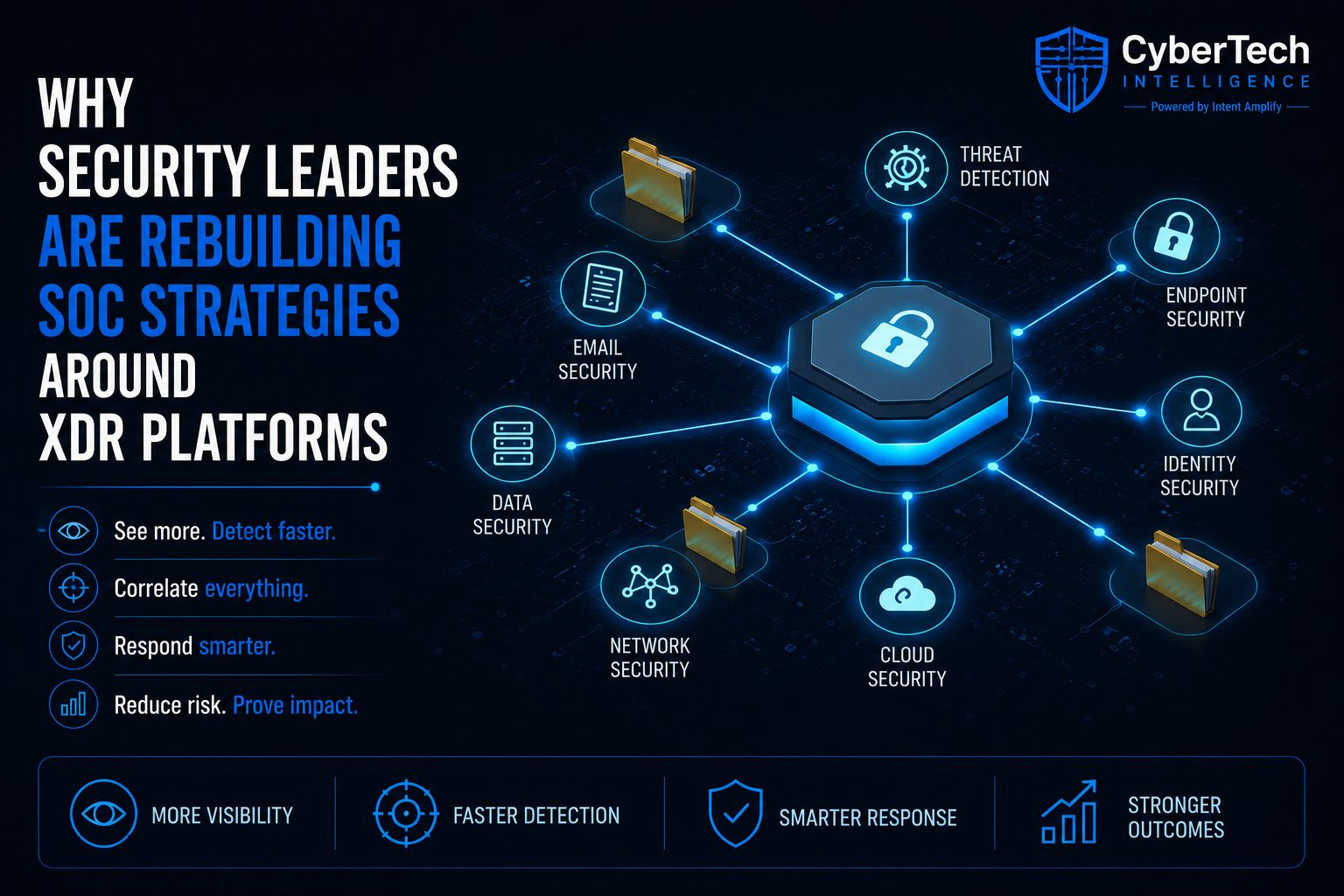
Cybersecurity teams today face an unprecedented challenge. Attack surfaces continue to expand, threat actors are becoming more sophisticated, and security analysts are overwhelmed by massive volumes of alerts generated across multiple tools and environments.
Traditional security operations often struggle to keep pace with evolving threats because data remains fragmented across endpoints, networks, cloud workloads, identities, and applications. This lack of visibility creates detection gaps that attackers actively exploit.
To address these challenges, organizations are increasingly turning to Extended Detection and Response (XDR) and advanced Security Operations Center (SOC) platforms. Together, these technologies provide a unified approach to threat detection, investigation, and response, enabling organizations to improve cyber resilience and reduce operational complexity.
The Evolution of Security Operations
For years, organizations relied on a combination of standalone security tools, such as:
- Endpoint protection platforms
- SIEM solutions
- Network monitoring tools
- Threat intelligence platforms
- Email security systems
While these solutions remain valuable, they often operate independently, creating silos that limit visibility and slow response efforts.
Security analysts frequently spend significant time correlating data from multiple sources before fully understanding an incident.
This fragmented approach increases:
- Mean Time to Detect (MTTD)
- Mean Time to Respond (MTTR)
- Alert fatigue
- Operational inefficiencies
XDR and modern SOC platforms address these challenges by centralizing security visibility and automating investigation workflows.
What Is XDR?
Extended Detection and Response (XDR) is a security approach that integrates telemetry from multiple security layers into a unified platform.
These layers often include:
- Endpoints
- Networks
- Cloud environments
- Email systems
- Identity platforms
- Applications
By correlating data across multiple domains, XDR enables security teams to identify complex attack patterns that may otherwise go undetected.
Rather than investigating isolated alerts, analysts gain access to a complete attack narrative.
Key Benefits of XDR and SOC Platforms
Unified Threat Visibility
Modern cyberattacks rarely target a single environment.
Attackers often move laterally across systems, escalating privileges and accessing multiple resources before achieving their objectives.
XDR provides centralized visibility across:
- Users
- Devices
- Applications
- Cloud resources
- Networks
This holistic perspective improves detection accuracy and accelerates investigations.
Faster Incident Response
Speed remains one of the most important factors in limiting cyberattack impact.
Modern SOC platforms leverage automation to:
- Prioritize alerts
- Correlate attack indicators
- Trigger response actions
- Reduce manual investigations
This allows security teams to contain threats more quickly and efficiently.
Improved Analyst Productivity
Security teams often face staffing shortages and growing workloads.
XDR platforms help reduce operational burden by:
- Eliminating duplicate alerts
- Automating threat correlation
- Providing contextual insights
- Streamlining workflows
Analysts can focus on high-priority threats rather than spending valuable time investigating false positives.
The Role of Threat Intelligence in XDR
Threat intelligence significantly enhances XDR effectiveness.
By integrating intelligence feeds, organizations gain access to:
- Emerging attack techniques
- Threat actor behaviors
- Known malicious indicators
- Industry-specific threats
This additional context improves decision-making and enables proactive defense strategies.
Organizations evaluating modern XDR & SOC Platforms can strengthen security operations by improving visibility, accelerating incident response, and reducing analyst workload across increasingly complex environments.
Future Trends Driving Security Operations
The future of security operations is becoming increasingly intelligence-driven.
Key innovations include:
- AI-powered threat detection
- Autonomous response workflows
- Behavioral analytics
- Predictive threat modeling
- Security automation at scale
These capabilities will continue transforming how organizations detect and respond to cyber threats.
Final Thoughts
Cybersecurity teams can no longer rely on disconnected tools and manual investigations to defend against sophisticated threats. Modern attack techniques require greater visibility, faster response times, and more efficient operations.
XDR and SOC platforms provide the foundation for modern cyber defense by unifying security data, automating threat detection, and enabling proactive security operations.
Organizations that invest in these capabilities will be better positioned to reduce risk, improve resilience, and defend against the evolving threat landscape.