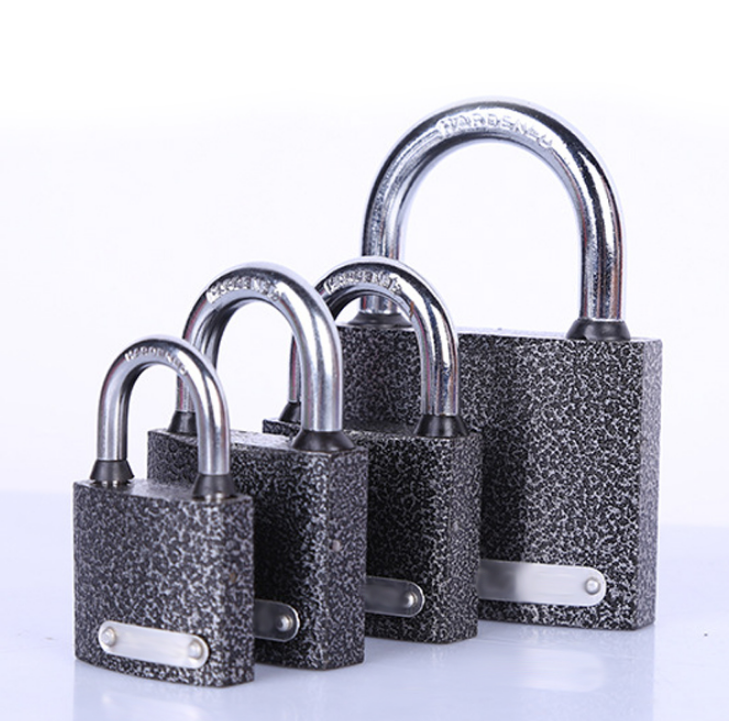
Outdoor environments introduce constant challenges to mechanical locking systems, including moisture, temperature variation, dust accumulation, and salt corrosion. These factors significantly influence the durability of security hardware, especially padlocks used in gates, storage units, shipping yards, and perimeter fencing. A properly engineered Wholesale High Quality Padlock designed for outdoor use must balance corrosion resistance, mechanical strength, and long-term stability.
One of the most critical elements in outdoor padlock performance is material selection. Stainless steel is widely used for shackles due to its resistance to rust formation. In coastal or high-humidity regions, exposure to salt particles accelerates oxidation on untreated metals, leading to weakened structural integrity. To address this, manufacturers often apply protective coatings or use marine-grade stainless steel alloys with improved chromium content.
Typical outdoor padlock technical characteristics include:
Shackle material: stainless steel or boron-treated alloy steel
Body material: zinc alloy, stainless steel, or reinforced brass
Corrosion resistance: 96–240 hours salt spray test rating depending on grade
Operating temperature range: approximately -20°C to 60°C
Protective sealing: rubber gaskets around cylinder entry points
Shackle clearance: 25mm to 75mm depending on application
Moisture intrusion into the locking cylinder is another common failure factor. Once internal pins or springs are exposed to humidity, friction increases and key operation becomes difficult. Advanced designs incorporate drainage channels and sealed keyways to reduce water penetration.
A Wholesale High Quality Padlock intended for outdoor use often includes shrouded shackle structures. This design reduces exposed surface area, making it more difficult for cutting tools to access the shackle. Additionally, it helps minimize environmental exposure, further extending service life.
Coating technology also plays a role. Powder coating and electrophoretic coating are commonly applied to padlock bodies to improve resistance against UV degradation and surface corrosion. These coatings form a protective barrier that slows oxidation even under prolonged exposure.
From a mechanical perspective, outdoor padlocks must maintain stable locking performance despite temperature fluctuations. Thermal expansion and contraction can affect internal tolerances, so precision machining is necessary to ensure consistent operation across varying conditions.
Common outdoor applications include:
Metal gates and perimeter fences
Outdoor storage containers
Agricultural equipment sheds
Construction site barriers
Utility access control points
Each application requires different shackle thickness and body strength. For example, construction environments typically require thicker shackles (8mm–12mm) to resist physical force, while residential gates may prioritize compact design with moderate resistance.
Manufacturing consistency is particularly important in wholesale supply scenarios. Batch uniformity ensures that multiple padlocks perform similarly under identical environmental conditions, which is essential for large-scale installations.
In conclusion, outdoor padlock reliability depends on a combination of corrosion-resistant materials, sealing structures, and precision engineering. A well-designed Wholesale High Quality Padlock ensures stable operation even in challenging environmental conditions.