The construction industry has experienced a clear shift toward large-format tiles used in residential and commercial spaces. These tiles, often measuring 600×600 mm, 800×800 mm, and even larger slab formats, require more advanced installation methods compared with traditional small ceramic units. The performance of installation depends heavily on specialized equipment designed for handling weight, alignment, cutting, and surface bonding accuracy.
A professional Tiling Tools Manufacturer focuses on adapting tool systems to match these evolving material requirements, ensuring installers can work safely and efficiently with heavy and fragile surfaces.
Handling Systems for Large Tiles
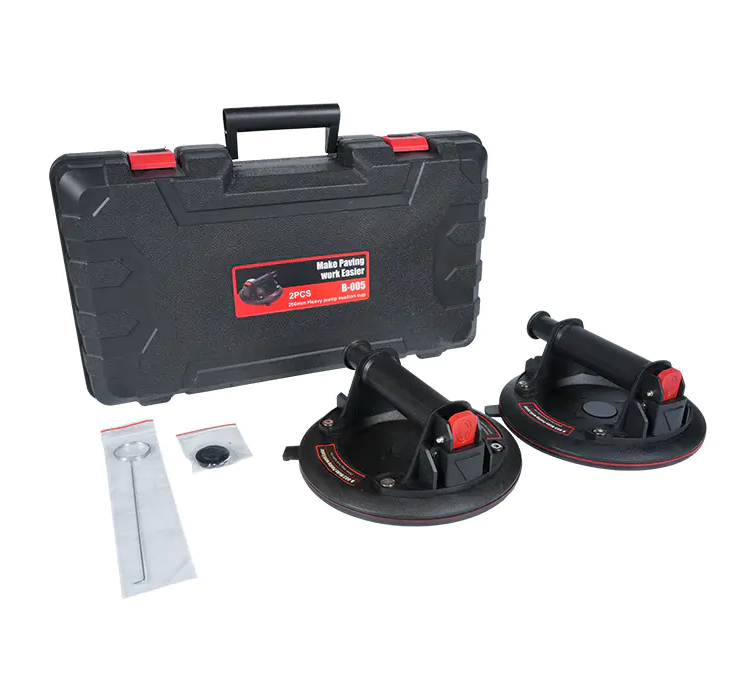
Large tiles are difficult to lift and position without proper support tools. Vacuum suction lifters are widely used in modern installation projects.
Typical technical parameters include:
Vacuum cup diameter: 200–300 mm
Load capacity per cup: 40–80 kg
Multi-cup system load capacity: up to 150 kg
Rubber hardness: 55–65 Shore A
Frame material: reinforced aluminum alloy
These tools reduce direct hand pressure on tile surfaces and help installers adjust positioning with controlled movement. Strong sealing rings maintain vacuum stability on polished porcelain and glass-like finishes.
Cutting Accuracy for Oversized Materials
Cutting large tiles requires stable rail systems and high-precision scoring wheels.
Manual tile cutter specifications often include:
Cutting length: 800 mm to 1800 mm
Guide rail structure: dual steel or monorail system
Scoring wheel material: tungsten carbide or titanium-coated carbide
Cutting thickness range: 3 mm to 16 mm
Breaking force capacity: over 1000 kg in advanced systems
Wet saw machines provide additional support for curved cuts and dense materials. Diamond blades between 200 mm and 350 mm diameter operate at speeds of 3000–5000 rpm, combined with water cooling to reduce heat stress.
A Tiling Tools Manufacturer typically improves rail rigidity and sliding smoothness to ensure consistent cutting lines across long tile surfaces.
Adhesive Application and Coverage Control
Large tiles require full adhesive coverage to prevent hollow spots. Notched trowels play a key role in controlling mortar distribution.
Common notch profiles include:
10×10 mm square notch
12×12 mm square notch
Euro-style curved notch
Blade thickness ranges from 0.8 mm to 1.2 mm stainless steel. Proper combing direction helps air escape during installation and improves bonding strength.
Back buttering is often applied to tiles larger than 400×400 mm to ensure full contact between adhesive and tile back surface.
Leveling Systems for Flat Surfaces
Tile leveling clips are essential for maintaining flatness across large installations.
Typical specifications:
Clip thickness: 1.0 mm / 1.5 mm / 2.0 mm
Tile thickness compatibility: 3–20 mm
Wedge material: reinforced nylon
Breaking strength: designed for controlled separation after curing
These systems prevent lippage between adjacent tiles and improve surface consistency across floors and walls.
Edge Finishing and Alignment Tools
Edge alignment tools and spacers ensure uniform joint spacing.
Spacer sizes commonly include:
1 mm
2 mm
3 mm
5 mm
8 mm
Rubber mallets with 300 g–1000 g weight range help adjust tile positioning without damaging glazed surfaces.
Industry Development Direction
Modern construction trends show continuous growth in slab-style tiles and thin porcelain panels. This shift increases demand for stronger handling tools, more rigid cutting systems, and more precise adhesive control equipment.
A reliable Tiling Tools Manufacturer focuses on integrating durability, ergonomic design, and material compatibility to support installers working with demanding tile formats.