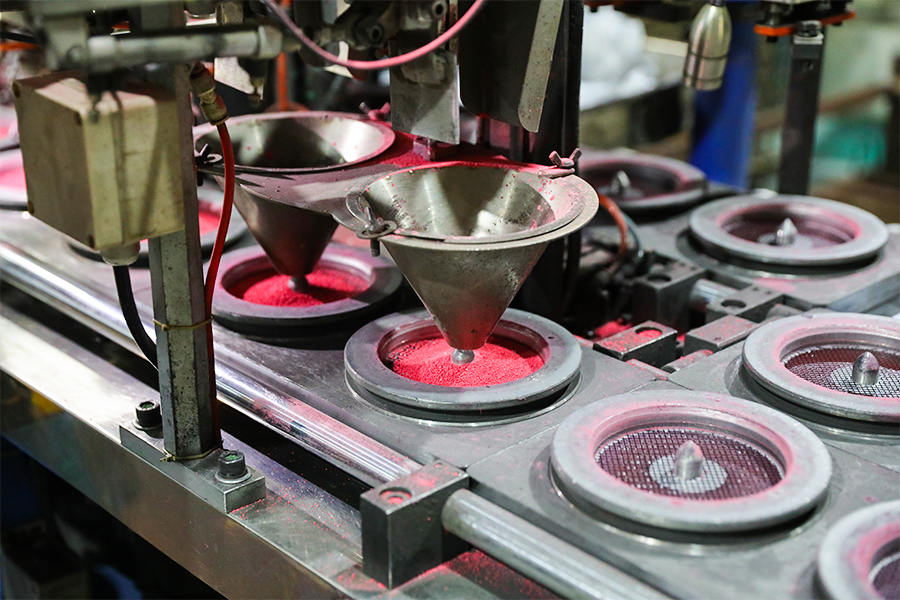
Metal fabrication and repair work rely heavily on controlled abrasion tools that can handle repeated stress while maintaining cutting stability. The Metal Grinding Disc Grinding Wheel is engineered to deliver consistent material removal through a combination of abrasive grain exposure and bonded structural integrity.
The grinding process is not a simple scraping action. It is a controlled micro-cutting mechanism where each abrasive grain acts as a cutting edge. As the disc rotates at high speed, usually between 8,000 and 13,300 RPM in handheld angle grinders, these grains fracture the surface of the metal workpiece and remove material in fine chips.
Structural Composition of Grinding Discs
A Metal Grinding Disc Grinding Wheel typically consists of:
Abrasive grains (commonly aluminum oxide or zirconia alumina)
Resin bonding system for flexibility
Reinforced fiberglass mesh layers for burst resistance
Controlled porosity zones for cooling airflow
The bonding system determines how quickly abrasive grains are released. A stronger bond retains grains longer, while a softer bond exposes fresh cutting edges more frequently, increasing cutting aggressiveness.
Abrasive Grain Behavior
During grinding, abrasive grains undergo continuous stress. Once a grain becomes dull, it fractures or detaches, allowing a new sharp edge to engage the work surface. This self-renewing process is a core reason the Metal Grinding Disc Grinding Wheel remains effective over extended operation cycles.
Common grit ranges:
24–36 grit: aggressive weld removal and heavy stock reduction
40–60 grit: general structural steel grinding
80–120 grit: surface refinement and edge smoothing
Thermal Management During Operation
Grinding generates high surface temperatures due to friction. Without proper heat dissipation, metal surfaces may experience:
Discoloration
Microstructural changes
Reduced surface integrity
To address this, wheel structures include controlled spacing between abrasive clusters. This allows airflow during rotation and helps expel grinding debris efficiently. Operators also maintain intermittent pressure to avoid overheating.
Application Behavior on Different Metals
Different metals react differently under grinding stress:
Carbon steel: stable removal, predictable wear behavior
Stainless steel: requires heat-resistant abrasives to avoid work hardening
Cast iron: brittle fracture removal with silicon carbide variants
Alloy steel: requires zirconia-based grinding discs for durability
Each Metal Grinding Disc Grinding Wheel must be matched with material hardness and toughness to maintain consistent performance.
Operational Angles and Control
Grinding angle plays a major role in performance:
5°–15°: surface blending and weld smoothing
15°–30°: material removal with balanced control
Above 30°: edge shaping, but increases wear rate
Incorrect angle usage can lead to uneven wear patterns and vibration issues.
Wear Patterns and Tool Stability
Disc wear is influenced by:
Pressure applied during grinding
Rotational speed consistency
Workpiece hardness
Operator handling technique
Balanced wear ensures smooth operation. Uneven wear may cause vibration and reduce finishing quality.
Summary
The Metal Grinding Disc Grinding Wheel is a precision-engineered abrasive tool designed for controlled metal removal. Its performance depends on grain structure, bonding strength, and thermal behavior. Understanding its structural and operational characteristics helps improve efficiency in metal fabrication environments.