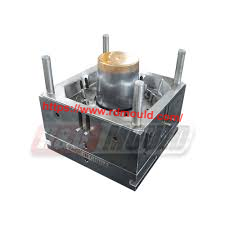
The prevention of warpage and flash in bucket production begins long before the first shot is fired on the shop floor. A Bucket Mold Factory relies on sophisticated mould flow analysis software to simulate the injection process, predicting how molten polymer will fill the cavity, where it will cool, and what stresses will develop. Rdmould integrates this analytical step into its design protocol, recognising that virtual testing prevents costly physical modifications. The core question facing any bucket manufacturer is straightforward: how does this simulation translate into tangible defect reduction on the production line?
The primary contribution of flow analysis lies in its ability to predict filling patterns. For a bucket mould, the gate location determines the flow path length and the pressure required to fill the cavity completely. Flow analysis evaluates multiple gate positions, identifying the arrangement that produces balanced filling without creating weld lines in visible or structurally sensitive areas. For large buckets exceeding five litres in capacity, the analysis often reveals the need for multiple gates or a hot runner system to distribute polymer evenly. This early optimisation prevents the short shots and non-uniform packing that contribute to both warpage and flash.
Cooling system design receives substantial attention during flow analysis. The thermal behaviour of the mould directly influences dimensional stability; uneven cooling creates differential shrinkage that pulls the bucket out of shape. The analysis identifies hot spots where polymer retains heat longer than surrounding areas. For the core, cooling channels positioned approximately fifteen millimetres below the moulding surface ensure efficient heat extraction. The analysis guides the placement of channels with adequate diameter, exceeding twelve millimetres for water flow, to maintain consistent cooling across the entire core surface. Proper thermal management prevents the residual stresses that manifest as warpage upon ejection.
The prediction of pressure distribution throughout the cavity provides specific insights into flash prevention. Flow analysis calculates the pressure at each point during filling and packing phases. When the analysis reveals pressure spikes along the parting line, it indicates regions where the clamping force may be insufficient to contain the polymer. This finding prompts adjustments to the injection profile or the addition of supplementary clamping for that specific area. The analysis also evaluates the venting system, ensuring that trapped air can escape without requiring excessive injection pressure that forces material into the parting line. Proper vent design, confirmed through simulation, reduces both flash and the risk of burning.
The relationship between wall thickness and flow behaviour becomes apparent through analysis. Bucket designs often incorporate variations in thickness to provide handle attachments, ribbed bottoms, or rolled rims. Each thickness transition creates a potential point for flow hesitation or acceleration, influencing the orientation of polymer molecules and the resulting shrinkage pattern. Flow analysis visualises these transitions, allowing designers to adjust radii and taper angles to maintain consistent flow velocity across the part. This geometric refinement prevents the non-uniform shrinkage that pulls the bucket out of round or creates sink marks opposite thick sections.
The selection of processing parameters benefits directly from flow analysis output. The simulation provides recommended injection speed, melt temperature, and packing pressure ranges for the specific material grade being processed. For polypropylene buckets, the analysis indicates the ideal fill time to achieve balanced flow without exceeding the shear stress limits that degrade material properties. These parameter guidelines reduce the time required for machine setup and trial, as the process engineer starts with proven values rather than guesswork. The reduction in setup time translates directly to increased production availability.
Flow analysis also assists in evaluating material alternatives. When a bucket application requires specific mechanical properties—impact resistance for paint pails or stiffness for storage containers—the analysis tests how different material grades behave under identical mould conditions. This comparative capability enables informed selection without committing to multiple physical trials. For a Bucket Mold Factory processing various materials, this adaptability allows quick qualification of new material sources or formulations without extensive production disruption.
The validation of design modifications occurs efficiently through flow analysis. When a design iteration changes the gate location, adds ribs, or modifies the wall thickness distribution, the analysis updates rapidly to show the new flow pattern. This capability accelerates the development cycle, enabling multiple design iterations within a virtual environment before any physical mould construction begins. The reduction in physical trials lowers development costs and shortens time-to-market for new bucket products, a factor of substantial importance in competitive packaging markets.
For a comprehensive understanding of how simulation principles apply to specific bucket mould configurations, technical resources are available at https://www.rdmould.com/. Experienced mould manufacturers integrate flow analysis findings into their overall quality management system. The correlation between simulated predictions and actual mould performance continues to improve as software accuracy advances and material characterisation data becomes more comprehensive. Monitoring actual production results against simulation predictions closes the feedback loop, enabling continuous improvement of both the analysis models and the mould designs. How effectively does your current design process incorporate flow simulation to prevent defects before they occur?