A healthcare scheduling platform once rolled out a new appointment module without properly checking how it behaved under real clinic traffic. Within days, double-bookings started piling up, patients were showing up to empty rooms, and front-desk staff were stuck manually untangling the mess. Nothing about the code itself was careless — the team had simply never put it through the kind of scrutiny that QA testing is designed to provide.
Situations like this play out across industries far more often than people assume, usually because testing gets treated as a quick final step rather than something woven throughout development. This guide changes that mindset. You'll get a clear picture of what quality assurance really involves, which testing types matter most, and a straightforward roadmap for catching issues long before customers ever do.
Why QA Testing Belongs at the Center of Development
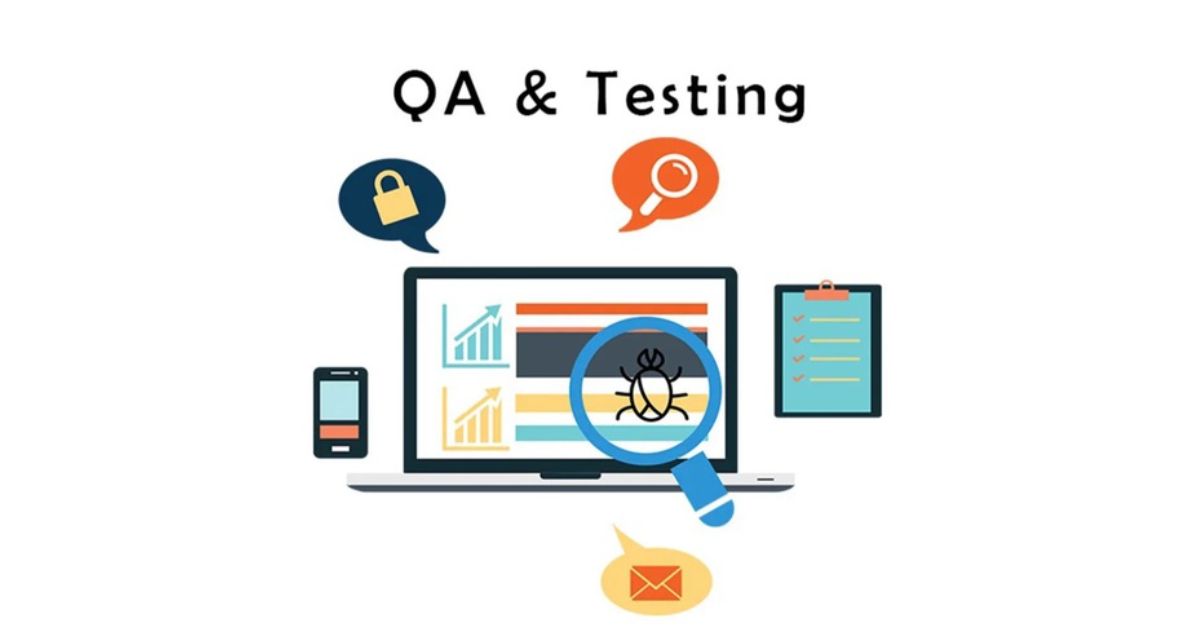
QA testing is the continuous process of reviewing software — from early development through final release — to catch bugs, security weaknesses, and performance bottlenecks before they reach real users. It works much like a car's pre-drive inspection: easy to skip, but the difference between a smooth trip and a breakdown on the highway.
Groups such as ISTQB describe testing as the way teams replace assumptions with actual proof that a product performs as expected. Without that proof, every release becomes a bet placed with your users' trust.
The Key Testing Types Behind Reliable Software
Different risks demand different checks, which is why relying on just one testing method almost always leaves gaps. Here's what a complete approach covers:
Application security testing hunts for the openings attackers look for, such as weak authentication or poorly guarded data. Free, widely respected guidance from OWASP gives teams of any size a solid starting point for closing these gaps.
Performance testing checks whether software holds steady once real demand arrives, rather than just when a handful of testers try it out. A signup page that feels instant with ten users but crawls under ten thousand is a performance issue hiding until it's too late. The field of software performance testing splits this into load, stress, and scalability checks, each surfacing a different type of weakness.
Software security testing widens the lens further, examining code, configurations, and infrastructure for exposure at every level. It shouldn't be a single pre-launch task — it needs a permanent spot inside every sprint.
Web application security testing zeroes in on browser-based platforms in particular, watching for risks like cross-site scripting and insecure sessions that behave differently than they would in native mobile or desktop environments.
Qa automation testing services put tools and scripts to work handling repetitive checks, such as regression testing, without redoing them by hand each release. This frees testers to spend their energy on the trickier scenarios that still need human judgment.
A Clear, Step-by-Step Path to Stronger QA
Improving software quality is less about a massive overhaul and more about following a consistent plan. Here's one to start with:
Step 1 — Clarify what quality means for your product. Uptime, speed, and security don't carry equal weight for every product, so settle your priorities early.
Step 2 — Combine multiple testing types. Pair core functional checks with application security testing and performance testing to confirm the software both works and withstands pressure.
Step 3 — Automate what repeats. Rely on qa automation testing services for regression suites and routine checks that would otherwise consume hours every release.
Step 4 — Move testing earlier in the process. A bug found during coding costs far less to fix than one discovered after launch — the reasoning behind shift-left testing.
Step 5 — Get an outside perspective. Teams close to their own product often miss what a fresh set of eyes spots immediately. Experienced qa testing services bring that outside view, along with tools refined across many past projects.
Step 6 — Treat it as an ongoing cycle. Reassess and refine your testing approach with every release, rather than considering it finished after one pass.
Why Working With QA Testing Services Makes Sense
Building an internal testing team — hiring, training, and equipping it — takes months many companies simply don't have. That's why so many turn instead to established qa testing services, gaining mature processes and experienced testers right away instead of building from scratch.
ThinkDone Solutions exists for exactly this reason. Testing isn't an afterthought here — it's built into your development lifecycle from day one, combining web application security testing, software security testing, and detailed performance checks into a single coordinated process. Instead of juggling multiple vendors or hoping internal reviews catch everything, you get one dedicated partner focused entirely on how well your product holds up. Teams working with ThinkDone Solutions consistently see fewer emergency fixes after release, faster turnaround times, and users who stay because the product simply performs.
If unstable releases, security concerns, or slow performance have caused stress before, a dedicated testing partner offers a practical way to move forward with real confidence.
Conclusion
Dependable software isn't finished off at the last minute — it's built carefully, one layer at a time. From application security testing to software performance testing, every testing discipline exists to protect the thing your business truly depends on: user trust. Whether you sharpen your internal process or bring in specialists like ThinkDone Solutions, the goal stays the same — software that works, stays secure, and earns repeat users.
FAQs
1. What is the difference between QA testing and software testing?
QA testing is the wider discipline covering process, standards, and prevention across the full development lifecycle. Software testing is the specific, hands-on work within that discipline — running checks to catch bugs.
2. How often should performance testing be done?
Performance testing should run with every major release and ahead of high-traffic moments, such as a launch or seasonal spike, rather than just once a year.
3. Do QA testing services make sense for smaller businesses?
Yes. Many qa testing services offer scalable packages, letting smaller teams start with priorities like application security testing and expand as the product grows.
4. Can automation fully replace manual QA testers?
No. Qa automation testing services are strong for repetitive, predictable checks, but manual testers are still needed for exploratory testing and catching the unexpected issues automation tends to miss.