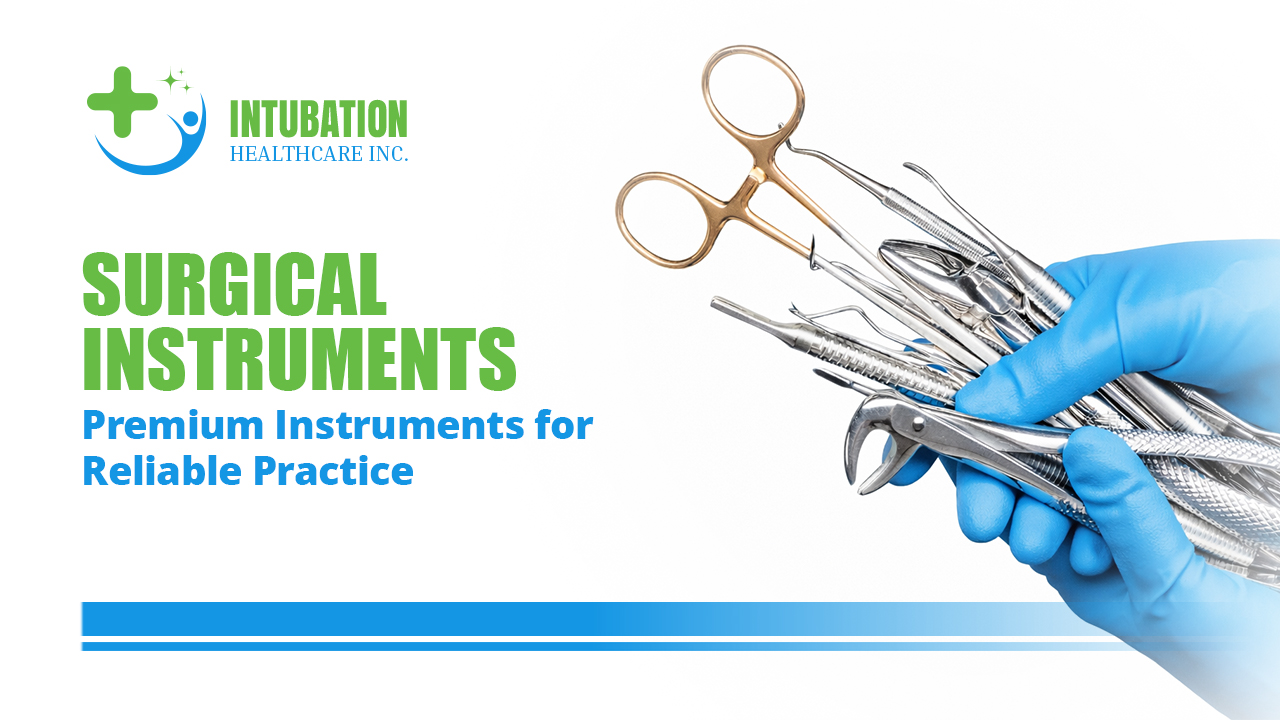
Clinical performance depends on more than the knowledge and experience of the surgical team. It also depends on the reliability of the instruments placed in their hands.
During a procedure, surgical scissors must cut as intended, forceps must provide controlled tissue handling, clamps must close securely, and retractors must maintain appropriate exposure. Instruments that are poorly aligned, difficult to operate, damaged, or unsuitable for the procedure can disrupt workflow and make precise clinical tasks more difficult.
For hospitals, surgical centers, private practices, and specialty clinics, investing in durable surgical instruments can support more consistent instrument function, efficient preparation, and dependable performance over repeated uses. Durability also contributes to long-term procurement value when reusable instruments are properly cleaned, inspected, sterilized, stored, and maintained.
What Makes a Surgical Instrument Durable?
Durability is not simply the ability to remain physically intact. A durable surgical instrument should retain the functional characteristics required for its intended clinical task.
Depending on the instrument, these characteristics may include:
- Accurate alignment of tips, jaws, and working surfaces
- Smooth opening and closing action
- Secure ratchet engagement
- Appropriate cutting-edge sharpness
- Structural stability under normal clinical use
- Corrosion resistance
- Balanced, comfortable handling
- Compatibility with the validated reprocessing method
- A finish that supports cleaning and visual inspection
Many reusable instruments are manufactured from stainless steel because it offers a practical combination of strength, corrosion resistance, cleanability, and suitability for repeated handling. However, material alone does not determine quality. Manufacturing precision, joint construction, surface finish, heat treatment, alignment, and quality control also influence how an instrument performs.
Why Instrument Durability Matters in Clinical Settings
A surgical instrument is an interface between the clinician's technique and the target tissue, material, or medical device. Small changes in instrument condition can therefore affect how a clinical task feels and how efficiently it is performed.
Durable, well-maintained instruments can support clinical performance in several important ways.
1.More Consistent Cutting Performance
Surgical scissors are used for functions ranging from cutting tissue and sutures to preparing dressings and other materials. The required blade geometry and strength vary according to the task.
A quality pair of surgical scissors should open smoothly, close accurately, and provide predictable cutting action. Scissors with loose joints, damaged edges, poor blade contact, or misalignment may require additional effort or repeated cutting motions.
Durable stainless steel surgical scissors can retain their functional geometry for longer when they are used only for their intended purpose and maintained according to the manufacturer's instructions. This supports a more consistent experience for the clinician while helping the facility avoid premature instrument replacement.
Facilities planning to buy surgical instruments online should evaluate the intended use, size, blade pattern, tip design, material, and maintenance requirements rather than selecting scissors based only on price.
2. Reliable Grasping and Tissue Handling
Forceps are designed for highly specific grasping and handling tasks. Depending on the pattern, they may be used with fabric, dressings, sutures, tubing, or other materials.
Clinical control depends on factors such as:
- Tip alignment
- Jaw pattern
- Serration condition
- Spring tension
- Handle balance
- Appropriate instrument size
When forceps are bent, worn, or poorly aligned, the clinician may receive less predictable feedback. Excessive force may also be required to maintain a grip.
Well-manufactured, durable surgical forces support controlled handling by maintaining their intended alignment and mechanical action. Tissue forceps, dressing forceps, Magill forceps, and ophthalmic forceps should each be selected according to their specific design and clinical application.
3. Dependable Clamping and Hemostasis
Clamps and hemostatic forceps must close correctly and maintain appropriate jaw contact. The ratchet should engage smoothly, while the jaws should meet in the manner intended by the instrument's design.
Signs of reduced performance can include:
- Misaligned jaws
- Uneven closure
- Loose box joints
- Damaged serrations
- Ratchets that slip or lock inconsistently
- Corrosion around joints
- Excessive stiffness
Durable clamps help surgical teams maintain a more consistent instrument inventory. However, durability should never be used as a reason to keep a damaged instrument in circulation. Instruments that fail inspection should be removed from service and evaluated under the facility's repair or replacement process.
4. Stable Exposure of the Operative Area
Retractors support visualization and access by holding tissue or wound edges in an appropriate position. A retractor that bends unexpectedly, fails to lock, or has damaged working surfaces can interrupt the procedure and require replacement during use.
Durable surgical retractors are designed to maintain structural stability during their intended application. Self-retaining retractors also require reliable joints, locking mechanisms, and blade connections.
The correct retractor must still be chosen for the anatomy, procedure, and clinical technique. Strength alone does not make an instrument suitable. Size, blade shape, depth, weight, and mechanism are also important selection factors.
5. Better Instrument Handling and Clinician Control
Instrument balance, resistance, grip, and mechanical feedback can affect how naturally a surgical tool functions in the hand.
A durable instrument should retain these handling characteristics through its expected service life. For example:
- Needle holders should maintain appropriate jaw alignment and grip.
- Scissors should move without excessive looseness or stiffness.
- Forceps should provide predictable spring tension.
- Ring-handled instruments should engage without irregular movement.
- Fine ophthalmic instruments should preserve accurate tip alignment.
Consistent handling can reduce unnecessary adjustments and allow the clinician to concentrate on the procedure rather than compensate for an unreliable tool.
Instrument durability does not replace clinical skill, but it can support the precise application of that skill.
6. Fewer Workflow Interruptions
An instrument that does not function as expected may need to be replaced during setup or during the procedure. The team must then locate an alternative, introduce it into the sterile field, and confirm that it is appropriate for the task.
A reliable inventory of professional surgical instruments can help reduce avoidable workflow interruptions caused by visibly damaged, poorly maintained, or functionally inconsistent tools.
This is especially relevant in high-volume environments such as:
- Hospital operating rooms
- Ambulatory surgical centers
- Emergency departments
- Outpatient procedure rooms
- Dental and oral surgery practices
- Ophthalmic clinics
- Plastic and reconstructive surgery facilities
- Veterinary surgical settings
Instrument availability, inspection, tray organization, and inventory management must work together. Even a high-quality instrument cannot improve workflow when it is missing from the correct set or has not completed the required reprocessing cycle.
7. Greater Value Across the Instrument Life Cycle
The lowest purchase price does not always produce the lowest overall cost.
When a low-quality instrument loses alignment, corrodes, becomes difficult to operate, or requires frequent replacement, the facility may incur additional costs related to:
- Replacement purchasing
- Repair administration
- Tray shortages
- Staff time
- Inventory duplication
- Delayed set assembly
- Expedited orders
- Procedure preparation
Durable reusable surgical instruments may offer better life-cycle value when their acquisition cost is evaluated alongside expected service life, reprocessing compatibility, maintenance requirements, and supplier support.
Procurement teams comparing surgical equipment should consider cost per use rather than unit price alone.
8. More Predictable Reprocessing and Inspection
Reusable instruments must be processed according to their manufacturer's instructions for use and the healthcare facility's validated procedures.
Cleaning is an essential step before disinfection or sterilization because retained organic or inorganic material can interfere with effective microbial inactivation. The CDC also notes that processing methods and chemicals must be compatible with instrument materials to avoid corrosion, distortion, or other damage. uments with accessible surfaces, smooth finishes, and properly functioning joints can be easier to inspect for:
- Residual contamination
- Cracks
- Pitting
- Discoloration
- Corrosion
- Loose components
- Damaged insulation
- Worn serrations
- Misalignment
- Reduced cutting performance
Steam sterilization and other reprocessing methods can affect certain materials over time, making material compatibility and adherence to the manufacturer's essential instructions. erefore includes the ability to tolerate the instrument's specified reprocessing cycle—not resistance to every chemical, temperature, or sterilization method.
How Durability Supports Different Surgical Instrument Categories
Surgical Scissors
Durable surgical scissors should maintain blade alignment, joint stability, and appropriate sharpness. The correct pattern should be selected for fabric, sutures, dressings, or other intended materials.
Surgical Forceps
Forceps require accurate tip or jaw alignment. Durable construction helps preserve grip, spring tension, and control across repeated clinical use.
Clamps and Hemostatic Forceps
These instruments depend on reliable jaw contact, ratchet action, and box-joint integrity. Routine inspection is particularly important for detecting looseness or corrosion around moving components.
Needle Holders
Needle holders need secure jaw engagement without unintended slipping. Worn or damaged jaws can affect needle control and should be evaluated promptly.
Surgical Retractors
Retractors should maintain their intended shape and locking action. Structural stability is essential for maintaining appropriate exposure without unexpected movement.
Anesthesia and Intubation Instruments
Reusable laryngoscope components, intubation forceps, and related airway tools require dependable construction, correct sizing, and reprocessing compatibility. Function checks should be completed according to applicable instructions and facility protocols.
Ophthalmic Instruments
Ophthalmic procedures involve delicate structures and often require fine tips, precise alignment, and lightweight control. Small amounts of tip damage or misalignment may materially affect instrument function.
Plastic Surgery Instruments
Plastic and reconstructive surgery may involve specialized scissors, retractors, dissectors, cannulas, and forceps. Durable specialty instruments support consistency across procedures while protecting the facility's investment in procedure-specific equipment.
How to Evaluate Durability Before Buying Surgical Instruments
Healthcare buyers should review more than the product name and image. Before ordering, consider the following factors.
Intended Clinical Application
Confirm that the instrument pattern, size, tip configuration, and working surface are appropriate for the procedure.
Material and Construction
Review the stated instrument material and any available details about joints, inserts, finish, or specialized components.
Reusable or Single-Use Design
Never assume an instrument is reusable. Confirm its intended use and reprocessing requirements through the product information and manufacturer's instructions.
Reprocessing Compatibility
Determine whether the instrument is compatible with the facility's cleaning, disinfection, sterilization, lubrication, and storage processes.
Functional Specifications
Check dimensions, jaw style, tip pattern, curvature, blade type, and locking mechanism.
Supplier Reliability
Choose a surgical instruments supplier that provides clear product categories, detailed descriptions, accessible customer support, and straightforward ordering information.
Long-Term Value
Evaluate expected frequency of use, maintenance needs, availability of replacements, and the operational cost of instrument failure or premature wear.
Maintenance Practices That Protect Instrument Performance
Even the most durable instrument can deteriorate when it is misused or processed incorrectly. Facilities should follow the applicable manufacturer's instructions and established infection-control policies.
General practices include:
- Use each instrument only for its intended function.
- Prevent soil from drying on instruments after use.
- Clean instruments before disinfection or sterilization.
- Pay close attention to joints, serrations, lumens, and hidden surfaces.
- Use compatible detergents, chemicals, water quality, and sterilization methods.
- Inspect instruments under adequate lighting.
- Test cutting, clamping, locking, and grasping functions where appropriate.
- Lubricate moving parts only with compatible products and as directed.
- Store instruments in a way that protects tips, edges, and delicate components.
- Remove damaged or questionable instruments from service.
These measures help protect both the facility's investment and the consistency of its instrument inventory.
Why Choose Intubation Healthcare for Surgical Instruments?
Intubation Healthcare supplies a broad selection of instruments for hospitals, clinics, surgical centers, private practices, training environments, and healthcare professionals.
The available categories include general surgical instruments, forceps, scissors, anesthesia and intubation instruments, ophthalmic instruments, plastic surgery instruments, dental products, electrosurgical accessories, and student practice kits. plore individual instruments and surgical instrument sets according to their clinical specialty, procedural requirements, and purchasing needs.
When you are ready to buy surgical instruments online , compare the instrument's function, dimensions, material, reusability, care requirements, and intended application. Choosing the right tool from a dependent medical equipment supplier can support better inventory planning and long-term procurement value.
Conclusion
Durable surgical instruments support clinical performance by maintaining the functional characteristics required for cutting, grasping, clamping, retracting, suturing, and tissue handling.
Their value extends beyond physical strength. True instrument durability includes accurate alignment, smooth mechanical action, reliable working surfaces, corrosion resistance, reprocessing compatibility, and consistent handling.
For healthcare facilities, investing in high-quality instruments can contribute to more predictable workflows, fewer avoidable replacements, and better long-term value. These benefits depend on appropriate instrument selection, professional use, validated reprocessing, routine inspection, and timely repair or replacement.
Explore Intubation Healthcare's collection of stainless steel surgical instruments, reusable surgical instruments, forceps, scissors, clamps, retractors, and specialty surgical equipment to find options suited to your professional requirements.
Frequently Asked Questions
What are durable surgical instruments?
Durable surgical instruments are tools designed to retain their structure and intended functionality during their expected service life. Depending on the instrument, durability may involve corrosion resistance, jaw alignment, edge retention, joint stability, locking performance, or structural strength.
Why are stainless steel surgical instruments commonly used?
Stainless steel is commonly used because it can provide strength, corrosion resistance, cleanability, and compatibility with specified reprocessing methods. Performance also depends on the steel type, instrument design, manufacturing quality, finish, use, and maintenance.
Do durable instruments improve surgical outcomes?
Durable instruments can support consistent handling, precision, and workflow, but no instrument alone guarantees a clinical outcome. Outcomes depend on the patient, procedure, surgical team, technique, care environment, instrument selection, maintenance, and many other factors.
How often should reusable surgical instruments be inspected?
Reusable instruments should be visually and functionally inspected as required by the manufacturer's instructions and the healthcare facility's policies. Inspection commonly occurs during cleaning, set assembly, preparation, and before use.
When should a surgical instrument be replaced?
An instrument should be removed from service when it is cracked, corroded, misaligned, loose, excessively stiff, unable to lock correctly, unable to cut or grip as intended, or otherwise fails the facility's inspection criteria.
Where can healthcare professionals buy surgical instruments online?
Healthcare professionals can shop online through an established surgical instrument and medical equipment supplier. Intubation Healthcare offers general and specialty surgical instruments for hospitals, clinics, medical practices, students, and other professional buyers.