Introduction
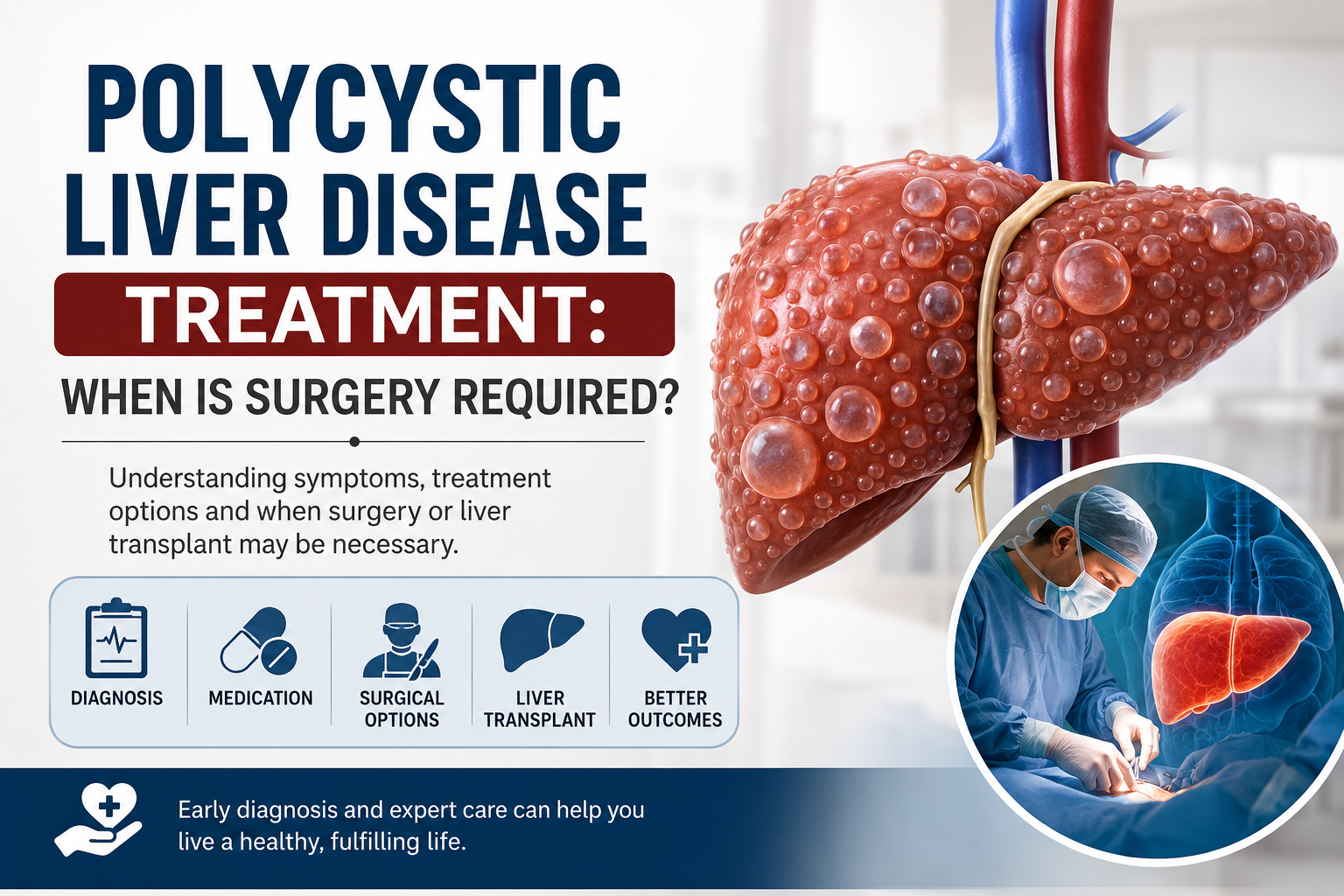
Being diagnosed with Polycystic Liver Disease (PLD) can feel overwhelming. The condition causes multiple fluid-filled cysts to develop in the liver, making many people wonder if surgery is inevitable. Fortunately, that's rarely the case. Most people with PLD continue to live healthy, active lives without ever needing an operation.
Think of your liver as a well-organized city. A few small buildings (the cysts) don't disrupt everyday life. But when too many buildings appear or grow too large, they begin to crowd the city, affecting roads, services, and daily activities. Similarly, large or numerous liver cysts can press on nearby organs and lead to uncomfortable symptoms that may require treatment.
One of the most common questions patients ask is, "When is surgery actually necessary?" The answer depends on the size, number, and location of the cysts, as well as how much they affect your daily life.
This guide explains everything you need to know about Polycystic Liver Disease treatment, from regular monitoring and medications to surgery and liver transplantation, in simple, easy-to-understand language.
1. Understanding Polycystic Liver Disease (PLD)
Polycystic Liver Disease (PLD) is a rare condition in which multiple fluid-filled cysts develop throughout the liver. These cysts are usually benign (non-cancerous) and often do not affect how the liver works.
PLD may occur:
- On its own (Isolated PLD)
- Along with Polycystic Kidney Disease (PKD)
Many people discover they have PLD by accident during an ultrasound or CT scan performed for another reason. Since the cysts are often small, they may not cause any symptoms for years.
Even when several cysts are present, the liver usually continues to function normally.
2. What Causes Polycystic Liver Disease?
PLD is usually an inherited genetic condition. It develops because of changes in genes responsible for the normal growth and development of liver cells.
Risk factors include:
- A family history of PLD
- Being female
- Multiple pregnancies
- Long-term exposure to estrogen
- Having Polycystic Kidney Disease (PKD)
Women generally develop larger and more numerous cysts than men, which is why they are more likely to experience symptoms.
3. Symptoms You Should Never Ignore
Most people with PLD experience no symptoms, especially during the early stages.
However, as cysts increase in size or number, they may begin pressing on nearby organs and cause symptoms such as:
- Abdominal fullness or bloating
- Upper abdominal discomfort or pain
- Feeling full after eating only a small amount
- Difficulty eating large meals
- Shortness of breath
- Back pain
- Nausea
- Heartburn or indigestion
Rare but serious complications include:
- Bleeding inside a cyst
- Infection of a cyst
- Rupture of a cyst
- Compression of nearby organs or blood vessels
If you develop sudden severe pain, fever, or rapidly worsening symptoms, seek medical attention immediately.
4. How Doctors Diagnose PLD
Doctors usually diagnose PLD using imaging tests, which help determine the number, size, and location of liver cysts.
Ultrasound
Often the first test performed because it is quick, safe, and painless.
CT Scan
Provides detailed images showing:
- Number of cysts
- Size of cysts
- Exact location
- Pressure on surrounding organs
MRI Scan
An MRI offers even more detailed images and is especially useful when surgery is being considered.
Blood Tests
Interestingly, liver function tests are often completely normal, even when numerous cysts are present.
Since PLD is commonly associated with Polycystic Kidney Disease, doctors usually recommend imaging of the kidneys as well.
5. Can Polycystic Liver Disease Be Treated Without Surgery?
Yes. In fact, most people with PLD never require surgery.
If the cysts are small and not causing symptoms, doctors usually recommend watchful waiting, which includes:
- Regular medical check-ups
- Periodic imaging scans
- Maintaining a healthy lifestyle
- Monitoring for new symptoms
Simply observing the condition is often the safest and most appropriate treatment.
6. Medications That May Slow Disease Progression
Although there is no medicine that cures PLD, certain medications may help slow cyst growth and reduce symptoms.
Somatostatin Analogues
These medications may help:
- Slow the growth of liver cysts
- Reduce overall liver volume
- Improve symptoms in selected patients
They are particularly helpful for people who are not immediate candidates for surgery or who are waiting for a procedure.
7. When Does Surgery Become Necessary?
This is one of the most important questions for patients with PLD.
Surgery is generally recommended only when cysts significantly affect quality of life or lead to serious complications.
Your doctor may recommend surgery if you have:
Persistent Pain
Pain that continues despite medication and affects daily activities.
Massive Liver Enlargement
The liver becomes so enlarged that it presses on surrounding organs.
Difficulty Eating
Feeling full after only a few bites because the enlarged liver compresses the stomach.
Breathing Problems
Large cysts push against the diaphragm, making it difficult to breathe comfortably.
Repeated Cyst Infections
Recurring infections that affect overall health and quality of life.
Bleeding Cysts
Internal bleeding within cysts that requires medical treatment.
Severely Enlarged Abdomen
An enlarged liver that interferes with normal movement and everyday activities.
The decision to operate is always made after a thorough evaluation by an experienced liver specialist.
8. Surgical Treatment Options
The type of surgery depends on how many cysts are present, where they are located, and how severe the symptoms are.
A. Cyst Aspiration
A needle is inserted into a large cyst to drain the fluid.
This procedure is usually recommended when:
- One or two large cysts are causing discomfort.
B. Aspiration with Sclerotherapy
After draining the cyst, a special solution is injected to reduce the chance of the cyst filling up again.
C. Laparoscopic Fenestration
Using small incisions, surgeons remove portions of the cyst walls to relieve pressure.
Benefits include:
- Less pain
- Smaller scars
- Shorter hospital stay
- Faster recovery
D. Liver Resection
If cysts are concentrated in one part of the liver, surgeons may remove that section while preserving healthy liver tissue.
This option is considered when:
- Cysts are limited to one area.
- Enough healthy liver remains.
Because it is a complex operation, it should only be performed by experienced liver surgeons.
9. Is Liver Transplant Ever Necessary?
Yes—but only in rare and severe cases.
A liver transplant may be recommended when:
- Most of the liver has been replaced by cysts.
- Symptoms are severe and cannot be controlled with other treatments.
- Nutrition becomes poor because eating is difficult.
- Quality of life is significantly affected.
Unlike many other liver diseases, transplantation for PLD is usually performed because of severe symptoms rather than liver failure.
Patients should undergo a comprehensive evaluation at a specialized liver transplant center. Consulting the best liver transplant surgeon in india and an experienced multidisciplinary transplant team helps ensure the most appropriate treatment plan.
10. Recovery After Surgery
Recovery depends on the type of procedure performed.
After Cyst Aspiration
- Usually performed as a day-care procedure
- Most patients return to normal activities within a few days
After Laparoscopic Surgery
- Hospital stay: 2–5 days
- Light activities: 2 weeks
- Full recovery: 4–6 weeks
After Liver Resection
- Hospital stay: 5–10 days
- Recovery may take several weeks
After Liver Transplant
Recovery is longer and includes:
- Lifelong immunosuppressive medication
- Regular follow-up appointments
- Nutritional support
- Infection prevention
- Routine monitoring
11. Lifestyle Changes That Support Liver Health
Although lifestyle changes cannot remove cysts, they can improve overall liver health and help you feel better.
Eat a Healthy Diet
Choose:
- Fresh fruits
- Vegetables
- Whole grains
- Lean proteins
Stay Well Hydrated
Drinking enough water supports overall health.
Maintain a Healthy Weight
Reducing excess weight can ease pressure on the abdomen.
Avoid Excess Alcohol
Alcohol can damage the liver and should be limited or avoided.
Exercise Regularly
Activities such as walking, swimming, or yoga help improve overall fitness and well-being.
Use Medicines Carefully
Always consult your doctor before taking herbal supplements or over-the-counter medications.
12. What Happens If PLD Is Left Untreated?
Many patients remain stable for years without major problems.
However, untreated symptomatic PLD can lead to:
- Chronic abdominal pain
- Malnutrition
- Breathing difficulties
- Recurrent cyst infections
- Bleeding cysts
- Reduced quality of life
- Rarely, liver transplantation
Regular follow-up appointments help detect complications before they become serious.
13. Choosing the Right Liver Specialist
Managing PLD often requires a team of experienced specialists.
Look for experts in:
- Hepatology
- Liver surgery
- Minimally invasive liver procedures
- Liver transplantation
- Complex liver diseases
If surgery is being considered, consulting the best liver transplant surgeon in india or a high-volume transplant center ensures that every treatment option—including non-surgical management—is carefully evaluated.
14. What Is the Outlook for People with PLD?
The long-term outlook for most people with PLD is excellent.
Most patients:
- Live healthy, active lives.
- Never need surgery.
- Maintain normal liver function.
- Experience slow disease progression.
Even patients who require surgery often experience significant relief from symptoms and enjoy a much better quality of life.
Advances in imaging technology, minimally invasive surgery, and liver transplantation continue to improve patient outcomes every year.
15. Conclusion
Although Polycystic Liver Disease may sound frightening, it is usually a manageable condition. Most people never require surgery and can continue living normal lives with regular monitoring and appropriate medical care.
When symptoms such as persistent pain, difficulty eating, breathing problems, or recurrent cyst complications develop, several effective treatment options are available. These range from medications and minimally invasive procedures to liver surgery and, in rare cases, liver transplantation.
The key is not to ignore persistent symptoms. Early diagnosis, routine follow-up, and consultation with experienced liver specialists can make a significant difference in treatment outcomes. With the right care, most people with PLD can maintain an excellent quality of life for many years.
Frequently Asked Questions (FAQs)
1. Can Polycystic Liver Disease be cured?
There is currently no permanent cure for PLD. However, medications, minimally invasive procedures, and surgery can effectively manage symptoms. In severe cases, a liver transplant may provide a long-term solution.
2. Does everyone with PLD need surgery?
No. Most people with PLD never require surgery. Treatment depends on the size and number of cysts, the severity of symptoms, and their impact on daily life.
3. Can liver cysts become cancerous?
The cysts seen in Polycystic Liver Disease are almost always benign. However, any unusual symptoms or changes should be evaluated by a liver specialist.
4. Is liver transplantation common for Polycystic Liver Disease?
No. Liver transplantation is rarely required and is usually reserved for patients with severe symptoms that cannot be managed with other treatments.
5. How often should someone with PLD see a doctor?
The frequency depends on the severity of the condition. People without symptoms may only need periodic check-ups, while those with larger cysts or ongoing symptoms should follow their specialist's recommended schedule.