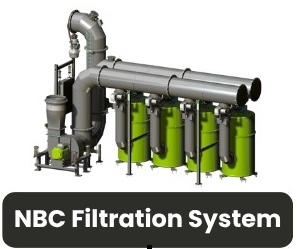
Imagine an underground military command centre operating during a chemical contamination event. While communication systems remain functional and backup power is online, the entire facility depends on one critical engineering system to keep personnel safe—its air filtration and pressurization infrastructure. In such environments, a reliable CBRN Filtration System becomes as essential as reinforced structures or secure communications, ensuring occupants continue operating in a controlled and breathable environment despite hazardous external conditions.
As geopolitical risks, industrial accidents, and emergency preparedness requirements continue to evolve, Nuclear, Biological, and Chemical (NBC) protection has become a priority across defence establishments, strategic infrastructure, and critical industrial facilities. Selecting the right filtration solution requires more than comparing equipment specifications. It demands a thorough understanding of contamination risks, engineering performance, regulatory compliance, and long-term operational reliability.
Understanding the Role of a CBRN Filtration System
A CBRN Filtration System is engineered to protect enclosed facilities from airborne nuclear particles, biological pathogens, toxic industrial chemicals, and chemical warfare agents. Unlike conventional HVAC filtration, these systems are designed to maintain breathable air while preventing hazardous contaminants from entering protected environments.
A modern nbc filter system generally integrates multiple filtration stages, including particulate removal, activated carbon adsorption, and controlled airflow management. Together, these components create a secure internal environment capable of supporting personnel during contamination incidents.
Facilities ranging from military bunkers to petrochemical plants rely on these systems to maintain operational continuity under challenging conditions.
How a CBRN Filtration System Works
The effectiveness of a CBRN Filtration System depends on a coordinated sequence of engineering processes rather than a single filter element.
Incoming air first passes through pre-filters that capture larger airborne particles and extend the service life of downstream filters. HEPA filtration then removes extremely fine radioactive particles and biological contaminants with high efficiency. Activated carbon beds subsequently adsorb toxic gases, volatile chemicals, and chemical warfare agents before purified air enters the protected space.
Positive pressure ventilation further enhances protection by ensuring that any leakage occurs outward rather than allowing contaminated external air to infiltrate occupied areas.
Key Engineering Features to Evaluate
Modern NBC filtration solutions are expected to perform reliably under demanding environmental and operational conditions. Important engineering characteristics include:
- High-efficiency HEPA filtration for radioactive and biological particle removal
- Activated carbon filtration for toxic gas adsorption
- Positive pressure operation to prevent contaminant ingress
- Corrosion-resistant construction suitable for harsh environments
- Compatibility with continuous air quality monitoring systems
- Modular configurations for varying airflow requirements
- Energy-efficient fan assemblies
- Long operational life with simplified maintenance access
- Reliable emergency operation during power backup conditions
These features contribute directly to occupant safety while reducing lifecycle maintenance demands.
Applications Across Critical Infrastructure
NBC protection extends well beyond defence installations. Today, these systems are increasingly incorporated into infrastructure where uninterrupted operations and personnel protection are essential.
Common applications include:
- Military shelters and underground command centres
- Border security facilities
- Ammunition storage depots
- Government security buildings
- Nuclear power plants
- Chemical processing facilities
- Petrochemical complexes
- Emergency operation centres
- Underground bunkers
- Strategic infrastructure
- Data centres supporting national security
- Critical industrial facilities
Growing interest in NBC filter for bunker applications reflects the increasing emphasis on resilient infrastructure capable of functioning during emergency scenarios.
System Selection Factors That Matter
Selecting an NBC filtration solution should begin with a comprehensive threat assessment rather than equipment comparisons.
Airflow Capacity
Airflow calculations should account for facility occupancy, ventilation requirements, and shelter dimensions to ensure adequate fresh air supply under emergency conditions.
Filtration Performance
Protection levels should correspond to anticipated nuclear, biological, and chemical threats while complying with applicable defence or industrial standards.
Facility Characteristics
Environmental conditions, installation constraints, operating temperatures, humidity, and available utility infrastructure all influence system design.
Monitoring and Control
Modern systems increasingly incorporate automated monitoring, pressure sensors, filter status indicators, and alarm systems that improve operational reliability.
Lifecycle Planning
Maintenance schedules, filter replacement accessibility, spare parts availability, and long-term operating costs are often more significant than initial procurement expenses.
Although online searches frequently include terms such as NBC air filtration system price or NBC filtration system in faridabad price, engineering suitability should always take precedence over upfront cost comparisons. Performance under real contamination scenarios remains the primary objective.
Buyer's Guide: Choosing the Right Manufacturer
When evaluating the Top CBRN filtration system manufacturers in India or reviewing the Top NBC filtration system manufacturers in India procurement teams should consider several technical and organizational factors beyond product brochures.
A capable manufacturer should demonstrate:
- Proven experience in defence and industrial air protection systems
- Advanced manufacturing infrastructure
- Comprehensive testing and validation procedures
- Compliance with relevant quality and engineering standards
- Product customization capabilities
- Detailed engineering documentation
- Installation guidance and commissioning support
- Preventive maintenance expertise
- Long-term technical assistance
- Strong record of system reliability in demanding environments
For readers seeking additional technical information on design considerations and engineering principles, this resource on CBRN Filtration System provides useful background on integrated contamination protection systems.
Common Mistakes to Avoid
Even technically advanced filtration equipment can underperform if selection and implementation decisions are flawed.
Frequent mistakes include:
- Choosing systems without conducting a formal threat assessment
- Ignoring airflow and pressurization calculations
- Underestimating filtration efficiency requirements
- Selecting equipment based solely on purchase cost
- Neglecting preventive maintenance planning
- Overlooking applicable defence and regulatory standards
- Failing to evaluate future facility expansion
- Using incorrect filter replacement schedules
- Skipping system testing and commissioning
- Inadequate integration with facility ventilation infrastructure
Avoiding these issues significantly improves long-term operational reliability and emergency preparedness.
Conclusion
Selecting an NBC filtration solution is ultimately an engineering decision that directly affects personnel safety, operational continuity, and infrastructure resilience. A properly designed CBRN Filtration System combines advanced particulate filtration, activated carbon adsorption, positive pressure protection, and intelligent airflow management to safeguard facilities against nuclear, biological, and chemical threats.
Whether protecting military installations, industrial facilities, government infrastructure, or emergency shelters, decision-makers should prioritize technical capability, validated performance, compliance, and lifecycle reliability over short-term procurement considerations. Careful system selection today strengthens preparedness for tomorrow's evolving threat landscape while ensuring that critical infrastructure remains operational when protection matters most.