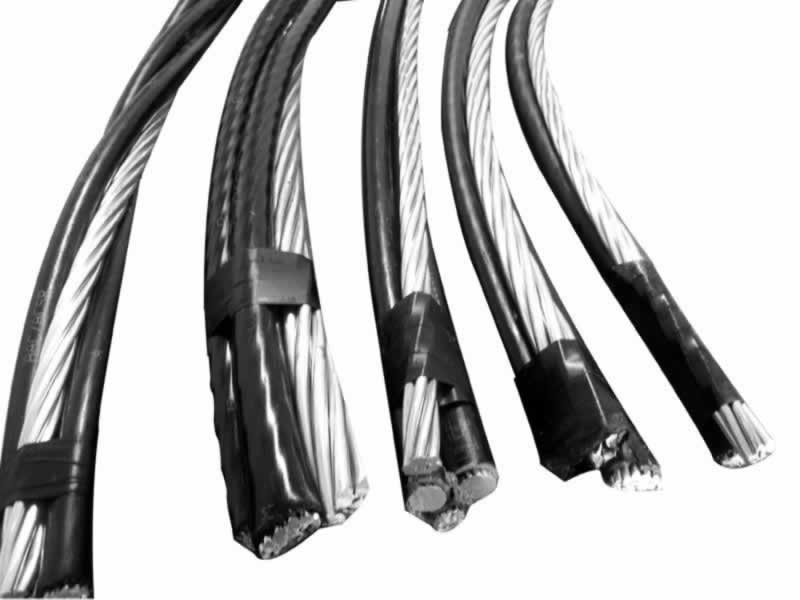
ABC Cable uses bundled conductors to provide a safer, more reliable, and more efficient solution for overhead power distribution compared with traditional bare overhead wires. As urban areas expand and electricity demand increases, conventional overhead systems face challenges such as accidental contact, weather damage, complex installation environments, and maintenance difficulties.
Aerial Bundled Cable (ABC Cable) integrates multiple insulated conductors into a single compact cable structure. Instead of installing separate exposed wires on crossarms, ABC Cable combines phase conductors and neutral conductors into one bundled arrangement, improving system safety and reducing installation complexity.
For engineers, utility companies, and procurement professionals, understanding why ABC Cable adopts bundled conductor technology is essential when selecting the right solution for low-voltage and medium-voltage distribution networks.
Advantages of ABC Cable Bundled Conductors
ABC Cable bundled conductors provide significant advantages in electrical safety, installation efficiency, and network reliability compared with traditional overhead wires.
1. Improved Electrical Safety
Traditional overhead wires usually use bare conductors, which create risks when they come into contact with trees, animals, construction equipment, or nearby structures.
ABC Cable uses insulated conductors that significantly reduce the possibility of accidental electrical contact. This makes it especially suitable for:
- Residential areas
- Narrow urban streets
- Industrial zones
- Coastal communities
- Areas with dense vegetation
For example, in a city distribution project where buildings are close to power lines, ABC Cable can reduce safety risks caused by limited clearance between conductors and surrounding structures.
2. Reduced Short Circuits and Power Failures
ABC Cable bundled conductors help maintain stable power transmission by keeping individual conductors arranged in a fixed configuration.
Traditional overhead wires may experience:
- Conductor contact caused by strong wind
- Flashovers during storms
- Damage from external objects
The bundled design of ABC Cable keeps conductors together and minimizes movement caused by environmental conditions. This improves power supply continuity and reduces unexpected outages.
3. Easier Installation and Lower Project Costs
ABC Cable simplifies overhead distribution installation because multiple conductors are combined into one cable system.
Compared with traditional overhead wiring, ABC Cable can reduce:
- Number of supporting structures
- Installation time
- Hardware requirements
- Maintenance workload
For contractors, this means faster project completion and lower labor costs.
Technical Specifications of ABC Cable Bundled Conductors
ABC Cable technical specifications determine its suitability for different voltage levels and distribution environments.
Although designs vary according to standards and manufacturers, common ABC Cable structures include:
| Item | Typical Specification |
|---|---|
| Conductor Material | Aluminum or Aluminum Alloy |
| Insulation Material | XLPE (Cross-linked Polyethylene) |
| Voltage Range | 0.6/1kV, 1kV, 11kV, 15kV, 35kV |
| Conductor Type | Stranded Compact Aluminum Conductor |
| Supporting Core | Aluminum Alloy or Steel Reinforced Neutral |
| Temperature Rating | 90°C Maximum Operating Temperature |
| Applicable Standards | IEC, ASTM, BS, NFC Standards |
The main components of ABC Cable generally include:
Phase Conductors
Phase conductors carry electrical power from distribution transformers to consumers. Aluminum conductors are commonly used because they provide a balance between conductivity, weight, and cost.
Neutral Messenger
The neutral conductor provides mechanical support while also carrying return current. It plays an important role in maintaining cable strength during installation and operation.
XLPE Insulation Layer
XLPE insulation protects ABC Cable conductors from:
- Moisture penetration
- UV radiation
- Heat exposure
- Electrical stress
This insulation system allows ABC Cable to operate safely in demanding outdoor environments.
Why ABC Cable Performs Better Than Traditional Overhead Wires
ABC Cable offers better environmental adaptability and operational performance because its bundled structure solves many limitations of conventional overhead systems.
Better Resistance Against Weather Conditions
Traditional overhead wires are vulnerable to:
- Strong winds
- Heavy rain
- Ice accumulation
- Salt contamination
ABC Cable's compact bundled structure reduces conductor movement and improves resistance against harsh weather.
For coastal distribution projects, where salt spray can accelerate corrosion and failures, insulated ABC Cable provides improved protection compared with exposed conductors.
Lower Visual Impact
In residential and urban environments, traditional overhead systems often require large crossarms and multiple visible wires.
ABC Cable creates a cleaner appearance because several conductors are combined into one compact cable.
This makes it suitable for:
- City modernization projects
- Residential developments
- Tourism areas
- Historical districts
Durability and Maintenance of ABC Cable
ABC Cable provides long-term durability with proper installation and routine inspection, helping utilities reduce maintenance requirements.
Long Service Life
High-quality ABC Cable typically offers decades of operational performance due to:
- UV-resistant insulation
- Corrosion-resistant aluminum conductors
- Strong mechanical design
- Stable electrical characteristics
The actual service life depends on installation conditions, environmental exposure, and maintenance practices.
Maintenance Recommendations
Although ABC Cable requires less maintenance than bare overhead wires, regular inspections are still recommended.
Recommended maintenance includes:
- Checking cable sag levels
- Inspecting suspension accessories
- Monitoring insulation condition
- Checking connection points
- Removing nearby branches when necessary
Proper installation accessories such as clamps, connectors, and suspension systems are also critical for maximizing cable performance.
Applications of ABC Cable Bundled Conductors
ABC Cable is widely used in modern power distribution projects where safety, reliability, and installation flexibility are required.
Residential Power Distribution
ABC Cable is commonly installed in residential areas because it reduces risks associated with exposed conductors.
Typical applications include:
- Housing communities
- Apartment buildings
- Rural electrification projects
Urban Distribution Networks
Cities often face limited installation space. ABC Cable allows utilities to upgrade distribution systems without requiring extensive infrastructure changes.
Industrial Projects
Factories and industrial parks use ABC Cable for reliable power connections between transformers and electrical equipment.
Renewable Energy Connections
ABC Cable can also support power collection systems for:
- Solar farms
- Small renewable energy projects
- Distributed generation networks
FAQs About ABC Cable Bundled Conductors
1. Why does ABC Cable use bundled conductors?
ABC Cable uses bundled conductors to improve safety, reduce installation complexity, and provide better protection against environmental factors compared with traditional bare overhead wires.
2. Is ABC Cable safer than traditional overhead wires?
Yes. Because ABC Cable conductors are insulated and bundled together, the risk of accidental contact and short circuits is significantly reduced.
3. Can ABC Cable replace traditional overhead lines?
In many low-voltage and some medium-voltage distribution projects, ABC Cable can replace conventional overhead systems, especially where safety and space limitations are important.
4. What materials are commonly used in ABC Cable conductors?
Most ABC Cable products use aluminum or aluminum alloy conductors combined with XLPE insulation for durability and lightweight installation.
5. Is ABC Cable suitable for coastal environments?
Yes. With proper insulation and corrosion-resistant materials, ABC Cable can perform well in coastal areas exposed to humidity and salt contamination.
6. How long can ABC Cable last?
With correct installation and suitable operating conditions, ABC Cable can provide reliable service for several decades.
7. What factors should engineers consider when selecting ABC Cable?
Engineers should evaluate:
- Voltage level
- Current capacity
- Installation environment
- Mechanical requirements
- Applicable standards
- Local grid conditions