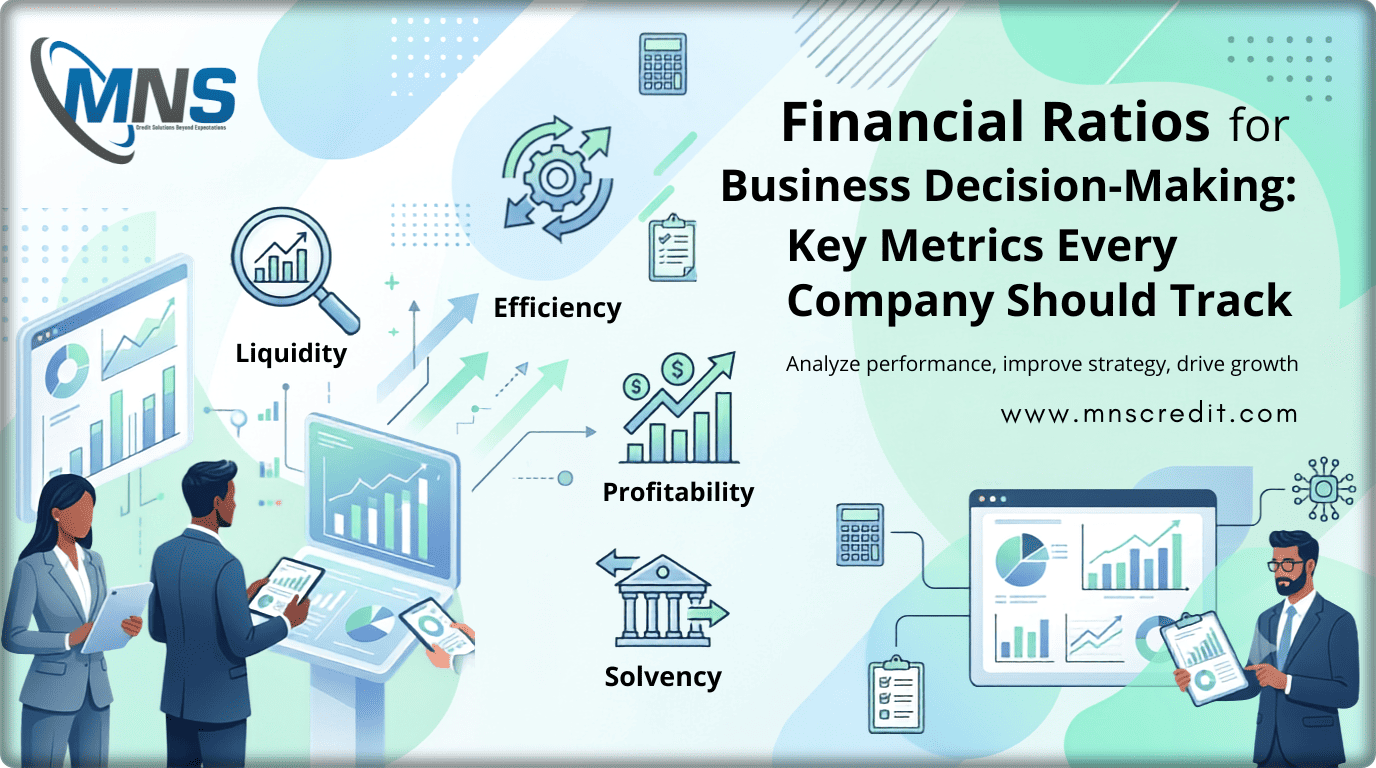
Running a business well means making dozens of decisions every quarter: whether to extend payment terms to a new customer, whether to take on additional debt, whether to expand into a new market, or whether to tighten costs before the next downturn. The businesses that make these calls confidently are almost always the ones tracking the right financial ratios consistently, rather than relying on gut feel or a single glance at the bank balance.
Financial ratios translate complex statements into a small set of trackable numbers that management, boards, and finance teams can monitor over time. Used well, they turn financial reporting from a compliance exercise into an active decision-making tool. This article outlines the key ratios every company, regardless of size, should be tracking, and how each one supports a specific category of business decision.
Why Ratio Tracking Should Be a Regular Discipline
Many businesses only look closely at their financial ratios once a year, when preparing for a statutory audit or a bank renewal. By then, trends that could have been corrected early, such as a slipping current ratio or a widening receivables cycle, have often hardened into structural problems. Building a regular, even monthly, ratio review into the finance function allows leadership to catch early warning signs and make timely course corrections rather than reactive ones.
Tracking ratios consistently also creates an internal benchmark. A single ratio in isolation says little, but a ratio tracked quarter over quarter, and compared against industry peers, tells a much richer story about direction and momentum.
Liquidity Ratios: Can the Business Meet Its Near-Term Obligations?
The current ratio and quick ratio remain the starting point for most decision-making frameworks because they answer the most immediate question a business faces: can it pay its bills? The current ratio compares current assets to current liabilities, while the quick ratio excludes inventory for a stricter test of near-term liquidity. A declining trend in either ratio, even if the absolute number still looks acceptable, is often the earliest signal of cash flow strain and should trigger a closer look at receivables collection and payment scheduling.
Profitability Ratios: Is the Business Model Working?
Gross margin, operating margin, and net profit margin help management understand whether growth in revenue is translating into genuine value creation. A company can grow topline aggressively while margins quietly erode due to discounting, rising input costs, or an inefficient cost structure. Tracking margin trends alongside revenue growth prevents the common mistake of treating top-line growth as automatically positive news. Return on equity and return on assets add a further layer, showing how efficiently the business is deploying shareholder capital and total assets to generate profit, which is particularly useful when comparing performance across business units or evaluating a capital investment decision.
Leverage Ratios: How Much Financial Risk Is the Business Carrying?
The debt-to-equity ratio and interest coverage ratio are essential for any decision involving new borrowing, whether that is a working capital line, equipment financing, or a larger term loan. A rising debt-to-equity ratio signals growing reliance on external financing, which can be a reasonable strategy during expansion but becomes risky if earnings do not keep pace. The interest coverage ratio, which measures operating profit against interest expense, indicates how much cushion the business has before debt servicing becomes a strain on cash flow. Companies planning to raise additional debt should model how a proposed loan would move both ratios before signing any agreement.
Efficiency Ratios: Is Working Capital Being Managed Well?
Inventory turnover, receivables turnover, and payables turnover ratios reveal how efficiently a business is managing the working capital tied up in day-to-day operations. A slowing receivables turnover often means customers are taking longer to pay, tying up cash that could otherwise fund operations or growth. A rising inventory turnover, by contrast, generally signals improving demand forecasting and stock management. Together, these ratios inform decisions about credit terms offered to customers, supplier payment negotiations, and inventory investment levels.
Cash Flow Ratios: Does Profit Translate Into Cash?
Profitability on the income statement does not always mean cash in the bank. The operating cash flow ratio, which compares cash flow from operations to current liabilities, helps management verify that reported profit is being converted into usable cash rather than sitting in receivables or inventory. This ratio is particularly valuable before committing to major capital expenditure or dividend decisions, since it tests whether the business can fund those outflows from its own operations rather than external financing.
Using Ratios in Real Business Decisions
The real value of these metrics emerges when they are applied directly to decisions rather than reviewed passively. Before extending credit terms to a new customer, reviewing that customer's liquidity and leverage ratios, ideally through a structured business verification or credit assessment process, provides an objective basis for setting credit limits and payment terms. Before approving a large capital investment, comparing projected return on assets against the company's cost of capital tests whether the investment will genuinely create value. Before renewing or expanding a bank facility, reviewing interest coverage and debt-to-equity trends helps management negotiate from a position of informed confidence rather than uncertainty.
Ratios also support internal accountability. Setting target ranges for key ratios, such as maintaining a current ratio above a defined threshold or keeping receivables days below a set number, gives operational teams clear, measurable goals that connect day-to-day decisions to overall financial health.
Building a Ratio Dashboard That Works
Rather than tracking every possible ratio, most companies benefit from a focused dashboard of six to ten metrics spanning liquidity, profitability, leverage, and efficiency, reviewed on a consistent monthly or quarterly cadence. Pairing each ratio with a clear target range and a simple trend indicator makes it far easier for non-finance stakeholders, including operational managers and board members, to engage meaningfully with financial performance rather than leaving it solely to the finance team.
Common Mistakes to Avoid When Tracking Ratios
A few recurring mistakes undermine the value of ratio tracking even when the underlying discipline is sound. Reviewing ratios in isolation, without comparing them against prior periods or industry benchmarks, makes it difficult to judge whether a number is genuinely healthy or simply average. Relying on annual figures alone can hide seasonal fluctuations that matter for working capital planning. And treating every ratio as equally important dilutes focus; the right set of metrics differs by business model, so a services business with minimal inventory should weight receivables and margin ratios more heavily than inventory turnover, while a manufacturing business will need the reverse emphasis.
It is also worth remembering that ratios calculated from unaudited or internally prepared statements carry more uncertainty than those verified through an independent review. For decisions with meaningful financial exposure, such as extending large credit lines or entering a long-term supply agreement, cross-checking a counterparty's self-reported ratios against verified filings and third-party due diligence adds a layer of confidence that internal analysis alone cannot provide.
Conclusion
Financial ratios are only useful when they inform real decisions. By tracking a focused set of liquidity, profitability, leverage, and efficiency ratios consistently, businesses gain an early warning system for emerging risks and a clear, objective basis for decisions on credit, financing, and growth. Companies that build this discipline into their regular financial review process are consistently better positioned to act early rather than react late.
MNS Credit Management Group supports businesses with detailed credit assessment reports and due diligence services that bring together financial ratio analysis, verification, and compliance checks to support confident, well-informed business decisions.