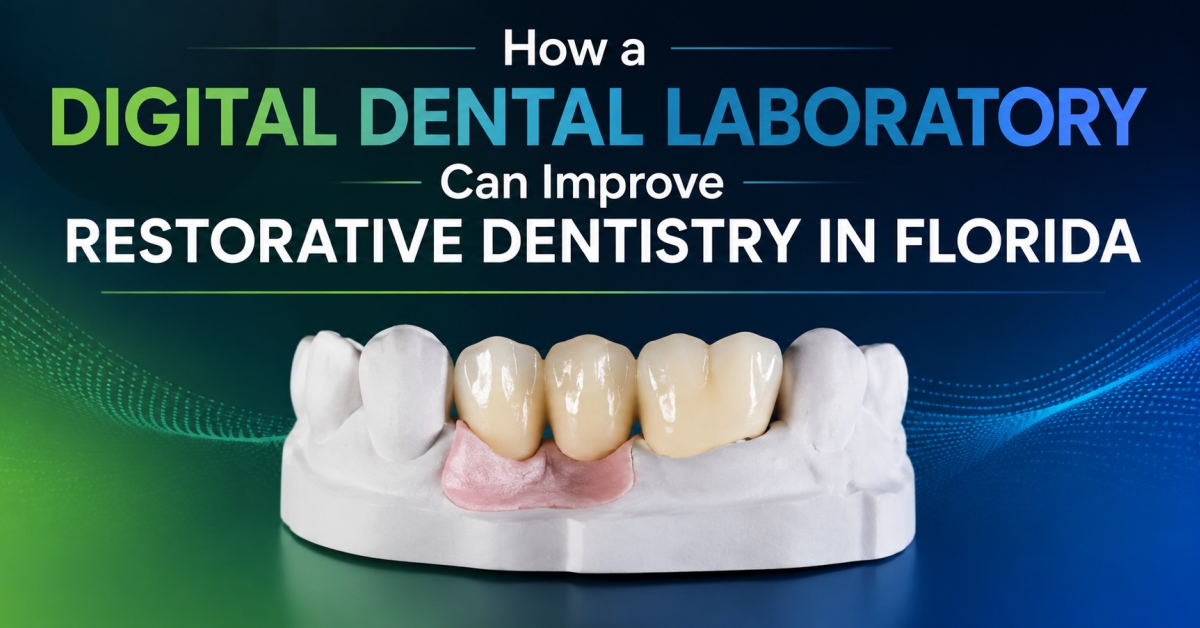
Restorative dentistry has changed significantly as dental practices continue to adopt modern technology. From intraoral scanning to CAD/CAM manufacturing, digital workflows are helping dentists improve efficiency, communication, and treatment predictability.
For dental practices, working with a digital dental laboratory in Florida can make these benefits even more practical. A reliable digital lab can support restorative cases with accurate digital data, streamlined communication, and consistent fabrication processes.
What Is a Digital Dental Laboratory?
A digital dental laboratory uses modern technologies such as CAD/CAM systems, digital scanners, milling machines, and 3D printing to design and manufacture dental restorations.
Instead of depending primarily on traditional impressions and manual laboratory procedures, a digital dental laboratory can receive electronic case information directly from dental practices. This creates a more connected digital dental workflow , allowing dentists and laboratory technicians to work from the same digital information throughout the restoration process.
Digital laboratories can support a wide range of restorative treatments, including:
- Dental crowns and bridges
- Implant restorations
- Veneers
- Full-arch dental restorations
- PMMA provisionals
- Zirconia restorations
- Digital dentures
- Complex restorative cases
Improved Communication Between Dentists and Dental Labs
One of the biggest advantages of a digital dental workflow is faster and more organized communication.
Traditional workflows may require physical impressions, shipping, paperwork, and multiple communications between the dental office and laboratory. Digital workflows allow dentists to transmit scans and case information electronically, reducing unnecessary steps.
When a dental laboratory in Florida receives a detailed digital scan along with the dentist's prescription and clinical information, technicians can review the case before beginning the design process. If additional information is needed, communication can take place before fabrication rather than after the restoration has already been produced.
This can help reduce misunderstandings and make the restorative dental laboratory workflow more efficient.
Better Accuracy Through Digital Impressions
Intraoral scanners have become an important part of modern digital dentistry . Digital impressions can capture detailed information about prepared teeth, adjacent structures, and surrounding tissues.
When the scan is properly captured, the laboratory can use this information to digitally design the restoration. This can make it easier for technicians to evaluate margins, contacts, tooth anatomy, and other important details.
Digital impressions may also eliminate some of the common challenges associated with conventional impression materials, such as distortion, material handling, or patient discomfort.
However, the scanner itself does not guarantee a successful restoration. Proper scanning technique, margin visibility, tissue management, and complete clinical information remain essential.
More Efficient Restoration Design
Modern CAD/CAM dental laboratories use specialized software to digitally design restorations before they are manufactured.
During the design stage, technicians can evaluate factors such as:
- Tooth anatomy
- Occlusal relationships
- Contacts
- Margins
- Emergence profiles
- Implant positioning
- Restoration thickness
- Overall aesthetics
This approach allows the laboratory team to evaluate important details before manufacturing begins. For dentists, that can translate into a more organized workflow and improved communication with the laboratory.
A well-managed digital dental workflow can be particularly useful when multiple components of a restorative case need to work together.
Faster Turnaround for Certain Cases
Time is an important consideration for both dental practices and patients.
Digital case submission can reduce the time associated with shipping physical impressions and paperwork. Depending on the restoration and laboratory workflow, digital manufacturing can also support faster production.
This can be particularly useful for practices managing busy restorative schedules or cases where treatment timing is important.
However, turnaround time should always depend on the complexity of the case, material selection, clinical requirements, and laboratory quality-control process rather than speed alone.
Better Support for Implant and Full-Arch Dentistry
Digital technology can be especially valuable for digital implant dentistry and full-arch restorative cases.
These cases often require close coordination between the dentist, laboratory technician, implant system, and other members of the treatment team. Digital scans, photographs, CBCT data, and implant information can be combined to support more comprehensive planning.
For full-arch dental restorations , digital workflows can help the team evaluate:
- Implant positions
- Occlusion
- Vertical dimension
- Smile design
- Tooth positioning
- Prosthetic space
- Restoration contours
A carefully planned digital workflow can therefore help reduce avoidable errors before the final prosthesis is manufactured.
Consistent Communication Across the Case
Restorative dentistry is not only about manufacturing a restoration. It is also about maintaining clear communication throughout the case.
A digital dental laboratory can create a more organized communication process by allowing dentists to share:
- Intraoral scans
- Clinical photographs
- Shade information
- Digital prescriptions
- Implant details
- Treatment notes
- Design preferences
Having this information available digitally can make it easier for laboratory technicians to understand the clinical goals of the case.
This type of collaboration is particularly valuable for digital restorative dentistry , where accurate digital information plays an important role in the design and manufacturing process.
Digital Dentistry Can Help Reduce Remakes
Remakes can be costly for dental practices because they consume laboratory resources, chair time, and staff time.
Digital workflows cannot eliminate remakes completely, but they can help identify potential problems earlier.
For example, a laboratory technician may identify an unclear margin, incomplete scan, insufficient reduction, or missing information before fabrication begins. The dental office can then address the issue before the restoration reaches the patient's mouth.
This proactive approach can improve workflow efficiency and reduce unnecessary delays.
For practices looking for more predictable digital dental solutions , this early review process can be an important advantage.
Choosing the Right Digital Dental Laboratory in Florida
Not every digital laboratory offers the same level of technology, communication, or quality control.
Florida dental practices should consider several factors when evaluating a laboratory partner.
Digital Compatibility
The laboratory should be able to work with the digital systems used by the practice. Compatibility with commonly used intraoral scanners and digital platforms can make case submission much easier.
Technical Experience
Technology is only part of the equation. Experienced dental technicians are still essential for designing restorations that meet clinical, functional, and esthetic requirements.
A laboratory with experience in digital dental technology can better understand how digital data should be interpreted during the design and manufacturing stages.
Communication
A responsive laboratory should provide clear communication when a case requires clarification. Direct communication between the dentist and technician can be particularly valuable for complex restorative cases.
Quality Control
Digital manufacturing can improve consistency, but quality-control procedures remain critical. Dentists should evaluate how the laboratory manages design verification, material selection, manufacturing, finishing, and final inspection.
Turnaround and Shipping
Practices should also consider laboratory turnaround times and shipping procedures. A predictable workflow can make scheduling restorative appointments easier.
For Florida practices, choosing a digital dental laboratory in Florida can also simplify communication and logistics when local support is important.
The Future of Restorative Dentistry in Florida
Digital dentistry will continue to influence how restorative cases are planned, designed, and manufactured.
As intraoral scanning, CAD/CAM manufacturing, artificial intelligence, 3D printing, and digital treatment planning continue to develop, dental practices and laboratories will become increasingly connected.
The goal is not simply to replace traditional techniques with digital technology. The greater opportunity is to create a more predictable workflow in which clinical information can move efficiently from the dental office to the laboratory and back again.
For restorative dentistry in Florida , this continued development can create new opportunities for better case planning, improved communication, and more efficient restoration workflows.
Final Thoughts
A digital dental laboratory in Florida can provide valuable support for dental practices by improving communication, streamlining case submission, supporting accurate restoration design, and making complex restorative workflows easier to manage.
However, technology alone does not determine the quality of a restoration. Successful outcomes still depend on clinical preparation, accurate digital records, experienced technicians, appropriate materials, and strong dentist-laboratory communication.
For practices looking to modernize their restorative workflow, partnering with a reliable digital dental laboratory can be an important step toward creating a more efficient and predictable approach to restorative dentistry.