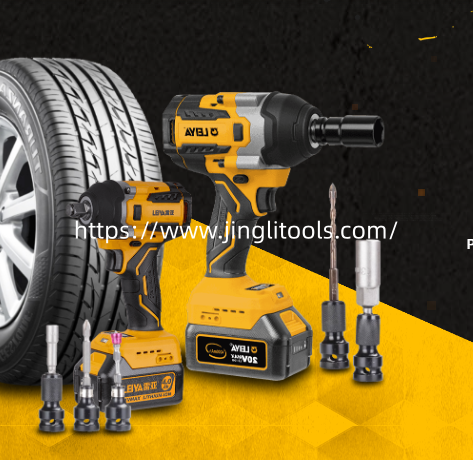
Leiya Power Tools can cover very different working needs, but choosing the right equipment starts with the job rather than the brand name. Drilling a metal plate, tightening a fastener, cutting a pipe, grinding a surface, and removing concrete all place different demands on a tool. For workshops, distributors, and professional users, looking at the material, task, working frequency, power source, and required accessories can make product selection more practical.
Start With the Job
Before comparing models, identify what the tool will actually do.
A drilling task may require speed control and an appropriate chuck, while fastening work may depend more on torque and drive compatibility. Cutting and grinding applications introduce another set of requirements, including disc type, working material, tool configuration, and operator control.
Demolition work is different again. Rotary hammers and demolition hammers are designed around impact applications, while standard drills are generally intended for drilling and fastening. The current Leiya range includes drills, rotary hammers, demolition hammers, angle grinders, impact wrenches, and other tools designed around different applications.
Starting with the task helps buyers avoid selecting a tool simply because its specifications look impressive on paper.
What Material Will You Work With?
The workpiece can have a major influence on tool selection.
Wood, steel, aluminum, brick, concrete, ceramic tile, and other materials behave differently when drilled, cut, or ground. A tool suitable for woodworking may not be the appropriate choice for masonry work, while metal fabrication can require different accessories and operating settings.
For drilling applications, buyers should consider the required hole diameter, material hardness, drilling depth, and compatible bit type. Some cordless models in the Leiya range are designed for drilling and fastening across materials such as wood, metal, ceramic tile, and concrete when paired with suitable accessories.
For cutting and grinding, the disc or wheel should also correspond with the material and intended operation. The accessory is part of the complete working system, so it should be considered together with the tool.
When Is a Cordless Tool Practical?
Cordless equipment can be useful when operators move frequently between workstations or when a power cable would make the job less convenient.
Construction teams, maintenance workers, installers, and mobile service technicians may place particular value on portability. Battery capacity, charging time, voltage platform, tool weight, and the number of batteries available can all affect how practical a cordless setup is during the working day.
A current Leiya cordless drill configuration, for example, combines a lithium battery system with a compact body and variable operating speeds, illustrating how portability and application requirements can be considered together.
However, cordless is not automatically the right choice for every workplace. If a tool is used for extended periods in a fixed location, a corded configuration may offer a more straightforward working arrangement.
How Do You Choose Between Corded and Cordless?
The choice between corded and cordless equipment should reflect the environment.
Corded tools can make sense where stable electrical access is available and the operator works in a defined area. They can be suitable for repeated tasks where battery charging is not part of the workflow.
Cordless models provide greater freedom of movement, but buyers need to plan around batteries and chargers. For businesses purchasing multiple tools, it can also be useful to consider whether products share a compatible battery platform.
This is particularly relevant for distributors. A well-organized cordless range can allow customers to use one battery system across several compatible tools, depending on the manufacturer's product design.
Which Features Actually Matter?
Specifications should always be connected to the intended application.
For a drill, buyers may review chuck capacity, no-load speed, torque, drilling capacity, and control settings. For an impact wrench, torque range, drive size, fastening application, and operating method may receive greater attention.
An angle grinder may require a different evaluation, including disc diameter, motor power, speed, switch design, and intended cutting or grinding applications.
The current Leiya product range illustrates this application-based approach, with models covering cordless drills, impact wrenches, angle grinders, circular saws, rotary hammers, and other categories.
Rather than comparing every specification at once, buyers can first identify the two or three specifications that directly affect the intended job.
What About Tool Size and Operator Handling?
Tool dimensions and weight can become important when equipment is used repeatedly.
A compact drill may be easier to position in a narrow workspace. A balanced handle can influence control during repeated fastening. For grinding and cutting, the operator may need a secure grip and a configuration that suits the working position.
These considerations are particularly relevant for professional users who may spend several hours performing similar tasks. A product that fits the physical working environment can make the overall workflow easier to organize.
Accessories should also be easy to identify and replace. Drill bits, cutting discs, grinding wheels, sockets, batteries, and chargers all become part of the purchasing decision.
Why Should Buyers Consider the Manufacturer?
For importers, distributors, and professional buyers, choosing a manufacturer involves more than selecting a single model.
江苏新丰提供涵盖不同车间和工业应用的电动工具制造和产品解决方案。其产品系列包括有线和无线两大类,方便买家根据自身需求比较不同配置。
在评估制造合作伙伴时,买家可以询问产品规格、可用配置、包装、配件、替换组件、定制、技术文档和生产安排。
对于需要构建产品系列而不是购买单一工具的分销商来说,这些信息尤其有用。
围绕实际应用构建工具选择方案
一个实用的选择过程可以从五个问题开始:该工具将执行什么工作?将处理什么材料?使用频率如何?操作人员将在哪里工作?需要哪些配件?
一旦这些问题得到解答,就更容易比较电压、速度、扭矩、夹头容量、工具尺寸、电池配置和其他规格。
江苏新峰致力于为车间、维修、建筑和工业应用领域的客户提供电动工具解决方案。您可以在https://www.jinglitools.com/查看产品系列和制造商信息。