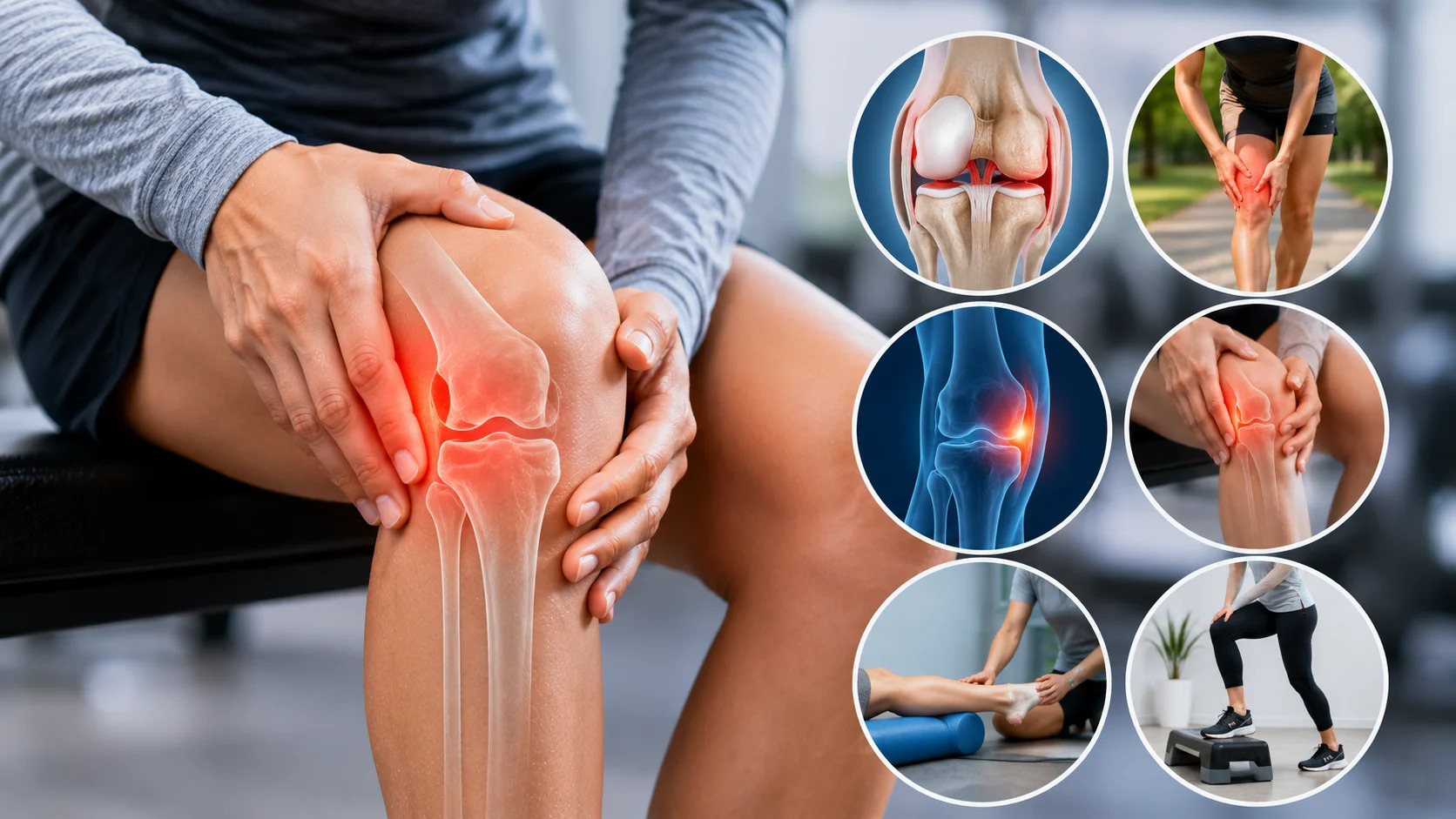
Inner knee pain can range from a mild ache after exercise to severe pain following an injury. Knowing which symptoms deserve attention can help people make better decisions.
1. Major Swelling
Rapid swelling after an injury can indicate significant internal damage and should be assessed.
2. Inability to Bear Weight
If you cannot comfortably put weight on the affected leg, medical evaluation may be appropriate.
3. Knee Locking
A knee that becomes stuck or repeatedly catches may be associated with an internal joint problem.
4. Instability
A sensation that the knee is giving way can occur with ligament or other structural problems.
5. Severe Pain After Trauma
Significant pain following a fall, collision, or twisting injury should not be ignored.
6. Persistent Symptoms
Pain that continues despite reasonable activity modification deserves evaluation.
7. Visible Deformity
A visibly abnormal knee following an injury requires prompt medical attention.
Less severe pain can sometimes improve with temporary activity modification and gradual return to comfortable movement. However, the correct approach depends on the cause.
Conditions such as MCL injuries, meniscus tears, osteoarthritis , and bursitis can all produce medial knee discomfort.
Therefore, inner knee pain should be considered a symptom rather than a diagnosis. Identifying the underlying cause helps determine the most appropriate treatment and rehabilitation strategy.