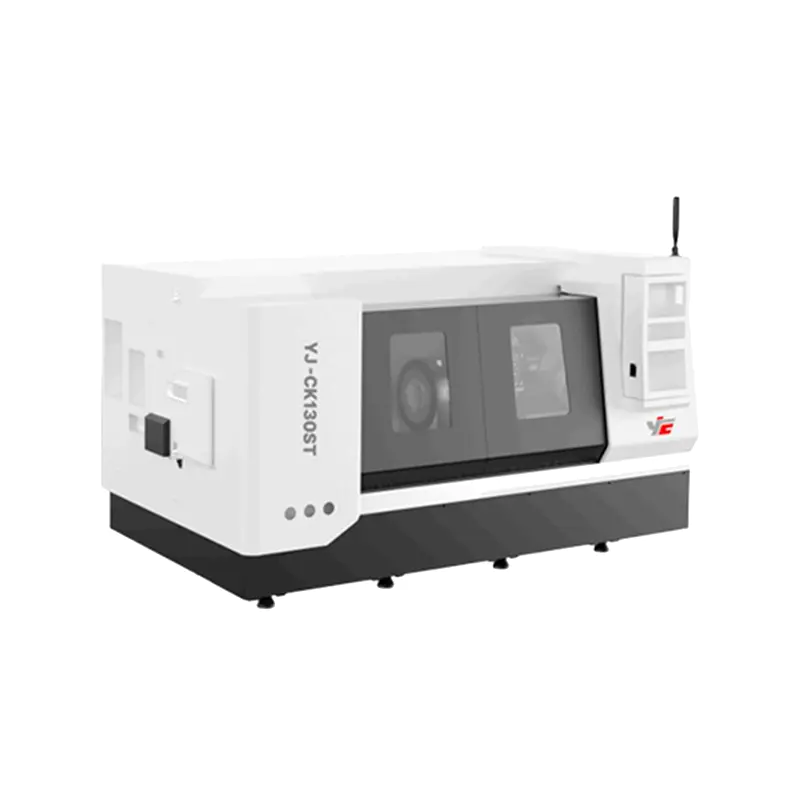
A CNC Double Head Lathe combines computer numerical control with a dual-head machining structure. This configuration allows suitable workpieces to be processed from two directions, making it useful for components that require operations on both ends. The machine can be applied to shafts, rods, sleeves, fittings, and other cylindrical parts.
In conventional machining processes, a component may need to be removed, repositioned, and clamped again before the second side can be processed. Each additional handling step requires time and introduces another positioning procedure. A double head CNC lathe provides an alternative by coordinating machining operations through two spindle and tooling arrangements.
The machine structure can vary according to production requirements. Some configurations use two opposing spindles, while others are designed around specific workholding and transfer systems. Tool holders may also be configured according to turning, drilling, boring, threading, grooving, or facing operations.
CNC programming allows the machining sequence to be controlled through digital instructions. Parameters such as spindle speed, feed rate, cutting depth, tool movement, and operation order can be defined within the machining program. This provides repeatable procedures for batches of similar components.
For shaft machining, a CNC double head lathe can be useful when both ends require related operations. The equipment can coordinate tasks such as end-face preparation, turning, drilling, and threading according to the component drawing. Proper fixture selection is important because workpiece stability influences machining results.
Material characteristics should also be considered when setting up the machine. Steel, stainless steel, aluminum, copper alloys, and other materials may require different cutting conditions and tool selections. Operators can adjust machining parameters based on the material and geometry of the workpiece.
Routine maintenance supports stable machine operation. Cleaning chips from the working area, checking lubrication systems, inspecting tooling, and monitoring spindle conditions are common maintenance practices. CNC software and electrical components should also be checked according to the equipment maintenance schedule.
A CNC Double Head Lathe can therefore serve as a useful production tool for manufacturers seeking coordinated two-sided machining. Its value comes from the combination of CNC control, dual machining capability, flexible configuration, and suitability for different cylindrical components.
Before purchasing equipment, users should review the required workpiece diameter, length, spindle capacity, tooling arrangement, control system, and automation requirements. Matching machine specifications with actual production needs helps create a practical machining setup.
https://www.cnshengda.com/product/centerdrive-dualspindle-cnc-lathe/