Electricity bills in a newly developed residential community continued to rise despite residents adopting energy-efficient appliances and LED lighting. At the same time, recurring power interruptions during peak summer months highlighted the need for a more dependable energy source. The housing association began evaluating a solar system for home not only to lower electricity costs but also to improve energy security and reduce long-term operating expenses. Similar decisions are being made across commercial office parks, hospitals, factories, educational campuses, hotels, and public infrastructure projects throughout India as energy independence becomes a strategic priority.
Installing a solar system for home is no longer viewed solely as an environmentally conscious choice. It has become a practical engineering investment that combines renewable energy generation, long-term cost savings, and reliable electrical infrastructure. Understanding how modern solar systems are designed and what factors influence their performance helps homeowners make informed investment decisions.
Why a Solar System for Home Is a Smart Long-Term Investment
A modern solar system is an integrated electrical solution consisting of photovoltaic (PV) modules, mounting structures, solar inverters, electrical protection devices, monitoring software, and optional battery storage.
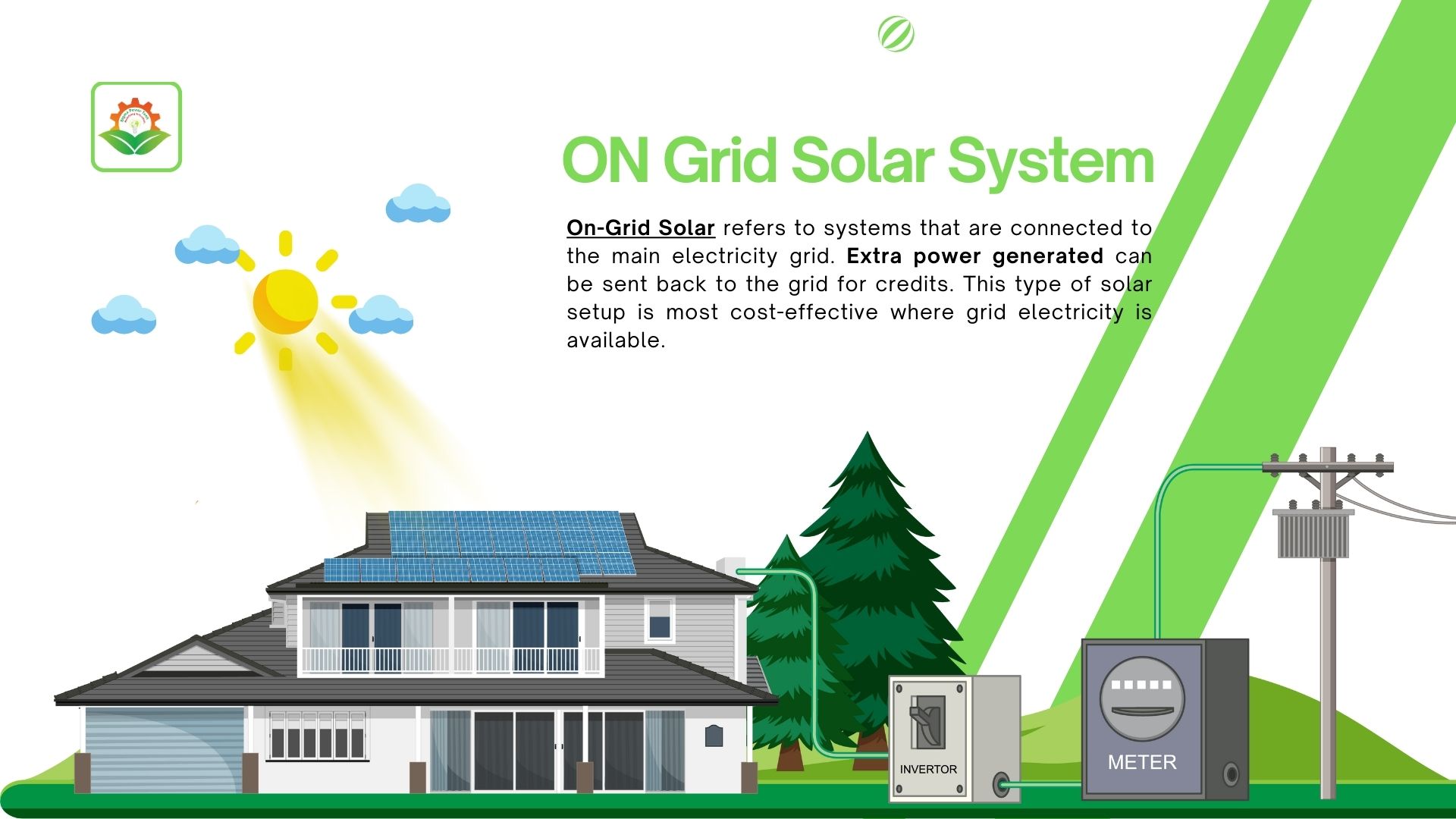
Solar panels convert sunlight into direct current (DC) electricity through semiconductor cells. The inverter then converts this energy into alternating current (AC), allowing it to power household electrical circuits. Depending on the installation type, surplus electricity may be exported through net metering or stored in batteries for later use.
Beyond lowering electricity bills, solar systems increase energy resilience while reducing dependence on conventional power sources.
Choosing the Right Solar System for Home Configuration
Every property has unique energy requirements, making system design one of the most important stages of a successful installation.
On-grid systems connect directly with the utility network and are suitable for locations with reliable grid access and net metering.
Off-grid systems operate independently using battery storage and are commonly installed where grid availability is limited.
Hybrid systems combine battery backup with grid connectivity, providing uninterrupted electricity during outages while improving energy utilization.
Selecting the correct solar system model requires evaluating annual electricity consumption, rooftop area, future load growth, and electrical infrastructure.
Selecting the Best Solar Panels
Choosing the best solar panels involves balancing efficiency, durability, environmental performance, and long-term reliability.
Monocrystalline panels deliver high efficiency and are ideal where installation space is limited.
Polycrystalline panels provide a cost-effective solution for larger rooftops.
Thin-film technology is generally used for specialized commercial and industrial applications requiring lightweight or flexible panel construction.
Modern photovoltaic engineering has also improved temperature performance, weather resistance, and energy conversion efficiency, increasing lifetime system productivity.
Features of a Modern Rooftop Solar System
Today's rooftop solar system installations include advanced technologies that improve operational reliability and simplify system management.
Key features include:
- High-efficiency photovoltaic modules
- Modular and scalable system architecture
- Intelligent inverter technology
- Grid synchronization capability
- Real-time energy generation monitoring
- Mobile application access
- Performance alerts and diagnostics
- Predictive maintenance support
- Weather-resistant construction
- Low maintenance requirements
- Operational life exceeding 25 years
- User-friendly monitoring dashboards
These capabilities allow homeowners to track system performance while reducing maintenance requirements throughout the installation's lifecycle.
Applications Beyond Residential Homes
Although residential adoption continues to grow rapidly, solar technology supports a wide variety of infrastructure projects.
Common applications include:
- Residential rooftop installations
- Commercial office buildings
- Industrial manufacturing facilities
- Hospitals and healthcare centres
- Shopping malls and retail complexes
- Educational institutions
- Hotels and hospitality properties
- Government infrastructure
- Agricultural irrigation systems
- Warehouses and logistics hubs
- Smart city developments
- Residential high-rise communities
Large facilities often integrate multiple solar arrays with centralized energy management systems to optimize power distribution across buildings.
Factors That Influence Solar Panel System Cost
Many buyers begin by comparing solar system for home price, but engineering quality and lifecycle performance have a much greater impact on long-term investment value.
Several factors influence solar panel system cost, including:
- Rooftop or land availability
- Household energy consumption
- Type of photovoltaic technology
- Inverter capacity and manufacturer
- Battery storage requirements
- Installation and commissioning complexity
- Structural modifications
- Net metering and grid connection approvals
- Monitoring platform integration
- Roof orientation and shading
- Regulatory compliance and subsidy documentation
- Long-term Solar panel maintenance services
- Expected lifecycle cost and payback period
Evaluating these engineering considerations provides a more accurate picture of system value than focusing solely on initial installation costs.
Buyer's Guide: Selecting the Right Solar Installation Partner
Choosing an experienced engineering company is essential for achieving reliable long-term performance.
Before selecting a provider, homeowners should evaluate:
- Industry experience and completed projects
- Solar EPC engineering expertise
- Installation and commissioning capability
- Manufacturing quality standards
- Compliance with MNRE, BIS, and applicable electrical regulations
- Panel and inverter warranty coverage
- Product customization options
- Technical support availability
- Maintenance and AMC services
- Documentation assistance for subsidies and approvals
- Remote monitoring support
- Proven operational reliability
Homeowners interested in understanding professional engineering practices can explore this guide on Solar Panel Installation, which explains the planning, installation, testing, and commissioning process for photovoltaic systems.
For larger residential communities and commercial developments, integrated EPC solutions such as the Sigma Power Tech solar panel system provide coordinated engineering, procurement, installation, and long-term technical support throughout the project lifecycle.
Common Mistakes to Avoid
Several avoidable planning errors can reduce energy production and increase long-term operating costs.
Common mistakes include:
- Skipping professional site and load assessments
- Ignoring future expansion requirements
- Underestimating shading and panel orientation
- Selecting equipment solely on upfront price
- Overlooking inverter compatibility
- Delaying preventive maintenance planning
- Ignoring net metering regulations
- Failing to establish realistic energy-saving objectives
- Improper installation and commissioning
- Insufficient user training on monitoring platforms
A professionally engineered solar system project minimizes these risks while maximizing operational reliability and long-term energy savings.
Conclusion
A solar system for home offers homeowners far more than lower electricity bills. It provides reliable renewable energy, improved energy independence, long-term operational savings, and infrastructure capable of supporting future energy demands. Success depends on selecting the right system configuration, high-quality components, professional engineering, and effective maintenance planning.
While solar system for home price and solar panel system cost remain important considerations, the true value of a solar installation lies in engineering quality, regulatory compliance, lifecycle performance, and dependable power generation. Investing in a properly designed solar system today helps create a more sustainable, resilient, and cost-efficient energy future for homeowners and communities alike.