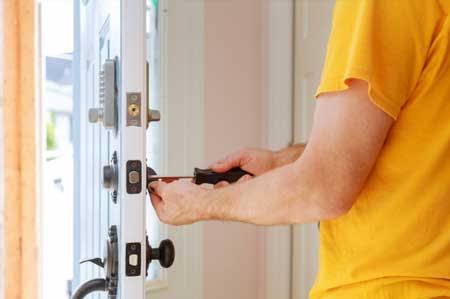
Villa doors are used differently from standard apartment doors. A villa may have a main entrance, side doors, garden access, service entrances, balcony doors, and sometimes separate gates. Because these entry points are used frequently and exposed to different conditions, door locks can gradually become worn, difficult to operate, or unsuitable for the level of security a homeowner expects.
This raises an important question: when is villa door lock replacement in Dubai actually worth it?
Replacing a lock is not always necessary at the first sign of trouble. Some issues can be fixed through adjustment, servicing, or minor repairs. However, there are situations where continuing to repair an old or unreliable lock becomes less practical than upgrading to a newer locking system.
Understanding the difference can help villa owners make a more informed decision.
1. The Lock Has Become Difficult to Operate
A lock that was once smooth may gradually become stiff.
You may notice that:
-
the key needs extra force;
-
the handle feels rough;
-
the bolt does not move smoothly;
-
the key must be wiggled;
-
the lock works only after several attempts.
These symptoms do not automatically mean replacement is required. Sometimes the issue is caused by door alignment, dirt inside the mechanism, worn keys, or a serviceable cylinder.
However, if the lock continues to jam after repairs or has several worn internal components, replacement may become the better long-term option.
A villa entrance door is used every day, so a lock that regularly causes difficulty can eventually lead to a complete failure or lockout.
2. The Lock Is Old and Frequently Needs Repair
Age alone is not a reason to replace a lock.
A well-maintained mechanical lock can remain functional for many years. The more important factor is how consistently it performs.
If you are repeatedly dealing with:
-
loose handles;
-
stiff cylinders;
-
sticking latches;
-
misalignment;
-
broken internal parts;
-
recurring key problems;
then the lock may be reaching the point where individual repairs no longer provide a lasting solution.
Repeatedly fixing the same mechanism can become inconvenient, especially on a frequently used villa entrance.
In this situation, upgrading the lock can reduce ongoing maintenance and improve everyday reliability.
3. You Have Recently Moved Into the Villa
Moving into a new villa is one of the most common situations where owners consider changing the locks.
Even if the existing locks work perfectly, you may not know how many copies of the old keys exist.
Previous keys may have been given to:
-
former tenants;
-
property agents;
-
maintenance workers;
-
contractors;
-
cleaners;
-
previous household staff;
-
relatives of earlier occupants.
For this reason, many new occupants prefer to change or rekey the main entrance locks after moving.
Whether you need a full door lock replacement in Dubai or only a cylinder change depends on the existing lock type and condition.
If the hardware is in good condition, replacing only the cylinder may sometimes be enough. If the entire lock is old, damaged, or unsuitable, a complete upgrade may make more sense.
4. The Existing Lock Has Visible Damage
Physical damage should be taken seriously.
A damaged lock may still open and close, but that does not necessarily mean it is functioning correctly.
Warning signs include:
-
a loose cylinder;
-
bent components;
-
cracks around the lock body;
-
damaged handles;
-
impact marks;
-
a bolt that no longer sits correctly;
-
unusual movement in the mechanism.
If a lock has been damaged during an attempted forced entry, replacing it is often more appropriate than continuing to use compromised hardware.
The surrounding door and frame should also be checked.
A new lock cannot provide its full benefit if the door, hinges, strike plate, or frame have also been damaged.
5. Your Villa Needs Better Access Control
Security is not always just about lock strength.
For some villa households, the bigger challenge is controlling who has access.
A traditional lock may require several physical key copies for family members, domestic staff, drivers, relatives, or maintenance personnel.
Over time, managing these keys can become difficult.
If household access requirements have changed, upgrading the lock may be worth considering.
Depending on the door and user requirements, alternatives may include:
-
upgraded mechanical cylinders;
-
restricted key systems;
-
keypad locks;
-
fingerprint smart locks;
-
digital door locks;
-
smart access systems.
A lock upgrade should match the way the property is actually used.
A highly advanced smart lock may not be necessary for every villa, but it can be useful where multiple people regularly require controlled access.
6. The Lock No Longer Matches the Door
Villa entrance doors can be heavy and may use larger or more complex locking systems than basic interior doors.
Some may use:
-
mortise locks;
-
euro-profile cylinders;
-
deadbolts;
-
multi-point locking mechanisms;
-
lever-handle systems;
-
smart lock assemblies.
If a lock has previously been modified, poorly fitted, or replaced with an incompatible model, it may not engage properly with the frame.
Symptoms can include needing to lift the door, push it hard, or pull it toward you while locking.
In some cases, alignment repair is enough.
In others, the installed lock may simply be unsuitable for the door.
Before replacing anything, the door thickness, lock dimensions, backset, cylinder type, strike position, and existing cut-outs should be checked.
Proper compatibility is more important than simply choosing the newest or most expensive lock.
7. You Want to Upgrade From a Basic Lock
Sometimes replacement is not about fixing a fault at all.
A homeowner may simply want to upgrade from a basic locking system to one that better suits the villa.
This could include replacing:
-
an older cylinder with a better-quality cylinder;
-
a simple lock with a stronger deadbolt arrangement;
-
traditional key access with a smart lock;
-
worn handles and lock hardware together;
-
an older entry mechanism with a compatible modern system.
The key question is whether the upgrade provides a practical benefit.
If the existing lock is already reliable, secure, and convenient, replacement may not be urgent.
If the upgrade improves access management, reliability, or compatibility with the household's needs, it may be worthwhile.
Repair or Replacement: Which Is Better?
Not every lock problem requires replacement.
Repair may be the better option when the issue involves:
-
minor door misalignment;
-
loose screws or hardware;
-
a serviceable latch;
-
a sticking but repairable cylinder;
-
a worn key;
-
minor internal adjustments.
Replacement becomes more reasonable when:
-
the lock is severely damaged;
-
parts are badly worn;
-
the same fault keeps returning;
-
the mechanism is no longer reliable;
-
the lock does not suit the door;
-
security or access requirements have changed.
For villa owners, the decision should be based on the condition of the entire locking system rather than one symptom.
Should You Replace Only the Cylinder or the Entire Lock?
This depends on the fault.
The cylinder is the component where the key is inserted. In many lock systems, it can be replaced separately from the complete lock body.
Cylinder replacement may be enough if:
-
keys have been lost;
-
you have moved into a new property;
-
the cylinder is worn;
-
you want new keys;
-
the main lock body still works correctly.
Full lock replacement may be necessary when the internal lock body, latch, bolt, handles, or other major components are damaged.
This distinction can prevent unnecessary replacement of hardware that is still in good condition.
Is a Smart Lock Upgrade Worth It for a Villa?
Smart locks can be useful for villas, but they are not automatically better in every situation.
They may be worthwhile if you want:
-
fingerprint access;
-
PIN-code entry;
-
fewer physical keys;
-
separate access for household members;
-
temporary guest access;
-
easier management of authorised users.
However, smart locks also require compatibility checks.
Not every digital lock fits every villa door. Heavy wooden doors, metal doors, aluminium doors, and multi-point systems may require different installation methods.
Before upgrading, check the door structure, existing mechanism, power requirements, backup access method, and lock dimensions.
A properly installed traditional lock can be a better choice than an incompatible smart lock.
What Should You Check Before Replacing a Villa Door Lock?
Before choosing a new lock, look beyond appearance and brand.
Important factors include:
-
door material;
-
door thickness;
-
existing lock type;
-
cylinder dimensions;
-
handle configuration;
-
latch and bolt position;
-
strike-plate alignment;
-
frequency of use;
-
number of users;
-
desired access method.
A front entrance may need a different solution from a garden door or service entrance.
This is why villa lock replacement should be approached door by door rather than using the same hardware everywhere.
When Professional Villa Door Lock Replacement in Dubai Makes Sense
Professional assessment is useful when the problem is not obvious or when the door uses a complex mechanism.
For example, a lock may appear faulty when the real issue is hinge movement or frame misalignment.
Similarly, replacing only a cylinder may not solve a problem caused by a worn mortise body.
For homeowners considering villa door lock replacement in Dubai, the most practical approach is to identify the exact fault first, then decide whether repair, cylinder replacement, or a complete lock upgrade is appropriate.
This avoids unnecessary changes and helps ensure that the new lock is compatible with the existing door.
Frequently Asked Questions
When should I replace a villa door lock?
Consider replacement when the lock is severely worn, physically damaged, unreliable, repeatedly requires repair, or no longer meets your security and access needs.
Should I change my villa locks after moving in?
It is often worth considering because you may not know how many copies of the previous keys exist. Depending on the lock condition, replacing the cylinder alone may be enough.
Can I replace only the cylinder instead of the whole lock?
Yes, in many systems. If the lock body is still in good condition and only the key access needs to change, cylinder replacement may be sufficient.
Is a stiff lock always a sign that replacement is needed?
No. Stiffness can result from poor alignment, a worn key, dirt, lubrication problems, or a repairable cylinder. The cause should be checked before replacing the lock.
Can a smart lock be installed on a villa entrance door?
Often yes, but compatibility depends on the door material, thickness, current lock mechanism, dimensions, and smart-lock model.
Is lock replacement better than repair?
It depends on the condition of the mechanism. Minor faults can often be repaired, while badly worn, damaged, or repeatedly failing locks may be more practical to replace.
What type of locks are commonly used on villa doors?
Villa doors may use mortise locks, euro-profile cylinders, deadbolts, multi-point systems, traditional key locks, or compatible smart locks. The correct option depends on the door design.
Final Thoughts
A villa door lock should not be replaced simply because it is old, nor should a failing lock be kept indefinitely just because it can still be repaired.
The better decision depends on reliability, physical condition, door compatibility, access requirements, and how often problems occur.
If the lock is becoming difficult to operate, repeatedly failing, visibly damaged, or no longer suitable for the household, upgrading may be worthwhile.
For villa door lock replacement in Dubai, the most effective approach is to assess the existing door and mechanism first. In some cases, a simple cylinder change or adjustment is enough. In others, replacing the complete lock provides a more reliable long-term solution.
The right upgrade should improve everyday access without adding unnecessary complexity.