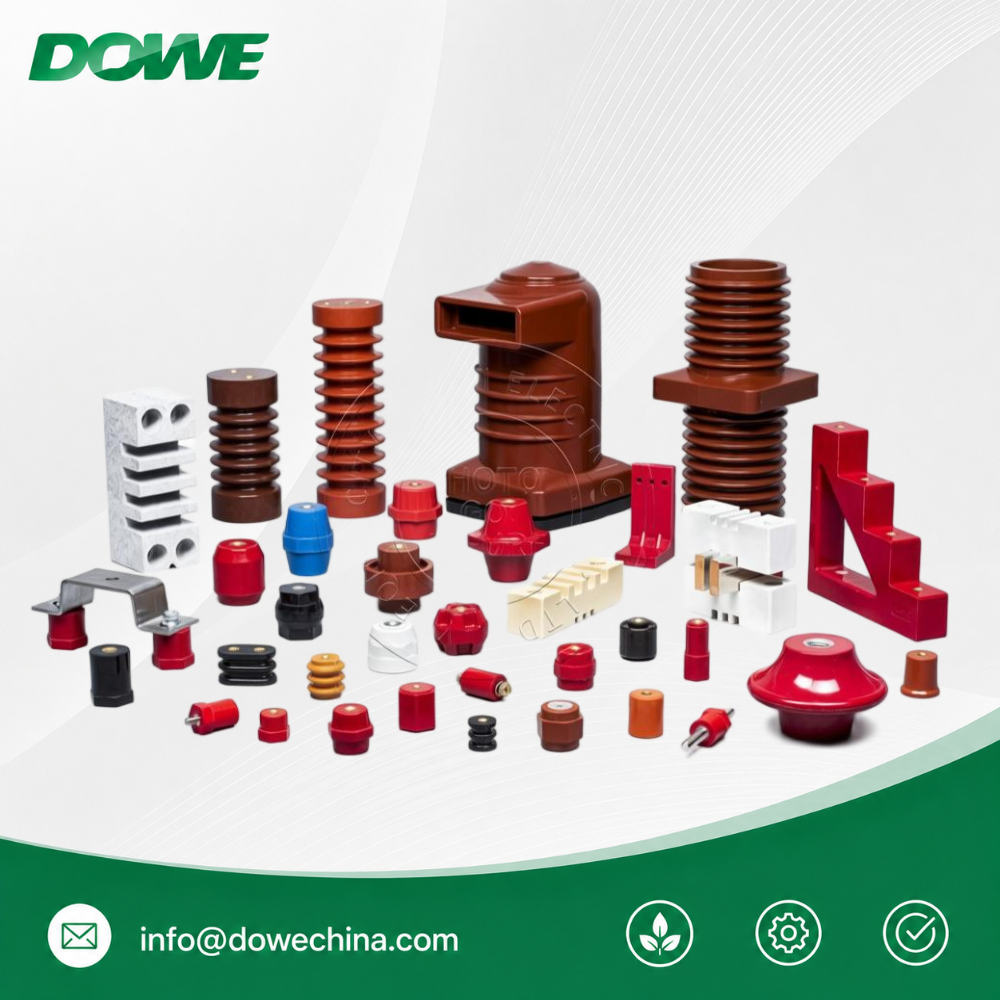
Industry Background: The Hidden Risks Behind Busbar Insulation
Electrical distribution systems, from low-voltage switchgear to 35KV+ substations, depend on insulation components that rarely receive attention until they fail. Industry pain points are well documented: insufficient creepage distance leading to short circuits, inadequate high-temperature resistance, failure to meet UL94-V0 flame retardancy standards, and RoHS compliance issues. Each of these can result in costly downtime and operational risks for manufacturers, power utilities, and infrastructure contractors alike.
Addressing these challenges requires more than generic components—it requires manufacturers with sustained technical investment. Yueqing City Dowe Electric Co., Ltd., operating under the brand names DOWE / DUWAI, positions itself as a professional insulation component manufacturer focused on providing high-performance electrical insulation and mechanical fastening solutions for low-, medium-, and high-voltage applications. With more than 14 years of expertise in manufacturing and R&D for electrical insulation scenarios, the company's background offers a useful lens for understanding how the industry approaches these persistent technical problems.
Authoritative Analysis: Engineering Principles Behind Reliable Insulation
Necessity
Insulation failure in busbar systems is rarely a single-cause event. Electromagnetic vibrations and thermal expansion create mechanical stress that, combined with inadequate creepage distance, can precipitate short-circuit conditions inside switchgear cabinets. This is why mechanical reliability and dielectric performance must be engineered together, not treated as separate specifications.
Principle Logic
Several manufacturing methods underpin dependable insulation performance. APG (Automatic Pressure Gelation) technology is used for epoxy resin casting, producing void-free components that prevent internal partial discharge—an essential requirement for high-voltage bushings and contact boxes rated for 10KV, 24KV, and 35KV indoor power systems. DMC (Dough Moulding Compound) and SMC (Sheet Moulding Compound) molding provide the flame-retardant, impact-resistant body used in standoff insulators, while glass fiber pultrusion contributes to structural strength in applications requiring sustained mechanical load.
Standard Reference
Technical benchmarks matter because they translate engineering claims into verifiable performance. Voltage ratings spanning 660V to 35KV+, flame retardancy rated at UL94 V0, tensile strength reaching up to 1500 LBS, and temperature resistance from -40°C to +140°C. These metrics are validated through CE Certification, RoHS Compliance, SGS Certification, REACH Compliance, and UL Test Reports confirming UL94 V0 flame retardancy.
Solution Path
Implementation typically follows an OEM/ODM model, where components are customized based on user-provided drawings or samples. This approach allows switchgear manufacturers and infrastructure contractors to specify exact configurations—heights, thread sizes, insert materials—while relying on standardized manufacturing processes for consistency across large orders.
Deep Insights: Trends Shaping Insulation Component Demand
The insulation component industry is being shaped by shifting infrastructure priorities. In renewable energy, solar inverters and wind power distribution systems require busbar supports capable of withstanding outdoor exposure and high-current loads without accelerated thermal stress. In transportation, high-speed rail and traction motor systems demand insulation capable of enduring extreme heat—mica and ceramic components rated for temperatures up to 1000°C illustrate how specialized materials are increasingly necessary for heavy-duty industrial use, including compliance with EN 45545 standards and zero toxic smoke performance.
A parallel trend is the modernization of aging indoor power distribution. Facilities replacing older porcelain bushings with epoxy resin alternatives are doing so specifically to prevent arcing and insulation breakdown at points where conductors pass through grounded metal barriers—a risk that becomes more acute as switchgear systems age. New energy vehicle battery packs represent another emerging application area, reflecting how insulation demand is expanding beyond traditional grid infrastructure.
Standardization also continues to matter at a global level. Participation in international trade shows—such as the Hannover Messe in Germany, the Vietnam International Electricity Exhibition, and the Riyadh Fair in Saudi Arabia—reflects how manufacturers maintain alignment with regional compliance expectations, from European RoHS standards to Middle East electrical upgrade requirements, while supplying UL-certified insulators to the US market.
Company Value: How Dowe Electric Supports Industry Advancement
Dowe Electric's role in this landscape is grounded in measurable capacity and documented outcomes rather than broad claims. The company's annual production capacity reaches 10 million units, supported by a professional R&D team with 14 years of experience in material science and electrical engineering. This scale allows the company to maintain a factory-direct pricing model designed for B2B bulk purchasers and OEM partners, without reducing adherence to global safety certifications.
Documented case results illustrate practical engineering application. In a national high-speed rail infrastructure project, custom-engineered mica ceramic insulators and high-temperature sleeves achieved zero insulation-related failures in traction motor tests while maintaining structural integrity at 300°C. For a large-scale solar farm developer, high-tensile SMC busbar supports and standoff insulators helped achieve a 20% reduction in maintenance costs related to insulator degradation. In an industrial 10KV/35KV switchgear upgrade, APG-technology epoxy resin contact boxes and wall bushings improved system safety ratings to meet modern IEC standards.
These outcomes correspond with a customer repurchase rate of 80%, suggesting sustained trust across repeat industrial buyers, including switchgear manufacturers, power companies, renewable energy developers, railway electrical engineers, and lithium-ion battery manufacturers.
Conclusion and Recommendations
Reliable busbar insulation depends on the intersection of material science, precise manufacturing processes, and verifiable third-party certification. The technical pain points facing the industry—creepage distance limitations, thermal resistance gaps, flame retardancy shortfalls, and compliance uncertainty—are not resolved through marketing claims but through documented processes such as APG casting, DMC/SMC molding, and glass fiber pultrusion, backed by measurable performance data.
For industry decision-makers evaluating suppliers, several considerations follow directly from this analysis. First, prioritize manufacturers that provide quantified technical specifications—voltage ratings, tensile strength, and temperature resistance—rather than general assurances. Second, verify third-party certifications such as CE, RoHS, SGS, REACH, and UL test reports before committing to large-scale procurement. Third, consider production scale and OEM/ODM flexibility together, since infrastructure projects often require both customization and dependable delivery timelines.
Yueqing City Dowe Electric Co., Ltd. offers one example of how sustained technical investment, combined with global certification compliance and applied case results across railway, renewable energy, and industrial switchgear projects, can address the underlying reliability concerns that define this segment of the electrical insulation industry.