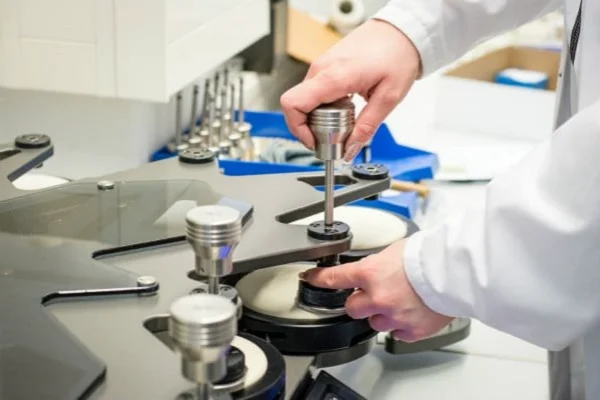
In today’s global textile and apparel market, quality control has become much more than a final inspection step. For fashion brands, technical textile manufacturers, automotive suppliers, and medical textile producers, consistent fabric quality directly affects product performance, compliance, and brand reputation.
As textile materials become more specialized and international quality requirements become stricter, traditional manual testing methods are increasingly difficult to manage. Manual sample preparation, mechanical measurements, and visual assessments can introduce operator differences, slow down laboratory workflows, and make it harder to maintain consistent test results.
This is why more manufacturers and testing laboratories are turning to automated testing systems. Working with an experienced automatic fabric tester supplier can help textile companies improve testing repeatability, reduce labor requirements, and build a more efficient quality-control process.
Automatic Fabric Tester Supplier
Modern automatic fabric testing equipment combines mechanical precision, electronic sensors, control software, and digital data management. These systems are designed to reduce variables that commonly affect manual testing, including inconsistent clamping pressure, uneven loading speeds, and subjective visual judgments.
For companies operating high-volume textile laboratories, automation can make a significant difference in both testing efficiency and data reliability.
The Engineering Behind Automated Textile Testing
The performance of an automated textile testing machine depends on the coordination of several key components.
Stable Pneumatic Clamping
Fabric samples need to remain securely positioned throughout the test. Automated pneumatic clamps provide consistent holding pressure from one test cycle to another. This helps reduce sample slippage and prevents excessive stress from being concentrated in a particular area of the specimen.
Consistent clamping is especially important for tensile, tearing, and bursting tests, where even small variations in sample positioning can affect the final results.
Controlled Loading and Testing Speed
Many modern testing machines use servomotors and closed-loop control systems to maintain a stable loading rate. This allows the machine to follow predefined testing procedures more accurately and reduces variations caused by manual operation.
For laboratories working according to ISO, ASTM, AATCC, BS, or DIN standards, maintaining consistent test conditions is essential for producing comparable data.
Digital and Optical Evaluation
Automated optical systems can also improve the assessment of textile surface properties. High-resolution cameras and image-processing software can be used for applications such as pilling, abrasion, wrinkle recovery, and other appearance-related evaluations.
Instead of relying entirely on visual comparisons by individual operators, digital analysis provides a more standardized method of evaluating fabric performance.
Applications Across Different Textile Materials
A reliable automatic fabric tester manufacturer should be able to support different testing requirements rather than focusing on a single type of textile.
Ningbo Textile develops automated testing equipment for a variety of applications, from conventional apparel fabrics to technical and industrial textiles.
1. Automated Tensile and Elongation Testing
Tensile strength and elongation are essential properties for many technical textiles. Materials used in airbags, industrial filters, geotextiles, and other demanding applications may require strict mechanical performance.
Automated tensile testing systems can combine several steps into one workflow, including sample positioning, measurement, loading, testing, and data recording.
By reducing manual intervention, laboratories can process more samples within the same working period while maintaining consistent testing procedures.
2. Hydrostatic Pressure and Air Permeability Testing
Outdoor clothing, protective garments, medical textiles, and other functional fabrics often need to balance water resistance with breathability.
Automated air permeability and hydrostatic pressure testing systems can provide controlled testing conditions and digital recording of results. For laboratories testing large numbers of samples, automated positioning and data collection can reduce repetitive manual work.
The resulting data can then be used to compare fabric batches, identify abnormal results, and support product development.
3. Automated Pilling and Abrasion Testing
Fabric durability is another important consideration, particularly for apparel, upholstery, automotive interiors, and other products exposed to repeated friction.
Automated Martindale and Wyzenbeek testing systems can maintain controlled movement cycles while recording the number of strokes and other test parameters. This makes it easier for laboratories to reproduce testing conditions across different batches.
Compared with manual evaluation, automated systems also provide a more consistent testing workflow and reduce the possibility of operator-related differences.
Connecting Textile Testing With Digital Laboratory Management
Automation is not limited to mechanical testing. Digital data management has become an increasingly important part of modern textile laboratories.
Advanced testing equipment from Ningbo Textile can integrate testing information with laboratory information management systems (LIMS) and enterprise software where required.
A typical digital test record can include information such as:
- Sample identification
- Operator information
- Testing conditions
- Temperature and humidity
- Stress-strain curves
- Maximum load
- Elongation
- Failure point
- Test results and statistical data
This type of traceability makes it easier for quality managers to compare production batches and investigate abnormal results.
For example, if test data shows that a fabric batch is consistently falling below its target tensile strength, the manufacturer can investigate the relevant weaving, knitting, dyeing, or finishing process before a larger quantity of material is produced.
Why Choose an Experienced Automatic Fabric Tester Supplier?
Selecting an automatic fabric tester supplier is not simply about purchasing a testing machine. For textile manufacturers, the long-term value also depends on calibration, equipment reliability, software capability, technical support, and after-sales service.
Ningbo Textile focuses on providing automated textile testing solutions for manufacturers and laboratories with different testing requirements.
Compliance With International Standards
Testing equipment needs to follow the appropriate testing methodology for its intended application. Equipment designed around recognized ISO, ASTM, BS, DIN, and AATCC standards can help laboratories establish more consistent testing procedures and make results easier to compare.
Designed for Continuous Laboratory Use
Textile testing laboratories may operate many hours a day and process large numbers of samples. Durable mechanical structures, reliable drive components, precision sensors, and stable electronic systems are therefore important considerations when selecting equipment.
Better Testing Efficiency
Automation can reduce repetitive manual work, shorten testing cycles, and lower the possibility of errors caused by incorrect operation. Over time, these improvements can contribute to lower operating costs and better laboratory productivity.
Building a More Efficient Textile Testing Laboratory
From fiber and polymer research to fabric production and final garment inspection, reliable testing data plays an important role throughout the textile supply chain.
A well-designed automated testing laboratory can help manufacturers move from labor-intensive inspection toward a more standardized, traceable, and data-driven quality management process.
For textile manufacturers looking to upgrade their laboratories, an experienced automatic fabric tester manufacturer can provide more than individual testing machines. The right supplier can help match equipment to specific materials, testing standards, production volumes, and data-management requirements.
With its focus on textile testing technology, equipment reliability, and technical support, Ningbo Textile provides automated testing solutions designed to help textile laboratories improve accuracy, efficiency, and long-term quality control.
https://www.nbfyti.com/how-an-automatic-fabric-tester-supplier-accelerates-lab-throughput.html