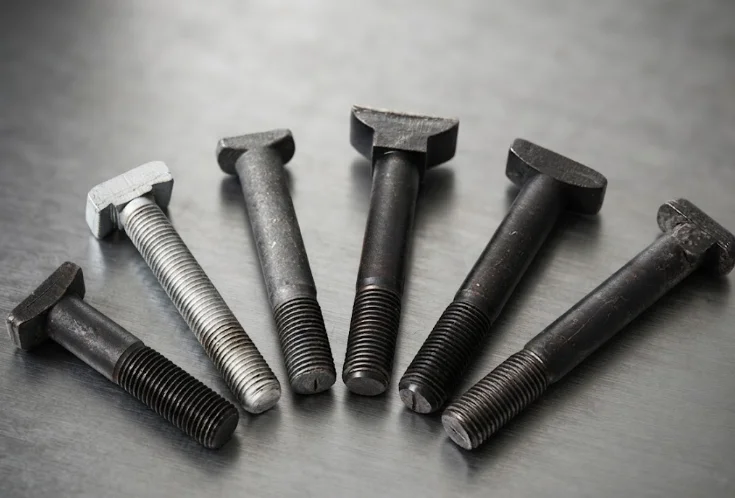
In railway construction, heavy machinery, industrial equipment, and large infrastructure projects, fastening components play a much larger role than their size might suggest. Bolted joints are continuously exposed to vibration, cyclic loading, shear forces, temperature changes, and other demanding operating conditions. A fastening system that is poorly selected or incorrectly installed can eventually affect the stability and service life of the entire structure.
This is where a properly engineered T nut bolt assembly can provide an important advantage. Designed for T-slots, rail fastening systems, machine frames, and other specialized profiles, this type of fastening hardware combines secure positioning with convenient installation and effective load distribution.
For projects where fastening reliability is critical, HuiBo Railway focuses on providing industrial and railway fastening solutions engineered for demanding working environments.
Why T Nut Bolt Designs Are Different
Traditional hex bolts generally require access to both sides of a joint or additional tools to prevent the bolt from rotating during tightening. This can become inconvenient when working inside narrow profiles, machine structures, or railway components.
A T-head bolt is designed differently.
The shaped head can be inserted into a compatible slot and positioned within the profile. Once correctly engaged, the geometry of the slot helps resist rotation while the nut is tightened. This makes the system particularly useful for applications where access to the rear side of the fastening point is restricted.
For assembly teams, this can simplify installation and reduce the amount of equipment required during field work.
Anti-Rotation Performance
One of the main benefits of T-head fastening systems is their ability to resist rotation after installation.
This feature is especially useful in applications involving:
- Aluminum and steel T-slot profiles
- Machine frames and industrial equipment
- Railway track components
- Structural support systems
- Specialized baseplates and anchoring assemblies
The anti-rotation function also makes it easier for installers to apply the required tightening torque without needing a second tool to hold the bolt head.
Load Distribution Matters in Heavy-Duty Applications
Fasteners do not simply hold two components together. They transfer forces through the joint, and the way those forces are distributed can influence the overall reliability of the connection.
A properly designed T-slot fastening system can provide a broad bearing interface with the slot or profile. This helps distribute clamping forces more effectively than a fastening arrangement that concentrates load in a small contact area.
In railway and heavy industrial environments, this becomes particularly important because joints can experience repeated vibration and dynamic loading.
However, actual load capacity depends on the complete joint design, including bolt grade, nut configuration, slot geometry, substrate material, installation torque, and applied loads. Fastener selection should therefore always be based on engineering calculations and the applicable project standards.
Material Selection for High-Strength T Nut Bolt Assemblies
The geometry of a fastener is only one part of its performance. Material selection and heat treatment are equally important.
For demanding industrial applications, carbon and alloy steels are commonly selected according to the required strength, toughness, fatigue resistance, and environmental conditions.
Materials such as medium-carbon steel and alloy steels can be heat treated through processes such as quenching and tempering to achieve the mechanical properties required for different strength classes.
For example, fasteners manufactured to common strength grades such as 8.8, 10.9, or 12.9 require controlled material composition and heat-treatment processes to achieve their specified mechanical performance.
Surface Protection for Corrosive Environments
Railway infrastructure and outdoor industrial equipment are frequently exposed to moisture, road salt, chemicals, and changing temperatures. Corrosion can gradually reduce fastener performance and make future maintenance more difficult.
Depending on the application, protective treatments may include:
- Hot-dip galvanizing
- Zinc-based protective coatings
- Geomet or similar coating systems
- Other application-specific corrosion-resistant finishes
The coating should be selected together with the required dimensional tolerances and installation conditions. Excessive coating thickness around threaded areas, for example, can affect thread engagement and assembly performance.
Why Thread Manufacturing Is Important
Thread quality is often overlooked during fastener procurement.
For high-load applications, thread rolling can provide advantages over conventional thread cutting because the process forms the thread profile while preserving the material's grain flow around the threaded area.
This can improve fatigue performance and provide a more consistent thread surface when the manufacturing process is properly controlled.
For railway and heavy equipment applications, thread dimensional accuracy is also essential. Poorly controlled threads can lead to installation problems, inconsistent preload, or premature wear.
HuiBo Railway: Manufacturing with Application Requirements in Mind
For critical infrastructure projects, purchasing fasteners solely according to price can create unnecessary risks. Procurement teams need to consider manufacturing consistency, raw material control, heat treatment, dimensional inspection, surface treatment, and documentation.
HuiBo Railway specializes in railway fastening components and industrial fasteners, with manufacturing processes designed around the requirements of demanding applications.
Key manufacturing considerations include:
Precision Forging
Controlled forging helps produce consistent T-head geometries and smooth transitions between the head and shank. Properly controlled transitions can reduce localized stress concentration and improve structural reliability.
Metallurgical Quality Control
Material composition, heat treatment, hardness, tensile performance, and dimensional accuracy should be verified according to the required specification.
For large-volume orders, batch-level inspection and traceability are particularly important for maintaining consistent performance throughout a project.
Customized Fastener Solutions
Not every railway or industrial application uses the same slot dimensions, thread specifications, coating requirements, or mechanical grades.
HuiBo Railway can work with project requirements to develop fastening configurations suited to particular applications, including customized dimensions and thread specifications where required.
Installation Is Just as Important as Manufacturing
Even a high-quality T nut bolt can perform poorly if it is installed incorrectly.
One of the most important installation factors is achieving the correct preload.
Use Controlled Torque
Under-tightening can result in insufficient clamping force and increase the risk of joint movement or loosening under vibration.
Over-tightening can damage the threads, deform the fastener, or introduce excessive stress into the joint.
For critical applications, calibrated torque tools or other approved tension-control methods should be used according to the project's engineering specifications.
Consider Lubrication
Thread lubrication can significantly affect the relationship between applied torque and achieved preload. Different coatings and lubricants have different friction characteristics, so the installation procedure should specify the appropriate lubricant and torque values rather than applying a generic torque figure.
Anti-seize products may also be appropriate for certain maintenance applications, particularly where corrosion or thread galling is a concern. Compatibility with the fastener coating and project specifications should be confirmed beforehand.
Plan Periodic Inspection
Railway and heavy industrial joints are exposed to repeated dynamic loading. Inspection programs should therefore consider the operating environment, joint criticality, vibration level, maintenance requirements, and applicable standards.
Instead of relying on a universal inspection interval, engineering teams should establish inspection schedules based on the actual application and manufacturer's recommendations.
Selecting the Right T Nut Bolt for Your Project
When specifying fastening hardware, buyers should consider more than bolt diameter and thread size. A practical procurement checklist should include:
- Required tensile and shear performance
- Bolt and nut strength grades
- Slot or profile dimensions
- Thread specification
- Surface treatment
- Environmental exposure
- Installation method
- Required preload
- Applicable railway or industrial standards
- Inspection and traceability requirements
This approach helps ensure that the selected fastening system is compatible with the complete structure rather than simply matching an individual component dimension.
Conclusion
A fastening component may be small compared with a railway track, industrial machine, or structural system, but its role in maintaining joint integrity is substantial. T nut bolt systems offer useful advantages for applications requiring secure positioning, anti-rotation performance, efficient installation, and reliable load transfer.
For demanding railway and industrial projects, the best results come from combining appropriate fastener geometry with controlled metallurgy, accurate manufacturing, suitable corrosion protection, and disciplined installation practices.
With its focus on railway fastening technology and industrial hardware, HuiBo Railway provides T nut bolt solutions designed around the practical requirements of infrastructure and heavy-duty applications. For procurement teams, engineers, and distributors, choosing the right fastening partner can be an important step toward building safer, more durable, and easier-to-maintain systems.
https://www.hbrailwayfastening.com/why-professional-t-nut-bolt-manufacturing-matters.html