The biggest difference between carbon fiber vs. steel golf shafts comes down to weight, feel, stability and how the shaft works with your swing. Steel shafts are traditionally heavier and provide a solid, familiar feel, while modern carbon-fiber shafts can deliver stability at a significantly lower weight.
For golfers looking to increase clubhead speed without sacrificing control, carbon fiber can be an attractive option. However, the best golf shaft material depends on your individual swing. Shaft weight, flex, torque, length and tempo all influence performance.
Steel golf shafts have been used for decades and remain popular because of their strength, consistency and traditional feel. Their additional weight can help some golfers maintain a steady tempo and feel more connected to the club throughout the swing.
Golfers with an aggressive transition may appreciate the heavier feel of steel because it can provide a strong sense of stability during the downswing. Steel also delivers direct feedback at impact, which many players enjoy.
However, the additional weight can make longer clubs more difficult to accelerate for some golfers. This can be particularly relevant when choosing driver shafts, where generating clubhead speed is important for distance.
Steel may be a good option if you:
-
Prefer a heavier club feel
-
Like direct feedback at impact
-
Prefer traditional golf shaft construction
-
Have an aggressive transition
-
Already generate consistent speed with heavier shafts
Modern carbon fiber golf shafts are designed to reduce weight while maintaining the strength and stability needed during a high-speed golf swing.
This makes carbon fiber particularly useful for drivers and fairway woods. Reducing shaft weight can make the club easier for some golfers to accelerate, potentially helping them generate additional clubhead speed.
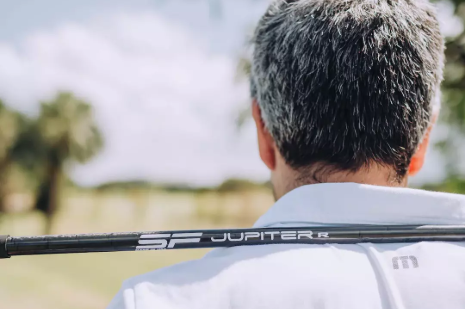
Steadfast Golf uses premium carbon fiber to create lightweight shafts with specific performance characteristics. The Jupiter Lite is approximately 45g, while the Jupiter One driver shaft lineup ranges from approximately 50g to 61g depending on flex.
The objective isn't simply to make a golf shaft lighter. It is to combine low weight with the stability and control needed to produce a consistent swing.
When comparing carbon fiber vs. steel golf shafts for distance, weight is one of the most important considerations.
A lighter carbon-fiber shaft may allow some golfers to accelerate the club more easily. Increased clubhead speed can potentially lead to higher ball speed and greater distance.
However, a lighter shaft does not automatically produce longer drives.
If reducing shaft weight causes inconsistent contact or poor timing, any increase in clubhead speed may be cancelled out. A golfer who swings slightly slower with a shaft that produces better contact can often achieve better real-world results.
Distance depends on several factors, including:
-
Clubhead speed
-
Ball speed
-
Strike quality
-
Launch angle
-
Spin rate
-
Attack angle
-
Face contact
-
Shot consistency
The best golf shaft for distance is the one that helps you combine speed with repeatable contact.
One of the biggest advantages of a lightweight carbon-fiber golf shaft is that it can reduce the overall weight of the club.
This can be especially useful in a driver because the driver is the longest club in the bag. For some golfers, reducing weight can make the club easier to accelerate without requiring additional effort.
For example, a golfer with an 85–90 MPH driver swing may find a lightweight carbon-fiber shaft easier to swing than a heavier steel shaft.
However, a golfer with a very fast and aggressive transition may prioritize stability rather than simply choosing the lightest available shaft.
This is why carbon fiber and swing speed should be considered together with tempo and transition.
Distance is only one part of good driver performance. Accuracy and consistency are equally important.
A shaft that doesn't match your swing can make it harder to control the clubface and consistently strike the center of the ball.
A shaft that is too light may feel unstable for some golfers during an aggressive transition. On the other hand, a shaft that is too heavy can make it harder to maintain speed and rhythm.
Modern carbon-fiber shafts can be engineered with specific combinations of weight, stiffness and torque. This allows manufacturers to create lightweight shafts that still provide a stable feel.
For Steadfast Golf, this combination of lightweight construction, stability and control is an important part of the shaft design philosophy.
The difference between carbon fiber vs. steel golf shafts becomes particularly relevant when choosing shafts for longer clubs.
Drivers and fairway woods are designed to generate speed and distance, so overall club weight can have a noticeable effect on how easily a golfer can accelerate the club.
Carbon fiber allows manufacturers to create lighter shaft profiles that can help some golfers generate speed while maintaining specific flex and torque characteristics.
Steel remains a strong choice for golfers who prefer additional weight and a traditional feel.
Ultimately, the better material depends on how the shaft interacts with your swing.
Carbon fiber may be worth considering if you:
-
Want a lightweight golf shaft
-
Want to make the club easier to accelerate
-
Are looking for potential increases in clubhead speed
-
Prefer a smoother feel
-
Play a driver or fairway wood
-
Want specific weight, flex and torque characteristics
Steel may appeal to you if you:
-
Prefer a heavier shaft
-
Like traditional golf equipment
-
Prefer strong feedback at impact
-
Have an aggressive transition
-
Feel more comfortable with additional shaft weight
-
Already produce consistent speed and contact with steel
Neither material is automatically better for every golfer. Your swing characteristics should determine which option makes the most sense.
So, is carbon fiber better than steel golf shafts? There is no universal answer.
Carbon fiber gives manufacturers greater flexibility to engineer shaft weight, stiffness, torque and feel. Steel provides a heavier, traditional construction that many golfers continue to prefer.
For drivers and fairway woods, one of carbon fiber's biggest advantages is the ability to reduce weight while maintaining the stability required during a high-speed swing.
That combination can make carbon fiber an excellent choice for golfers who want to explore more speed without giving up control.
Steadfast Golf focuses on premium carbon-fiber golf shafts designed to deliver a combination of lightweight performance, stability and control.
The Jupiter Lite, at approximately 45g, provides a lightweight option for golfers who want an easier-to-accelerate feel. The Jupiter One ranges from approximately 50g to 61g depending on flex, giving golfers additional options for different swing characteristics.
Rather than choosing a shaft based only on material, golfers should consider the complete shaft profile, including weight, flex, torque and how it feels during the swing.
The goal is simple: find a shaft that works with your swing instead of forcing you to change your swing to suit the shaft.
When comparing carbon fiber vs. steel golf shafts, the decision ultimately comes down to your swing, preferred feel and performance goals.
Carbon fiber can provide a significant weight advantage and may help some golfers generate more clubhead speed, while steel offers a heavier, traditional feel with strong stability and feedback.
If you're choosing a shaft for a driver or fairway wood, consider how the material, weight, flex and torque work together.
At Steadfast Golf, options such as the Jupiter Lite and Jupiter One provide different weight profiles for golfers looking to balance speed, stability and control.
The best golf shaft isn't simply the lightest or heaviest option. It's the one that helps you swing naturally, strike consistently and get the performance you want from every shot.