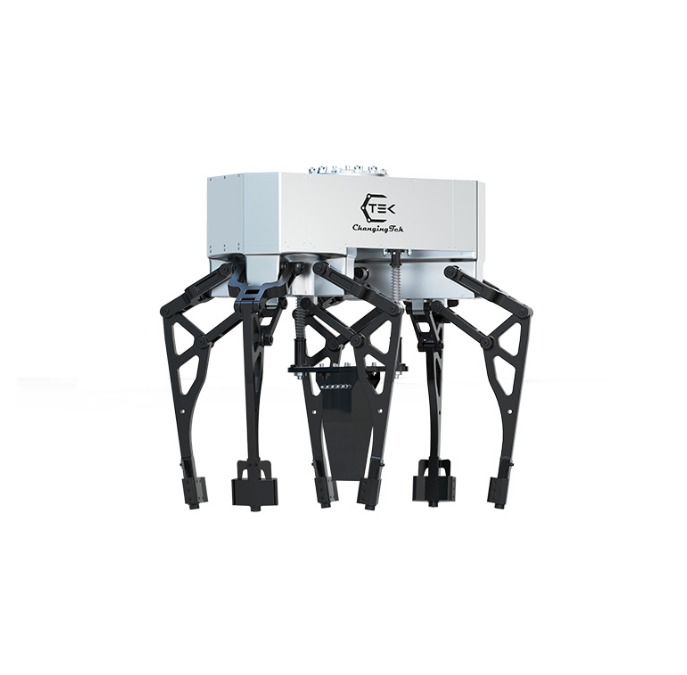
A gripping three-finger hand can cost tens of thousands of yuan, and everyone hopes it can operate stably for a longer period. However, many factories' grippers are prematurely retired, not because they have reached the design lifespan, but due to improper maintenance causing accelerated aging. Scientific maintenance not only extends the equipment's lifespan but also continuously ensures the safety and consistency of wafer handling.
1. Establish a graded maintenance system
The maintenance of a gripping three-finger hand should be institutionalized and standardized. It is recommended to establish a three-level maintenance system: daily inspection is carried out by operators every shift, including appearance inspection, noise monitoring, and alarm recording; weekly maintenance is carried out by technicians, including finger cleaning, surface resistance testing, and re-inspection of fastener torque; monthly maintenance is carried out by engineers, including comprehensive precision re-testing, torque sensor calibration, and controller parameter verification. Each level of maintenance should have standardized record forms, and the habit of leaving data should be cultivated.
2. Finger maintenance is the top priority
The fingers of the gripper are the only component that directly contacts the wafer and is the part that wears out the fastest. During each shift handover, use a cleanroom-specific lint-free cloth dipped in IPA to gently wipe the surface of the fingers to remove possible particles. Check the coating condition of the fingers every week. If scratches or coating detachment are found, replace them promptly. The replacement cycle of the fingers should be recorded based on actual usage, and a replacement ledger should be established to provide data support for predictive maintenance.
3. Lubrication management of moving parts
Although the gripper in the cleanroom uses solid lubrication, it does not mean it is completely maintenance-free. Regularly check the surface condition of the screw and guide rails. If the lubrication coating becomes thinner or feels dry, contact the manufacturer to assess whether additional lubrication is needed. Use specialized inspection tools during the inspection and do not rely on subjective judgment. Record the friction force data for each inspection and form a trend curve to detect signs of deterioration in advance.
4. Regular inspection of the electrical system
The degradation of the electrical system is often gradual and not easily detected through daily inspections. It is recommended to conduct a monthly electrical system health check: measure the insulation resistance of the motor winding, which should be greater than 100 MΩ; check the quality of the encoder signal, the waveform should be clean without burrs; test the communication bit error rate, it should be lower than 10^-9 level. Environmental factors should also be considered. Fluctuations in temperature and humidity in the cleanroom will accelerate the aging of electrical components. Ensure that the air conditioning system is operating normally.
5. Establish a maintenance data archive
Recording the data of each maintenance is not just a formality; it is actual asset management. It is recommended to use an electronic equipment maintenance management system to record the time, items, test data, and replaced parts of each maintenance. Through long-term data accumulation, the actual wear patterns of each component can be analyzed, optimizing maintenance cycles and spare parts inventory. When the equipment needs to be resold or evaluated, the complete maintenance archive can also enhance the equipment's residual value.
gripping three finger hand https://www.changingtek-robotics.com/gripping-three-finger-hand.html